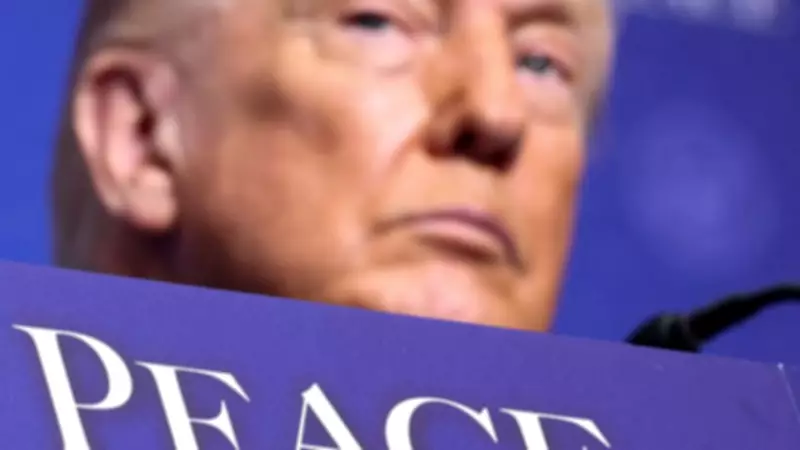
Trump's Board of Peace Commits $7 Billion to Gaza Reconstruction Effort
In a significant move aimed at fostering stability in the Middle East, Donald Trump's Board of Peace has pledged $7 billion (£5.2 billion) to rebuild the war-torn Gaza Strip. The announcement came during the board's inaugural meeting in Washington DC, where the US president emphasized that this financial commitment represents "an investment in stability" and the hope for a harmonious region.
International Contributions and Troop Deployments
The funds were pledged by nine member countries of the Board of Peace, including:
- Kazakhstan
- Azerbaijan
- United Arab Emirates
- Morocco
- Bahrain
- Qatar
- Saudi Arabia
- Uzbekistan
- Kuwait
Additionally, five nations have agreed to send troops for an international stabilisation force. Indonesia, Morocco, Kazakhstan, Kosovo, and Albania will deploy soldiers, with initial efforts focused on Rafah, a major population centre in southern Gaza where reconstruction is set to begin. Egypt and Jordan have committed to training police forces to support security efforts.
Security and Reconstruction Plans
Major General Jasper Jeffers, head of the newly-created International Stabilisation Force, outlined the plan, which calls for 12,000 police officers and 20,000 soldiers to help bring the security necessary for Gaza's future prosperity and enduring peace. This initiative is part of Mr. Trump's broader 20-point peace plan, designed to end the conflict in the enclave, where a fragile ceasefire agreed in October remains in effect.
Despite these pledges, the total estimated cost to rebuild Gaza, decimated by two years of war between Israel and Hamas, is around $70 billion (£52 billion), meaning the current commitment covers only a tenth of the needed funds. Mr. Trump also announced an additional $10 billion (£7.4 billion) pledge from the US, though details on the source and specific use of these funds were not provided.
Broader Implications and Global Response
The Board of Peace, initially launched in August as part of Trump's vision to bring lasting peace between Israel and Hamas, has since expanded its scope to address conflicts worldwide. This shift has prompted accusations that Mr. Trump views the board as a potential rival to the United Nations. However, he dismissed such concerns, stating that the UN would become stronger with the board "looking over" it to ensure proper operation.
Approximately 50 countries attended the meeting, including the UK, Germany, Italy, Norway, and Switzerland, which participated as observers without joining the board. Mr. Trump noted that most nations have accepted the initiative, warning that "some are playing a little cute" and emphasizing that such tactics would not work with him.
Regional Tensions and Future Prospects
Amidst these developments, Mr. Trump issued a warning to Iran, stressing the need for a meaningful deal to prevent "bad things" from happening. He also confirmed the deployment of a second aircraft carrier group to the Middle East, underscoring ongoing regional tensions.
As Muslims in Gaza observed Ramadan, photographs from Thursday showed them gathering for iftar meals amidst rubble in Khan Younis, highlighting the urgent need for reconstruction. The Board of Peace's efforts aim to transform this devastation into a foundation for lasting peace and stability, though challenges remain in securing full funding and international cooperation.