In a significant development, former US President Donald Trump has issued a stark warning that the United States may take action in Cuba, but only after concluding his ongoing war in Iran. This statement comes just days after a rare and violent anti-government riot erupted in Havana, highlighting the island nation's deepening economic and political turmoil.
Trump's Conditional Warning on Cuba
Speaking to reporters aboard Air Force One on Sunday, Trump outlined a clear priority: "We're going to do Iran before Cuba." He revealed that Cuba has expressed interest in negotiating a deal with the US, stating, "Cuba also wants to make a deal, and I think we will pretty soon either make a deal or do whatever we have to do." However, he emphasized that any decisive moves regarding Cuba would be postponed until the Iran conflict is resolved.
Trump further complicated the situation by suggesting Cuba could face a "friendly takeover," but then ambiguously added it "may not be a friendly takeover." These remarks underscore the volatile and unpredictable nature of US-Cuba relations, which have been strained for years due to sanctions, migration disputes, and security concerns.
Rare Anti-Government Riot in Havana
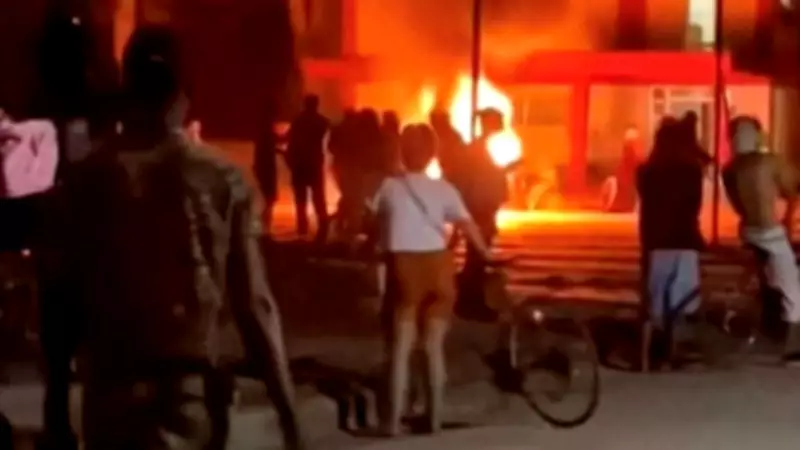
The political tension is amplified by a rare riot that occurred in Cuba on Saturday, as reported by local media. Protesters, initially gathering peacefully, turned violent and attacked a Communist Party office. The unrest was fueled by widespread frustration over rolling electricity blackouts and severe fuel shortages that have crippled public services and transportation networks.
Social media footage from the incident showed demonstrators throwing rocks through windows while chanting "liberty," marking a significant outburst of public dissent in the typically tightly controlled nation. Cuban President Miguel Diaz-Canel responded by acknowledging the protesters' anger as understandable but vowed there would be "no impunity for vandalism and violence."
Cuba's Economic Crisis and Diplomatic Overtures
Cuba is currently grappling with one of its worst economic crises in decades, exacerbated by disruptions in imported oil essential for power plants and infrastructure. In a bid to address bilateral issues, President Diaz-Canel announced on Friday that Cuba has opened talks with the US. He expressed hope that these negotiations would move the long-term rivals "away from confrontation" and toward diplomatic solutions.
Despite these efforts, Trump has repeatedly claimed in recent weeks that Cuba is on the verge of collapse or eager to strike a deal, adding pressure to an already fragile situation. The combination of internal unrest and external threats poses a critical challenge for the Cuban government as it navigates both domestic dissatisfaction and international diplomacy.