Trump Predicts US Will Have 'Honour of Taking Cuba' Amid Total Power Blackout
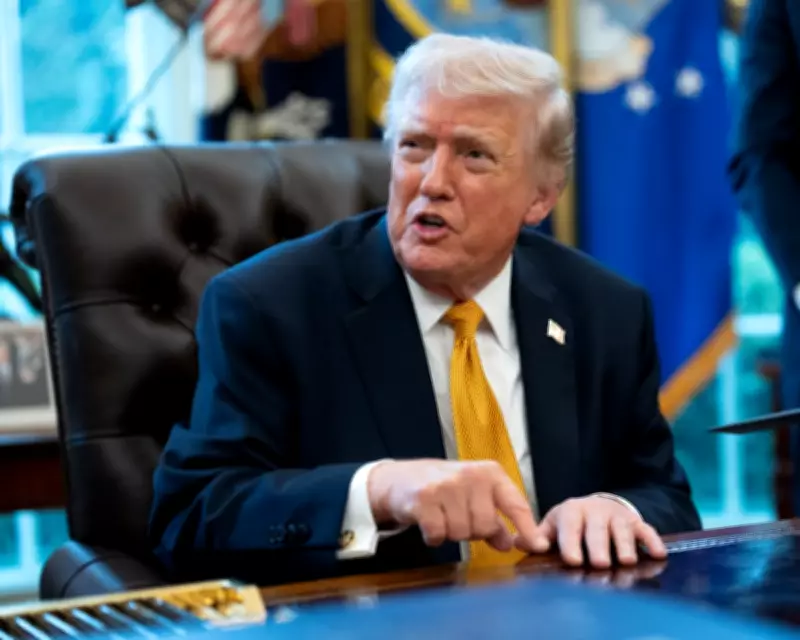
US President Donald Trump has boldly declared that he expects to have "the honour of taking Cuba", following a severe power blackout across the island nation caused by an American-imposed oil blockade. Speaking to reporters at the White House on Monday, Trump asserted his unilateral authority over Cuba's future, stating he could do "anything I want" with the country as negotiations between Washington and Havana intensify.
'A Very Weakened Nation Right Now'
Trump described Cuba as "a very weakened nation right now", highlighting the impact of the US blockade that has plunged the country into darkness. "You know, all my life I've been hearing about the United States and Cuba. When will the United States do it?" Trump remarked, reflecting on longstanding geopolitical tensions. He added, "I do believe I'll be ... having the honour of taking Cuba. Whether I free it, take it – think I could do anything I want with it."
US Demands Regime Change in Recent Talks
Shortly after Trump's comments, reports emerged that US officials have demanded the removal of Cuban President Miguel Díaz-Canel from power during recent negotiations. According to the New York Times, citing four unnamed sources familiar with the discussions, this condition was presented as part of the talks. The US has ramped up pressure on Cuba since seizing Venezuelan President Nicolás Maduro in January, who was a key foreign benefactor for Havana.
Trump's administration cut off Venezuelan oil shipments to Cuba and threatened tariffs on any country selling oil to the island, effectively strangling its antiquated electrical grid. Toppling Díaz-Canel would eliminate a significant figurehead while leaving the repressive Communist regime, which has ruled Cuba for nearly seven decades, largely intact.
Cuba's Stance and Historical Context
Cuba has traditionally rejected any foreign interference in its internal affairs, viewing such proposals as dealbreakers in any agreement. President Díaz-Canel, 65, who succeeded Fidel and Raúl Castro in 2018, stated on Friday that he expects talks with the US to proceed "under the principles of equality and respect for the political systems of both countries, sovereignty and self-determination".
US Secretary of State Marco Rubio, the son of Cuban immigrants, has long advocated for regime change in Havana. Trump has echoed calls for a "friendly takeover" but recently hinted it "may not be a friendly takeover". Since removing Maduro from power and joining Israel in attacks on Iran, Trump has openly speculated that Cuba would be "next" in his administration's foreign policy focus.
The ongoing negotiations and Trump's provocative statements underscore a critical moment in US-Cuba relations, with the Caribbean nation's stability hanging in the balance amid economic and political pressures.