Trump Gathers Latin American Right-Wing Leaders for Florida Summit
Donald Trump is set to host the leaders of at least ten Latin American countries at a golf resort in Miami this Saturday. This event marks a significant step in the US president's ongoing efforts to reshape America's influence in the region and counter China's growing presence. Since his return to power last year, Trump has embarked on a dramatic and sometimes controversial campaign to reassert US dominance, as described by Pentagon chief Pete Hegseth as "reclaiming our back yard."
Aggressive Regional Strategy
Trump's approach has included bold moves such as vows to "take back" the Panama Canal, airstrikes on suspected narco boats in the Caribbean and Pacific, and overt interference in Brazil's judicial system. Threats of military intervention in Mexico and Colombia have also been part of this strategy, along with the startling abduction of Venezuela's president, Nicolás Maduro. Additionally, the use of Predator drones to help eliminate El Mencho, a top drug boss in Mexico, underscores the administration's hardline stance.
Further actions include a multibillion-dollar bailout for Argentina's radical libertarian president, Javier Milei, and interference in Honduras's recent election to support the right-wing winner. Trump has even suggested a "friendly takeover" of Cuba, with his administration cutting off oil supplies to pressure the communist regime, despite UN warnings of a humanitarian collapse.
Ideological Guest List and Exclusions
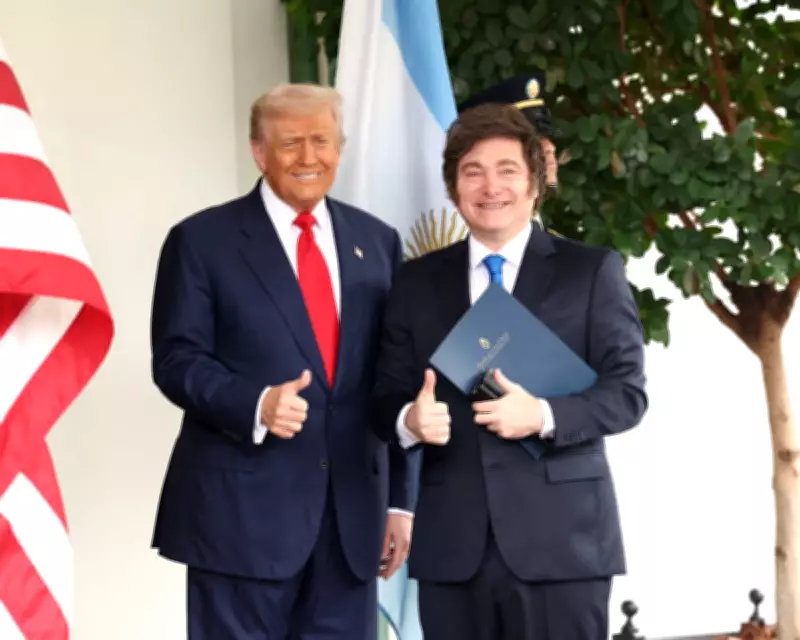
The summit's guest list features right-wing presidents from Argentina, Bolivia, El Salvador, and Paraguay, but notably excludes the leftist leaders of Brazil, Mexico, and Colombia—three of Latin America's largest economies. White House press secretary Karoline Leavitt stated that the invitation-only Shield of the Americas summit aims to "promote freedom, security, and prosperity in our region." However, experts like Brian Winter, editor-in-chief of Americas Quarterly, describe it as a gathering of "ideological fellow travellers Trump likes to take photos with," with no major breakthroughs expected on the agenda.
Security, migration, and issues related to Venezuela and Cuba are likely topics. Trump's Latin American allies, such as Paraguay's president Santiago Peña, have expressed enthusiasm for the meeting, highlighting its potential to strengthen cooperation. Chile's ultra-conservative president-elect, José Antonio Kast, and Ecuador's president, Daniel Noboa, will also attend, with Noboa recently promoting joint anti-drug operations with the US.
Criticism and Regional Reactions
Trump's strategy has sparked alarm and outrage in capitals like Brasília and Bogotá, where officials view actions like Maduro's capture and the pressure on Cuba as violations of international law. Brazil's left-wing president, Luiz Inácio Lula da Silva, criticized the US for causing hunger in Cuba by restricting access to resources. Despite this, many countries have tempered their protests, with even Colombia's outspoken president, Gustavo Petro, toning down anti-Trump rhetoric after a recent White House meeting.
Benjamin Gedan, director of the Stimson Center Latin America programme, argues that the summit's "ideological guest list" exposes the failure of Trump's "theatrical" doctrine, as it sidelines key regional players. He notes that Brazil and Mexico alone account for over half of Latin America's population and economic activity, with Colombia adding significant weight, yet all are excluded from US hemispheric policy discussions.
Future Implications
As Trump continues to push his "Don-roe Doctrine"—a revamp of the Monroe Doctrine aimed at reducing Beijing's influence—the summit highlights both the support and resistance within Latin America. While some leaders seek political benefits from aligning with Trump on security issues, others quietly diversify their relationships to reduce dependence on the US. The long-term impact of this strategy on regional stability and US-Latin American relations remains to be seen, but it underscores a pivotal moment in foreign policy under the current administration.