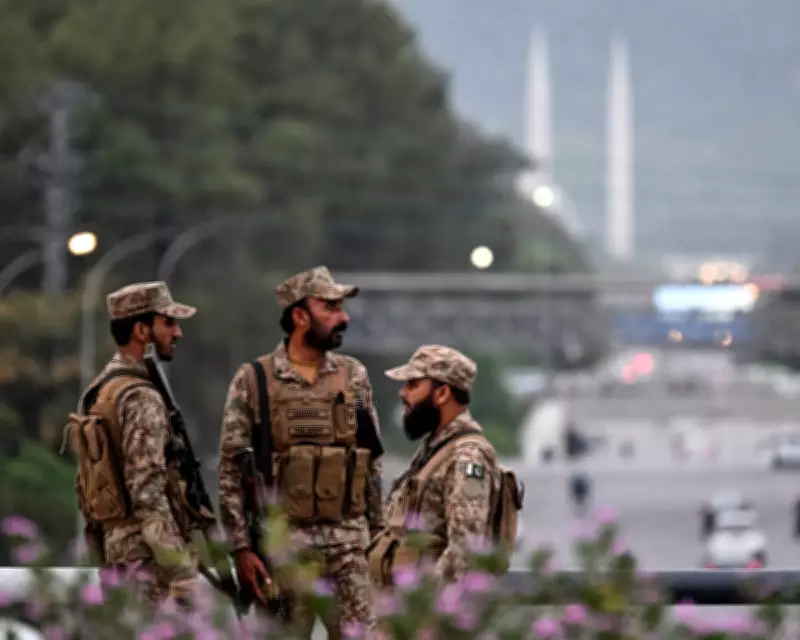
Donald Trump is sending his Middle East envoys Steve Witkoff and Jared Kushner to Pakistan to resume negotiations aimed at ending the war with Iran, which has lasted nearly eight weeks. The White House spokesperson Karoline Leavitt confirmed the travel on Friday, stating that Witkoff and Kushner would meet Iran's foreign minister, Abbas Araghchi, in Islamabad.
Leavitt expressed optimism about the talks, saying: "We're hopeful that it will be a productive conversation and hopefully move the ball forward to a deal." Araghchi had announced a tour of Pakistan, Russia, and Oman to explore a basis for reopening peace talks that could culminate in a permanent US-Israeli commitment to cease attacks on Iran, now a key demand from Tehran.
Vice President JD Vance, who led a US delegation to Islamabad in the previous round of talks, will not travel to Pakistan but will remain on standby in case of a breakthrough. "The president, the vice-president, the secretary of state, will be waiting here in the United States for updates," Leavitt said, adding that Vance would be "willing to dispatch to Pakistan if we feel it's a necessary use of his time." Mohammad Bagher Ghalibaf, the leader of the Iranian negotiating team in the first round, is not expected to attend at this stage.

Key Issues on the Table
Araghchi is also likely to discuss a potential permanent arrangement governing the Strait of Hormuz with Oman, which oversees the southern part of the strait. Iran had previously stated it would not restart talks until the US lifted its blockade of Iranian ports, while the US demanded verifiable assurances that Tehran would end its nuclear program and lift its own blockade of the strait.
In a new idea under consideration, Iran is considering parcelling out its 400kg stockpile of highly enriched uranium and agreeing to sequentially dilute the enrichment level of each parcel in return for the lifting of specific sanctions. Iran is also exploring the possibility of China acting as a guarantor for any agreement. When Araghchi visits Moscow, Russia is likely to revive its offer to take some of the stockpile, as it has done in the past.
Iranian foreign ministry spokesperson Esmail Baghaei stated on Iranian TV that the main subject of negotiations is no longer the nuclear issue but rather "ending the war in a way that secures the country's interests." He added: "We accept the ceasefire only if it is the first step to bringing the war to an end on all fronts. With respect to the country's demands, issues such as compensation, the Strait of Hormuz, lifting sanctions – all these issues are critical to the country's future." He stressed that commitments to non-aggression are required not just from the US but also from Israel, which has not been party to the talks. Trump has extended the ceasefire in Lebanon, a move that Israel resisted.
Blockade and Military Posture
At a Pentagon briefing, Defense Secretary Pete Hegseth said Trump had indicated the US "had all the time in the world and we are not anxious for a deal." He reported that 34 ships had been turned back as part of the US blockade of Iran's ports, and a second aircraft carrier would join the blockade next week. The blockade, he said, had gone global: "No one sails from the Strait of Hormuz to anywhere in the world without the permission of the United States navy." He accused Iran of acting like pirates with flags by trying to stop ships and laying mines. "If there's attempts, recklessly and irresponsibly, to lay more mines, we're going to deal with that. It's a violation of the ceasefire," he warned, adding that the US navy would shoot and kill anyone in boats laying mines, comparing it to targeting drug boats in the Caribbean.
Hegseth also criticized European countries for refusing to intervene militarily: "We're not pinning our hopes on Europe, but they need the Strait of Hormuz far more than we do. Maybe it's time for Europe to talk less and stop holding fancy conferences – perhaps they should just hop on a boat and come over. This is their fight more than ours."

Iran has so far attacked five ships and captured two in its effort to enforce the blockade. Hegseth acknowledged that some transit was occurring through the strait, albeit limited and risky. Dan Caine, chair of the joint chiefs of staff, said the US military was on standby to resume major combat operations as soon as Trump issues an order.
Regional Reactions
Anwar Gargash, the United Arab Emirates' diplomatic adviser, claimed Iran's "callous" behaviour toward Gulf states would take decades to restore trust and predicted more countries in the region would seek political communication with Israel, viewing Iran as the strategic threat. "Relations are bound to come back at some stage, but trust and confidence are different. Iran will be seen as the strategic threat for the region for many decades to come," he said. He also alleged political jockeying inside Iran between military and political wings, with no possibility of restoring the old cohesive political order.
The UAE, one of the Gulf states closest to Israel, has interests in driving Saudi Arabia toward closer relations with Israel amid Iranian attacks on Gulf states. Gargash predicted the deadlock in the Strait of Hormuz could last another two weeks but said it was in the interests of both Iran and the US to reopen talks. "The tug of wills in the strait will take some time, but cannot go on for ever," he concluded.