
Trump Announces 10-Day Ceasefire in Lebanon, Plans Historic Summit
In a significant development in the Middle East crisis, former US President Donald Trump has announced a 10-day ceasefire in Lebanon, which took effect at midnight on Thursday. This halt to seven weeks of intense fighting will be followed by a groundbreaking summit between Israeli and Lebanese leaders next week, marking the first such meeting in decades.
Ceasefire Details and Diplomatic Conversations
Trump revealed on social media that the truce was agreed upon after he held separate "excellent conversations" with Lebanon's President Joseph Aoun and Israeli Prime Minister Benjamin Netanyahu on Thursday. The ceasefire aims to bring progress toward a parallel peace agreement between the United States and Iran, though Trump provided few other specifics beyond the start time and duration.
Israeli Prime Minister Netanyahu described the ceasefire as an opportunity for a "historic peace agreement" with Lebanon but emphasized that the disarmament of Hezbollah remains a non-negotiable precondition. In a televised speech, Netanyahu stated that Israel would maintain a 10-kilometer (6.2-mile) "security zone" along the border in southern Lebanon to ensure safety.
Terms and Initial Reactions
According to the US State Department, the ceasefire terms prohibit Israel from offensive military actions in Lebanon but allow for "self-defense" against planned, imminent, or ongoing attacks. The Lebanese army has cautioned displaced residents about returning home due to intermittent shelling reported after the ceasefire began.
Hezbollah, the Iranian-backed militia at the center of the conflict, has indicated it will respect the truce as long as Israel remains committed to halting all hostilities. Hassan Fadlallah, a Hezbollah member of the Lebanese parliament, attributed the deal to "Iranian diplomatic efforts," highlighting Tehran's role in the negotiations.
Background and Escalation
The conflict spilled over into Lebanon when Hezbollah launched missile attacks on Israel on March 2 in solidarity with Iran, triggering a ferocious Israeli response that included a ground invasion into southern Lebanon. This escalation came 15 months after the last major conflict between the two sides.
Israel has declared its intention to occupy southern Lebanon up to the Litani River, approximately 18 miles from its border, and has continued fighting Hezbollah there in recent days. Lebanon is expected to demand the complete withdrawal of Israeli forces, a condition Israel has previously rejected.
Humanitarian Impact and Ongoing Violence
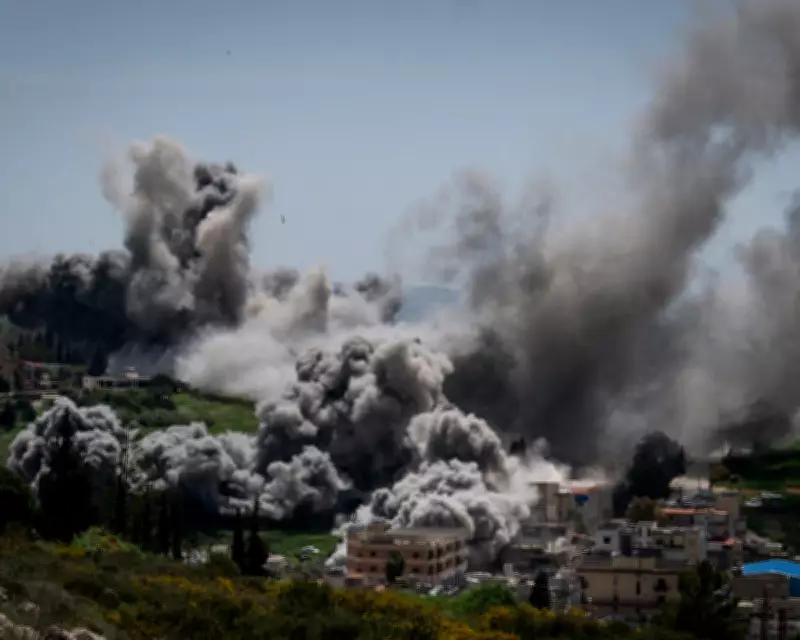
The humanitarian toll has been severe. In less than seven weeks, Israeli strikes in Lebanon have killed at least 2,196 people and wounded 7,185. On Thursday alone, Israeli bombing struck an ambulance in Tebnine, critically injuring two paramedics, and destroyed the last remaining bridge into Tyre, isolating about 30,000 residents.
Hezbollah has continued to fire rockets at northern Israel and target Israeli forces in southern Lebanon, underscoring the fragility of the ceasefire.
Link to US-Iran Peace Talks
The ceasefire is directly linked to parallel negotiations aimed at a US-Iranian peace agreement. A two-week Pakistani-brokered ceasefire in the broader conflict, which began with a US-Israeli attack on Iran on February 28, is set to expire on April 22. Initial peace talks broke down last weekend after 21 hours of negotiations in Islamabad.
Trump claimed that Iran has agreed to hand over its enriched uranium stockpile, describing it as "nuclear dust," and stated that the two sides are "close" to a deal. However, neither Iran nor intermediary countries have confirmed these assertions.
Military Posturing and Legal Concerns
US Defense Secretary Pete Hegseth warned Iran on Thursday that US forces are "locked and loaded" and ready to return to combat if negotiations fail. Hegseth reiterated Trump's threat to target Iran's energy industry, citing its "dual-use" nature, though legal experts like Yale professor Oona Hathaway caution that such attacks must meet strict criteria under international law to avoid war crimes.
Path Forward and Challenges
The paths to enduring peace in Lebanon and Iran remain fraught and interlinked. Success or failure in one arena could derail progress in the other. Key issues include the complete disarmament of Hezbollah—a challenge for Lebanon's under-equipped army—and Israel's withdrawal from Lebanese soil, which Israel insists is contingent on security guarantees.
As the ceasefire holds, all eyes will be on the planned Israeli-Lebanese summit in Washington next Tuesday, which could mark a pivotal moment in regional diplomacy.




