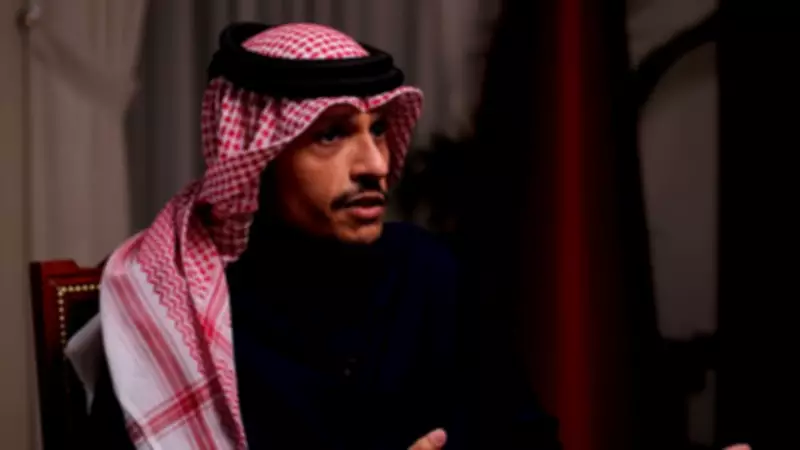
Qatar's Prime Minister Delivers Blunt Warning to Iran Over Gulf Strikes
In an exclusive interview with Sky News, Qatar's Prime Minister Sheikh Mohammed bin Abdulrahman al Thani issued a stark condemnation of Iran's recent military actions against Gulf countries, describing them as a "dangerous miscalculation" that has "destroyed everything." Speaking publicly for the first time since Qatar faced repeated missile and drone attacks, the prime minister emphasized that the escalation threatens both regional stability and the global economy.
A Profound Sense of Betrayal
Sheikh Mohammed expressed deep frustration and anger toward Iran, a nation with which Qatar has historically maintained diplomatic ties even during volatile periods. "It is a big sense of betrayal," he stated. "Just an hour after the start of the war, Qatar and other Gulf countries have been attacked. We made clear that we were not going to take part in any wars against our neighbours." He noted that Qatar has consistently sought to preserve good relations with Tehran, but firmly rejected Iran's justifications for the strikes.
Civilian Infrastructure Under Fire
The prime minister strongly refuted claims that Iran's attacks are solely targeting military objectives. He revealed that civilian facilities, including international airports, water utilities, and gas infrastructure, have been hit. "25% of the attacks are targeting civilian facilities. What has this got to do with the war? What do they want to achieve?" he questioned, underscoring the indiscriminate nature of the assaults.
Global Economic Stakes
Repeatedly highlighting the international ramifications, Sheikh Mohammed pointed out that Qatar supplies approximately 20% of the world's natural gas and is a major global fertilizer producer. Any sustained disruption to these critical sectors could severely impact global markets, food supplies, and populations worldwide. "What happens in the Gulf won't stay in the Gulf," he warned, stressing the interconnectedness of regional conflicts and global stability.
Call for Diplomatic De-escalation
Despite his strong condemnation, the prime minister consistently advocated for diplomatic solutions over military escalation. "We continue to seek de-escalation," he asserted. "They are our neighbours - it's our destiny." He called on all parties, including the United States, to reduce tensions and avoid dragging the entire region into a broader war. Sheikh Mohammed insisted that renewed negotiations represent the only viable path forward, even as he acknowledged the severe strain in Qatar's relationship with Tehran.
The Unwilling Front Lines
The prime minister's remarks underscore a perilous reality: Gulf states like Qatar, which have sought to remain neutral mediators, are increasingly being drawn into a conflict they did not choose. "A war that began between the US, Israel and Iran is now dragging in countries that want no part of it, but increasingly find themselves on its front lines," he observed. This dynamic poses a central danger, as nations committed to peace find themselves targeted and forced to respond.
Sheikh Mohammed praised the professionalism of Qatar's defense and security forces during what he termed "a very difficult period," but made clear that the responsibility to step back lies with all involved parties. His message blends firm condemnation with a persistent plea for dialogue, reflecting Qatar's dual role as a victim of aggression and a dedicated advocate for regional diplomacy.