Qatar's Prime Minister Delivers Blunt Message to Iran Amid Regional Conflict
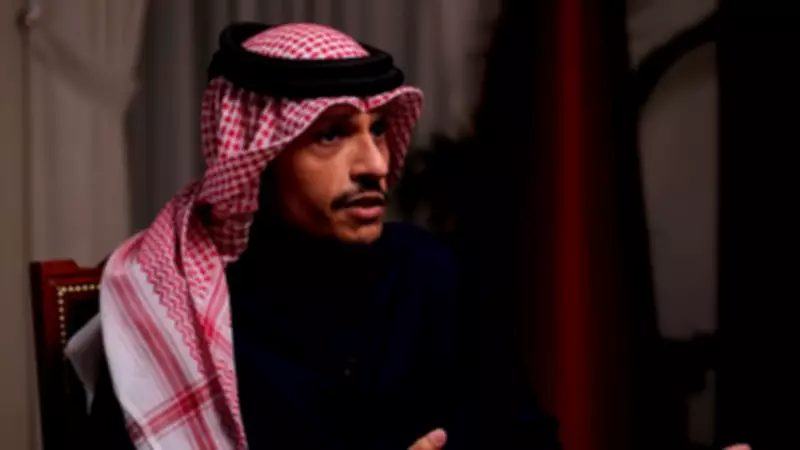
In an exclusive interview, Qatar's Prime Minister Sheikh Mohammed bin Abdulrahman Al Thani has issued a stark warning to Iran, describing its recent strikes on Gulf countries as a "dangerous miscalculation" that risks destabilizing the entire region and sending shockwaves through the global economy. The prime minister, speaking publicly for the first time since Qatar faced repeated missile and drone attacks, expressed profound anger and a sense of betrayal over Iran's actions.
A Profound Sense of Betrayal
"It is a big sense of betrayal," Sheikh Mohammed told Sky News. "Just an hour after the start of the war, Qatar and other Gulf countries have been attacked. We made clear that we were not going to take part in any wars against our neighbours." This sentiment marks a significant shift for Qatar, which has long maintained open diplomatic channels with Tehran, even during periods of high volatility. The country has traditionally positioned itself as a global mediator, capable of engaging with all parties, but that relationship now appears severely strained.
"All the attacks on the Gulf countries - we never expected this from our neighbour," he continued. "We have always tried to preserve a good relationship with Iran, but the justifications and pretexts they are using are completely rejected." The prime minister emphasized that Qatar has entered what he termed "a very difficult period," though he praised the professionalism of the nation's defence and security forces in responding to the threats.
Urgent Calls for De-escalation and Diplomacy
Despite his condemnation of Iran's strikes, Sheikh Mohammed repeatedly stressed that military escalation would only deepen the crisis. He asserted that the responsibility to step back lies with all sides involved. "We continue to seek de-escalation," he stated. "They are our neighbours - it's our destiny." His message was directed not only at Tehran but also at the United States, warning of the risk that the entire region could slide into a broader war if tensions are not reduced.
The prime minister argued that diplomacy remains the only viable path out of the current crisis. "The miscalculation by the Iranians to attack Gulf countries has destroyed everything," he said, but insisted that the answer now must be renewed negotiations. He pushed back against claims that Iran's strikes were aimed solely at military targets, noting that international airports, water utilities, and gas infrastructure have all been in Tehran's crosshairs.
"Twenty-five percent of the attacks are targeting civilian facilities. What has this got to do with the war? What do they want to achieve?" he questioned, highlighting the indiscriminate nature of the assaults.
Global Economic Stakes and Regional Implications
Sheikh Mohammed repeatedly underscored the global stakes of the conflict, warning that what happens in the Gulf will not stay in the Gulf. Qatar supplies approximately 20 percent of the world's natural gas and is one of the planet's largest fertiliser producers. Any sustained disruption to these critical resources would have far-reaching impacts on global markets, food supplies, and populations worldwide.
Even as Gulf states insist this is not their fight, they have become an integral aspect of it. The central danger of this moment, as highlighted by the prime minister, is that a war which began between the United States, Israel, and Iran is now dragging in countries that want no part of it, yet increasingly find themselves on its front lines. This dynamic threatens to escalate the conflict beyond its original parameters, with potentially catastrophic consequences for regional stability and international security.
The prime minister's dual message - condemning Iran's actions while advocating for diplomatic solutions - reflects Qatar's precarious position as both a victim of aggression and a potential mediator. His call for all sides to de-escalate serves as a urgent plea to prevent further violence and economic disruption, emphasizing that the path forward must be through dialogue and negotiation, not military confrontation.