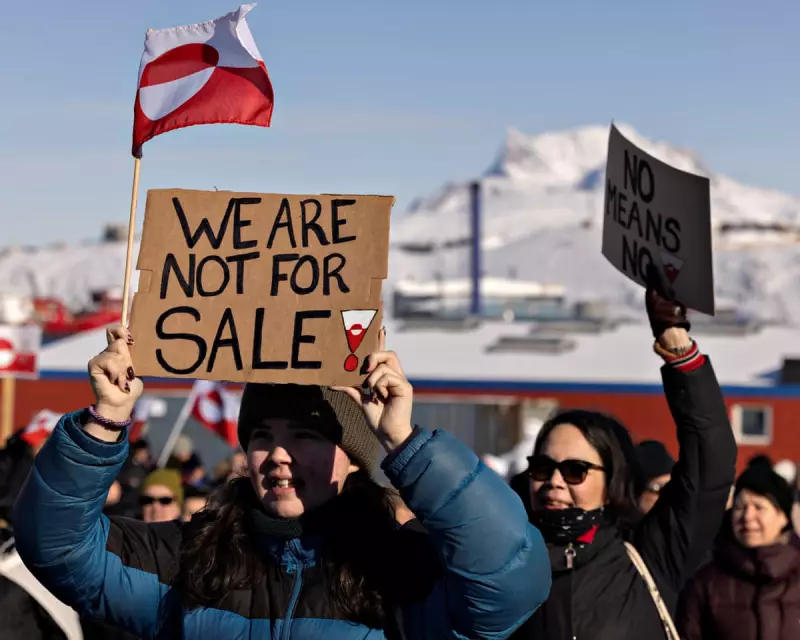
Anti-US protests have erupted in Nuuk, Greenland, following startling threats from former US President Donald Trump to potentially seize the vast Arctic territory. The demonstrations on 15 March 2025, captured in photographs by Christian Klindt Soelbeck for Reuters, underscore a profound geopolitical rupture. According to leading historian and commentator Timothy Garton Ash, this moment crystallises a stark reality: the liberal western order that defined the post-1945 era is now definitively history.
A World Without a Coherent West
The alarming prospect of a US administration threatening to take over Greenland – a territory of its NATO ally Denmark, possibly by force – while Russia continues its war in Ukraine marks a decisive shift. Garton Ash argues that even if an invasion never occurs, the threat itself heralds a new era of illiberal international disorder. The task for Europe and other liberal democracies is to confront this reality and devise a robust response.
Insights from a major global opinion poll, conducted in November 2024 for the European Council on Foreign Relations and the University of Oxford, provide crucial evidence. This fourth annual survey since Russia's 2022 invasion of Ukraine shows how the situation has deteriorated from "very bad then to critical now."
While a united transatlantic West condemned the invasion in 2022, other major powers like China, India, and Turkey continued business with Russia, creating a post-western world with a West still active within it. The prospect of a second Trump term has shattered even that. Garton Ash contends we now face a post-western world with no coherent geopolitical West. Trump's worldview, articulated by aide Stephen Miller as one governed by "strength... force... power," aligns more with Vladimir Putin than any post-war US president.
European Pessimism and a Wake-Up Call
The poll data reveals a stunning collapse in transatlantic trust. On average across ten EU nations surveyed, less than one in five continental Europeans now views the US as an ally. In Britain, the figure is just one in four, and in Ukraine, it has plummeted to 18%. While Europeans still see America as a "necessary partner," the allyship is gone. The rest of the world perceives this split too: a majority in China now sees American and European approaches as different, not part of a single West.
Garton Ash warns that the worst response would be to nostalgically invoke a lost "rules-based order" while appeasing Trump. Instead, Europe must pioneer a new, faster, and harder-edged internationalism. This means rejecting force but embracing power, seeking pragmatic issue-based partnerships beyond traditional alliances, and focusing on results over process—a direct challenge to the EU's often slow, rules-heavy institutional culture.
A Strategy for Greenland and Beyond
In practical terms, the response to the Greenland crisis must be guided by the elected governments of Greenland and Denmark, upholding the liberal democratic principle. Recent moves include Denmark and European NATO allies sending more troops to Greenland, and a high-level working group being established after meetings in Washington with Vice President JD Vance and Secretary of State Marco Rubio.
Garton Ash proposes several concrete actions. German Chancellor Friedrich Merz, French President Emmanuel Macron, British Prime Minister Keir Starmer, and Danish PM Mette Frederiksen should make a high-profile visit to Greenland, joined by Canadian PM Mark Carney. The visual message of solidarity is crucial for a US President whose "second language is television." The EU should also rapidly increase its financial support for Greenland, not waiting until the 2028 budget, and begin strategic talks on a future close relationship with a potentially independent Greenland.
Privately, Europe—as the US's largest economic partner—should review its range of economic responses, including the sale of US Treasury bonds, in the unlikely event of a military takeover. The outlines of such contingency plans could be discreetly conveyed to the White House.
The overarching need is for Europe, Canada, and other democracies to project quiet strength and resolve. The poll's most depressing finding, Garton Ash notes, is that Europeans lead the world in pessimism, with nearly half doubting the EU can deal equally with the US and China. By practising this new, pragmatic internationalism, perhaps Europeans can begin to believe in Europe once more.