Displaced Families Celebrate Ceasefire Amid Lebanon's Devastation
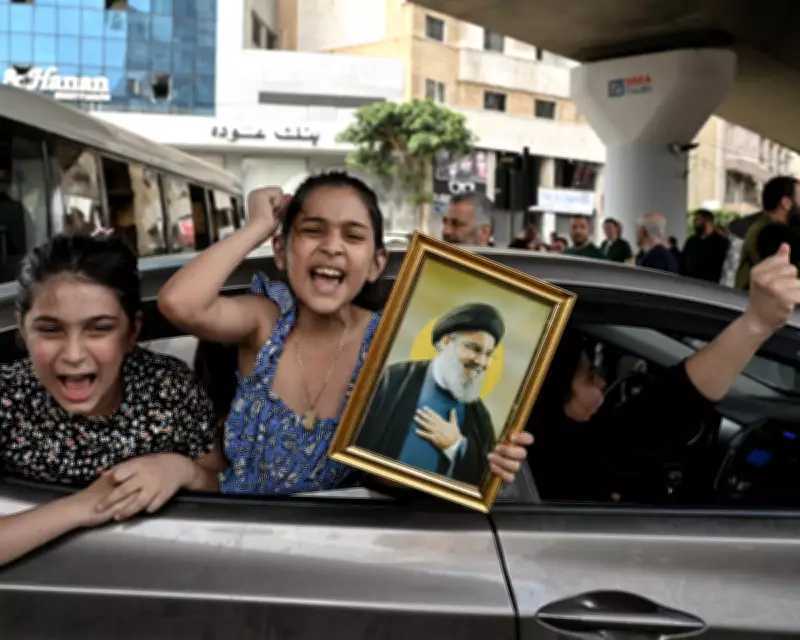
A displaced family in Beirut celebrated the ceasefire on Friday, offering a moment of relief in a conflict that has claimed more than 2,000 lives in Lebanon during Israel's offensive. The temporary halt in fighting, however, masks underlying tensions that threaten to reignite violence at any moment.
Trump's Announcement and the Fragile Truce
Donald Trump claimed to have ended his 10th war with the Lebanon ceasefire, but stability on the ground remains elusive. Israeli troops maintained positions deep in Lebanese territory, firing artillery shells and machine gun bursts at residents who approached too closely hours after the ceasefire began. Hezbollah, while pledging to respect the truce, warned that its fighters' fingers "remained on the triggers."
The 10-day ceasefire provides only a temporary pause in hostilities. The agreement's text fails to address fundamental issues that sparked the conflict between Hezbollah and Israel, including Hezbollah's arsenal and Israel's occupation of southern Lebanon. Without significant shifts in both parties' positions, fighting could easily resume.

Historical Context and Negotiation Challenges
The ceasefire aims to create space for direct negotiations between Lebanese and Israeli governments—a notable achievement given their lack of diplomatic relations for decades. According to the deal, talks will pursue "lasting peace" where Lebanon maintains exclusive control over force within its territory and establishes formal border demarcation, contested since 2000.
To achieve these goals, Hezbollah's weapons status must be resolved, and Israeli forces must withdraw from Lebanese territory. Hezbollah has appointed Iran as its steward in broader US-Iran talks while urging the Lebanese government to avoid direct negotiations with Israel. The Lebanese government proceeds with diplomacy without Hezbollah's mandate, raising doubts about its ability to enforce terms without external support.
Human Cost and Domestic Divisions
Hezbollah's base, which endured the war's brunt, feels increasingly alienated from the Lebanese government, viewing it as ineffective against Israeli aggression. Many saw Lebanon's flag beside Israel's in Washington as a humiliating capitulation, especially while Israeli jets continued bombing.
Residents returning to southern villages found homes destroyed and Israeli soldiers nearby. Nearly 2,200 people have been killed by Israel over the past month, including women, children, and elderly, with no accountability for these deaths. This devastation strengthens arguments among Hezbollah supporters for retaining weapons, while others see negotiations as the only viable path forward.
Political Pressures and International Dynamics
Domestically, the situation remains fraught. Unlike previous agreements, stalling on Hezbollah's disarmament is no longer an option, and decisions must be made in a more challenging context. In Israel, the ceasefire announcement angered many northern residents who wanted the conflict to eliminate Hezbollah's threat permanently. A poll by Israel's Channel 12 found nearly 80% of respondents favored continued strikes on the armed group.
Israeli officials, while boasting of military victories, implied that war could resume if Lebanon fails to meet demands. Defence Minister Israel Katz stated, "The ground manoeuvre into Lebanon and the attack on Hezbollah throughout Lebanon have achieved many achievements but are still not complete; the goal we defined: disarming Hezbollah by military or diplomatic means, was and remains the goal of the campaign to which we are committed."
Trump's Role and Future Prospects
Trump took a less cavalier stance, declaring Israel "prohibited" from further bombing Lebanon while announcing a deal with Iran over enriched uranium. This contrasted with Prime Minister Benjamin Netanyahu's assertion that Israel had not "finished the job" of dismantling Hezbollah. Whether Trump maintains focus on Lebanon and pressures Israel to refrain from aggression remains uncertain.

The ceasefire, imposed from above, now depends on Washington and Tehran for progress toward lasting peace, even as negotiators from Beirut and Tel Aviv engage. Sustained international attention on Lebanon-Israel talks is crucial; otherwise, the war may resume, undoing the fragile peace celebrated by displaced families.