End of an Era: Khamenei's Death Marks Iran's Berlin Wall Moment
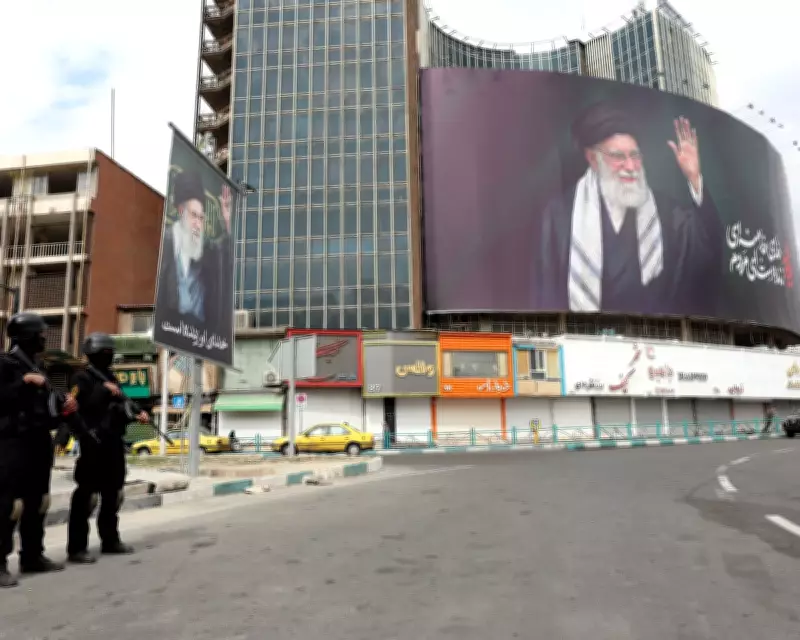
The sudden and violent death of Ayatollah Ali Khamenei, Iran's supreme leader for thirty-seven consecutive years, has created what regional experts describe as a transformative Berlin Wall moment for the Islamic Republic. Khamenei, aged eighty-six, was killed alongside his wife in an Israeli missile strike on his supposedly secure Tehran compound last Saturday, removing the country's most powerful figure at a time of unprecedented external pressure and internal unrest.
A Power Vacuum of Historic Proportions
Khamenei sat atop Iran's Islamic power structure since 1989, nearly a decade longer than the Berlin Wall stood dividing Europe. As the senior religious authority in Iran's system of velayat-e faqih—rule by Islamic jurisprudence established after the 1979 revolution—he maintained final say on all critical state matters. These included nuclear negotiations with the United States, recognition of Israel, women's dress codes, and demands for liberalizing social reforms, toward which he consistently demonstrated intransigence.
"I think the death of Khamenei is close to a Berlin Wall moment, in the sense that it marks the end of an era," said Abbas Milani, director of Iranian studies at Stanford University. "The psychological effect is absolutely profound." Milani, author of numerous books on Iran, argues that despite some analysts claiming the Islamic Republic could survive leadership change as more than a personalized dictatorship, Khamenei's rule was indeed highly personalized.
Succession Struggles Amid Violent Conditions
The regime faces immense challenges in filling the political vacuum created by Khamenei's sudden removal. Although a succession plan exists and is already underway—with Khamenei's son Mojtaba emerging as a frontrunner—the violent circumstances complicate everything. "What's the Mike Tyson quote about plans? Everyone has a plan until they get punched in the face," noted Naysan Rafati, senior Iran analyst with the International Crisis Group.
Rafati emphasized that leadership transition would have been difficult under any circumstances but is occurring amid the most violent conditions imaginable, with potential targeting of anyone announced as successor or serving on the transition council. The regime has shown multiple signs of strain under this pressure.
Regime Strain and Security Measures
Authorities have postponed Khamenei's funeral, normally a major propaganda event, fearing US and Israeli forces might target senior officials in attendance. Similarly, the Assembly of Experts—the eighty-eight-member clerical body charged with electing a new leader—met remotely this week rather than at its Qom headquarters, which was bombed on Tuesday.
Within the penal system, authorities have intensified pressure on political prisoners while freeing other inmates on bail amid reports of prison bombardments. Prisoners from ward 209, a high-security section for political inmates in Tehran's notorious Evin prison, have reportedly been dispersed to other locations as a precaution.
Security forces have responded to celebrations at news of Khamenei's death by firing live rounds at homes where anti-regime slogans were shouted. Meanwhile, members of the hardline Basij militia have reportedly been cruising residential neighborhoods blaring pro-regime slogans in attempts to intimidate opponents and sustain morale.
Questioning Regime Survival
Some analysts question whether the regime can retain power while clinging to its previous principles without Khamenei's unyielding presence. Milani argues that Khamenei's intransigence, dogmatism, and ordering of mass murder against protesters made it impossible for any iteration of the regime to survive. "The velayat-e faqih system is completely dead regardless of who replaces Khamenei," he stated.
However, Alex Vatanka, Iran programme director at the Middle East Institute in Washington, suggests the Islamic Revolutionary Guard Corps (IRGC)—empowered by Khamenei with control over vast economic segments—could redeem itself. This might involve easing domestic repression to placate a population still angry over recent protest crackdowns, while simultaneously invoking nationalist and Shia martyrdom narratives to defend against US and Israeli assailants.
Fear Dissipates as Apparatus Weakens
Milani contends that regime elements no longer possess sufficient means or power of intimidation to maintain control through fear alone. "You need an apparatus of oppression," he explained. "They don't have enough people willing to kill for them. And you need a frightened population. In Iran, fear has dissipated. When fear dissipates, authoritarian regimes cannot survive."
The death of Ayatollah Ali Khamenei after nearly four decades of absolute authority represents not merely a leadership change but potentially a watershed moment for Iran. With nationwide demonstrations already signaling popular discontent and external conflicts intensifying, the regime faces its most severe crisis since the 1979 revolution, struggling to manage succession while maintaining control over a population whose fear has notably diminished.