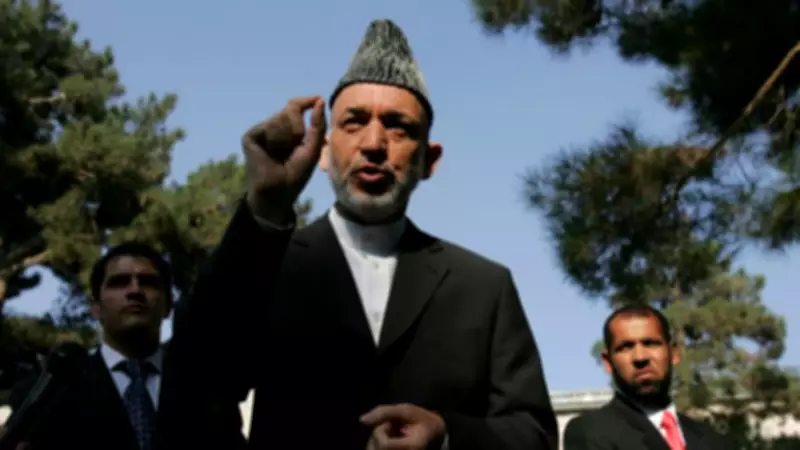
Former Afghan Leader Accuses Pakistan of Deliberate Destabilization
In a stark condemnation of escalating regional tensions, former Afghan President Hamid Karzai has publicly accused the Pakistani government of intentionally seeking to "create anarchy and weakness" within Afghanistan. Speaking exclusively to Sky News presenter Yalda Hakim, Karzai articulated a grave perspective on the motivations behind recent military actions by Islamabad.
Condemnation of Hospital Bombing and Escalating Conflict
The interview followed a significant intensification of hostilities that began in late February 2026, when Pakistan initiated a series of airstrikes into Afghan territory. Pakistani authorities maintain these operations target militant strongholds. However, the conflict reached a tragic peak this week when a missile struck a hospital facility in Afghanistan dedicated to treating drug addicts. Afghan officials report this single attack resulted in approximately 400 fatalities.
Karzai, who served as Afghanistan's president from 2002 to 2014 following the Taliban's initial ouster, described hearing the "horrific sound" of the explosion firsthand. He recounted his residence shaking violently and the surrounding area becoming engulfed in smoke and dust. He labeled the hospital strike an "extremely unfortunate event" in the long and troubled history between the two neighboring nations.
A Pattern of Destructive Relations
Karzai's critique extended beyond the immediate violence to a broader historical pattern. "The government of Pakistan has not been able to live with any Afghan government," he asserted, referencing various political regimes from monarchies to republics. He revealed that during his own presidency, he made twenty diplomatic visits to Pakistan in a persistent, yet ultimately unsuccessful, effort to forge a more constructive bilateral relationship.
He expressed deep frustration that Pakistan's current leadership appears to be repeating what he sees as a longstanding strategy to undermine Afghan sovereignty. "The unfortunate fact is that the government of Pakistan does not wish to have a sensible, reasonable, civilised relationship with Afghanistan," Karzai stated. "They rely on creating anarchy and weakness and a downtrodden Afghanistan these years, in their interest, which is terribly wrong."
Humanitarian Crisis and Conflicting Narratives
The human cost of the conflict is mounting rapidly. United Nations estimates indicate the violence has already displaced over 100,000 people, creating a severe humanitarian crisis. Karzai issued a direct plea to Pakistani leadership, urging them to adopt a more "civilised way" of engagement. "Please stop the approaches that did not work in the past for decades and it may not work into the future," he advised.
Pakistan's official stance starkly contradicts the Afghan narrative. Military spokespersons have insisted their strikes were "precisely targeted" at militant installations, including technical equipment and ammunition storage sites used by the Afghan Taliban and other groups. They claim these facilities were being utilized to launch attacks against innocent Pakistani civilians. Furthermore, Pakistani officials have dismissed reports of the hospital strike as "false and misleading," alleging such claims are propaganda intended to obscure what they describe as Kabul's "illegitimate support for cross-border terrorism."
The exchange highlights a profound and dangerous rift, with Karzai's accusations painting a picture of a regional power deliberately fostering instability, while Pakistan frames its actions as necessary counter-terrorism measures. The former president concluded with a note of cautious hope, expressing his desire that Pakistan would "change their minds and look for a more stable and civilised relationship with Afghanistan."