Iran's Unwavering Position in Post-War Negotiations with the United States
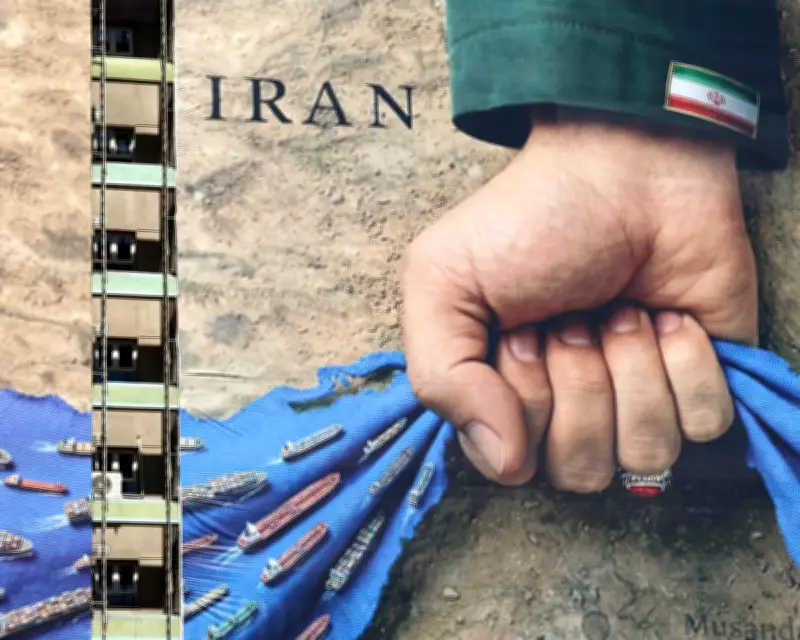
A massive billboard in Tehran prominently displays the strategic Strait of Hormuz with the defiant slogan "Forever in Iran's hand", captured on April 15, 2026. This powerful visual statement underscores the fundamental challenge facing Washington: Iran perceives no compelling reason to compromise on its core strategic advantages. The United States has failed to achieve its objectives through military pressure, and Tehran now senses its position strengthening across multiple fronts.
The Diplomatic Stalemate and Divergent Perspectives
Iran's delegation arrived for the first round of post-ceasefire talks in Islamabad aboard a plane named Minab 168, commemorating the young schoolgirls killed in early US bombings. This symbolic gesture framed the negotiations as an extension of a conflict where Iran believes it has already absorbed immense costs without surrendering its fundamental advantages. With the ceasefire set to expire and no diplomatic breakthrough in sight, the risk of renewed hostilities is escalating dramatically.
From Tehran's perspective, military pressure has failed to break their strategic position. Their primary leverage remains intact through:
- Substantial stockpiles of enriched uranium
- The ability to disrupt the vital Strait of Hormuz with global economic consequences
- A demonstrated capacity to absorb sustained US and Israeli strikes while continuing regional operations
This stands in stark contrast to Washington's assumptions that pressure would accelerate Iranian concessions. Instead, Iran appears willing to patiently maintain its core advantages while pursuing a broader strategic settlement that links its development to regional and global economic stability.
The Fundamental Mismatch in Strategic Thinking
The divergence reflects deeper differences in how each side understands the conflict's trajectory. US policymakers focus on what combination of military and economic tools can compel movement on far-reaching demands including nuclear program curbs, missile capability limitations, and regional alliance restrictions. Iranian decision-makers, however, question whether meeting these demands would require trading away what they consider fundamental security pillars.
This concern has only intensified following the war. Iran's ability to disrupt Hormuz shipping, alongside its nuclear threshold capability, missile systems, and regional alliance network, are increasingly viewed in Tehran not as negotiable assets but as foundational sources of power and security. In this perspective, US sanctions relief remains reversible, while relinquishing strategic leverage risks inviting further pressure and escalation.
Negotiation Dynamics and Escalating Tensions
Kian Abdollahi, editor-in-chief of the Tasnim news agency affiliated with the Islamic Revolutionary Guard Corps, framed Iran's interpretation of the US approach in uncompromising terms. "When we can go and fight a war with Iran and make it surrender, what need is there to negotiate?" he questioned, arguing that any agreement inherently contains recognition of the Islamic Republic that Washington sought to avoid through military means.
Recent signals from Washington have reinforced Iranian assessments. Following the unsuccessful first round of talks in Islamabad, Donald Trump emphasized his uncompromising position: "I don't want 90%, I don't want 95%. I want everything." Despite this, Iranian delegation members describe entering negotiations from a position of perceived strength, believing the war failed to produce Washington's anticipated decisive shift.
Majid Shakeri, an adviser to parliamentary speaker Mohammad Bagher Ghalibaf who led the Iranian delegation, characterized the Islamabad talks as primarily evaluative, with each side testing the other rather than moving toward immediate compromise. He identified a core problem on the US side: the delegation lacked clear goals and decision-making authority, while the Iranian side claims it had full negotiating power.
The Blockade Paradox and Strategic Calculations
Following the talks, Trump escalated tensions by announcing a naval blockade of Iran's ports. Tehran responded by partially reopening the Strait of Hormuz, consistent with its position linking access to broader regional ceasefire arrangements. When Washington refused to lift its blockade, Iran quickly reversed course, reclosing the strategic waterway.
On the blockade issue, Tehran appears confident it can outlast the pressure. Iranian analysts point to oil sales from floating storage, substantial onshore storage capacity, and alternative routes developed over years. More significantly, the blockade creates a strategic paradox for the United States: to counter Iran's disruption of Hormuz shipping, Washington is now targeting Iranian oil, thereby tightening global markets and reinforcing the very dynamic that underpins Iran's leverage.
From Tehran's perspective, this move reinforces doubts about whether Washington genuinely seeks negotiated compromise or is simply escalating due to limited options. Iranian officials believe their position will strengthen over time as the global economic fallout from energy disruption makes renewed escalation increasingly costly for all parties.
The Path Forward: Management Rather Than Resolution
Having endured what they view as an existential conflict with the United States and Israel, Iranian officials see little reason to rush into major concessions. Their priority focuses on reducing war risks while preserving core sources of power, from Hormuz control to nuclear capabilities. In the immediate term, this may mean simply extending the ceasefire rather than reaching substantive agreement.
The likelier outcome appears to be an interim arrangement or broad memorandum-of-understanding framework that defers key details, rather than a decisive breakthrough. In this view, the conflict is being managed rather than resolved, with Iran believing its position will strengthen as global economic consequences make renewed escalation increasingly untenable. The broader objective, crystallized through the war experience, remains achieving lasting integration into regional and global systems based on demonstrated strategic indispensability.