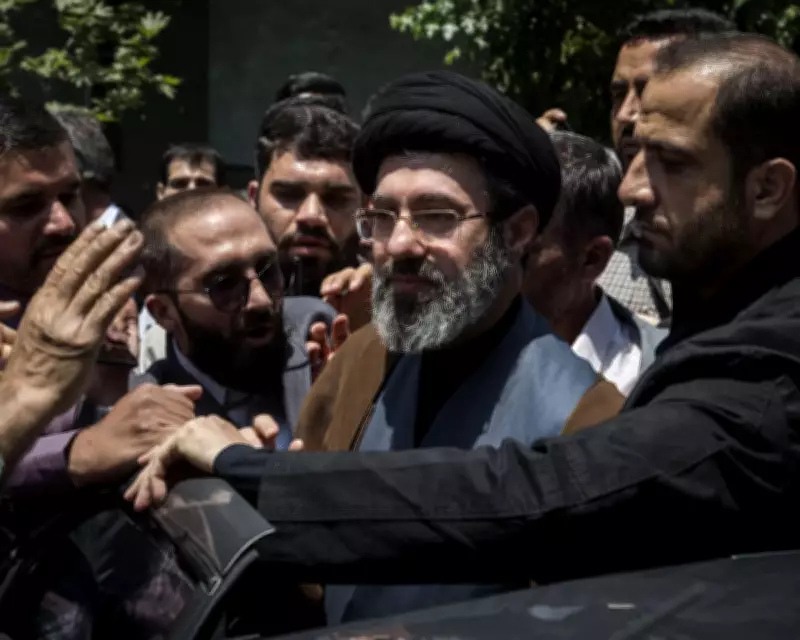
Iran's Assembly of Experts Reportedly Chooses Khamenei's Son as Next Supreme Leader
The Assembly of Experts of Iran has reportedly settled on Mojtaba Khamenei, the son of Ayatollah Ali Khamenei, as the country's next supreme leader, according to claims from his supporters. This significant development comes as Iran faces intense regional conflicts and internal political disputes, with the formal announcement delayed due to disagreements over voting procedures.
Voting Procedures and Internal Disputes
Supporters of Mojtaba Khamenei assert that the vote has already been cast and will be announced soon. Hosseinali Eshkevari, a member of the council responsible for electing the new leader, stated emphatically, "The name of Khamenei will continue." However, the announcement faces potential delays if the assembly decides that an in-person meeting is not required for the vote. In such a scenario, the secretariat could simply declare that a consensus had been reached.
Former President Hassan Rouhani hinted at possible postponement, suggesting that any announcement should "come at an appropriate time that doesn't harm the public focus on the sacred defence." This reflects the delicate balance between political transitions and ongoing military engagements.
International Reactions and Regional Tensions
The anticipated appointment of Mojtaba Khamenei is likely to face strong rejection from former U.S. President Donald Trump, who has previously labeled him as "unacceptable." Trump has insisted on playing a decisive role in the selection process, while Israel has issued threats against both the next supreme leader and those involved in his selection.
Iran is currently embroiled in what it describes as an existential war of self-defence, with the country reeling from U.S.-Israeli attacks and virtually at war with its Gulf neighbours. The situation has created complex dynamics within Iran's leadership structure.
Wartime Leadership Concerns
Some forces within Iran express concern that handing power during wartime to a relative novice could prove disruptive. These voices advocate for leaving defence efforts in the hands of experienced figures like Ali Larijani, the highly experienced secretary of the supreme national security council, and the armed forces.
Mojtaba Khamenei, who served as deputy chief of staff for his assassinated father, possesses intimate knowledge of the supreme leader's office inner workings. His supporters present him as a rejuvenated version of his father, capable of navigating the current crisis.
Gulf Relations and Diplomatic Challenges
Iran is currently governed by a temporary tripartite leadership council that includes President Masoud Pezeshkian. On Saturday, Pezeshkian made what many considered a botched effort to reset relations with Gulf states by apologizing for Iran's attacks on their territory. He announced that strikes would end if Gulf states prevented attacks on Iran from being mounted from their countries.
Pezeshkian's comments followed Russian mediation and initially expected positive responses from at least two Gulf states. However, immediate internal opposition and continued attacks prevented any diplomatic breakthrough. Trump's subsequent characterization of Pezeshkian's move as a "humiliating surrender" further undermined the president's position.
Military Stance and Regional Dynamics
Iranian Foreign Minister Abbas Araghchi defended the apology, noting that in Iranian culture, saying sorry represents "a sign of dignity and strength." However, Pezeshkian's statement was immediately countermanded by the Iranian army, which regards U.S. bases in the Gulf as legitimate targets in what they view as an existential war.
Ali Larijani clarified Iran's position in a television interview, stating, "We have told our neighbours and we repeat: If a base is to be provided to the Americans from your soil to attack Iran from there, it is our undisputed right to respond to those bases. We have said this clearly and we are not lying."
Larijani further pressured Gulf states to consider the role of U.S. bases, particularly if they believe Israel represents the chief source of regional insecurity with U.S. sponsorship. He asserted, "It makes no sense for a country to declare its friendship with us, but at the same time its base is in the hands of the enemy to attack Iran."
Regional Diplomacy and Arab League Concerns
Despite rising anger over Iran's military actions, most Gulf governments have not yet backed a counteroffensive that would align them with the U.S. and Israel. Iran has admitted that 60% of its missiles and drones have targeted Gulf states, compared to 40% directed at Israel.
Foreign ministers from the Arab League met recently to discuss their options, with one Western diplomat noting, "Their patience is running out. The attractiveness of their economies and reputations for stability are being trashed."
The United Arab Emirates government described Iranian attacks as "brutal and unprovoked," claiming more than 1,400 ballistic missiles and drones had targeted its infrastructure. They stated these attacks constitute "a flagrant violation of international law and the UN charter."
Broader Strategic Considerations
Amr Moussa, former secretary general of the Arab League, warned about broader strategic implications, stating, "The ongoing attack on Iran is not just an Israeli adventure into which Netanyahu succeeded in dragging the United States, but a planned strategic American move."
Military sources indicate that attacks on U.S. assets in the Gulf would be widened in response to U.S. assaults on Iranian oil refineries and fuel depots. Iran has responded by reducing maximum daily petrol consumption while maintaining stable supplies.
Western diplomats report no letup in Iran's ability to mount drone and missile attacks, warning that the scale of military assets being deployed in the region suggests the U.S. does not intend to make an early unilateral declaration of victory.
As Iran navigates these complex challenges, the potential succession of Mojtaba Khamenei represents a critical juncture for the country's future direction amid unprecedented regional tensions and internal political calculations.