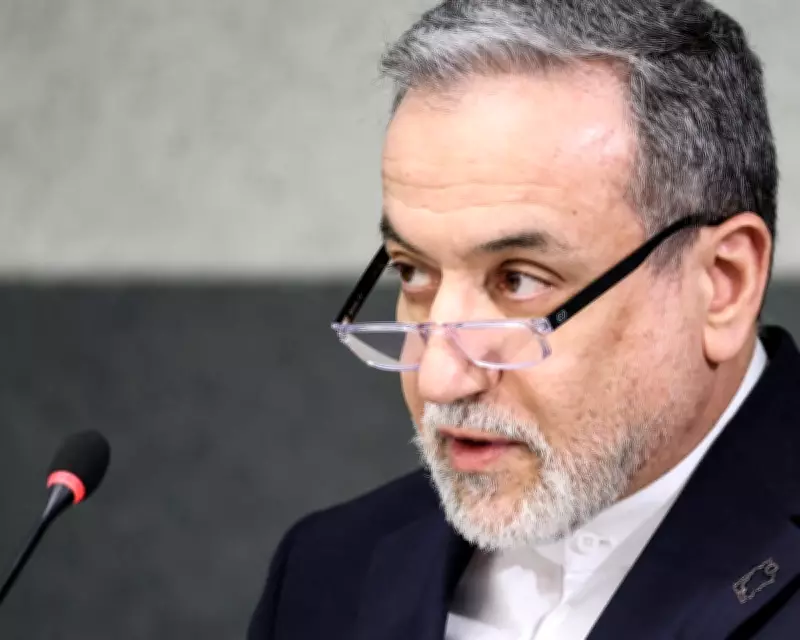
Iran's Defiant Stance: No Ceasefire Without Guarantees Against Future US Attacks
Iran's foreign minister, Abbas Araghchi, has publicly suggested that even if the United States were to cease its military assaults on Iran, Tehran might opt to prolong the conflict in some capacity. This bold declaration underscores a significant shift in the Iranian regime's posture, moving from a focus on mere survival to a stance of calculated defiance. The statement comes as Iran spurns multiple ceasefire overtures from Donald Trump's special envoy, Steve Witkoff, reflecting Tehran's growing confidence that it is not losing the war and that political pressures are mounting on the US president.
Iran's Conditions for Peace: A Permanent Deal and No Repeat Attacks
Iranian officials have made it clear that any resolution to the ongoing hostilities must include ironclad guarantees from the United States that aggressive actions will not be repeated. Kazem Gharibabadi, the deputy foreign minister, emphasized this point, stating, "If a ceasefire is to be established or the war stopped, there must be a guarantee that aggressive actions against Iran will not be repeated. Otherwise, if another attack occurs after a few months, such a ceasefire would be meaningless." This demand highlights Iran's insistence on a permanent agreement, potentially including the conditional lifting of US economic sanctions, rather than a temporary halt in fighting.
The regime's defiance is particularly striking given that, just eleven days ago, it was primarily concerned with its own survival. Now, Iranian leaders are exploring diplomatic avenues, engaging with numerous countries offering mediation, to determine whether the conflict can simply stop as it did in June last year or must conclude with a formal pact. However, the prevailing sentiment among Iranian regime figures is one of resilience; they believe they will survive and should not seek any agreement at this juncture.
Strategic Control and Diplomatic Pressures
Iran has also asserted its strategic dominance in key regions, notably the Strait of Hormuz. The Islamic Revolutionary Guards Corps (IRGC) has declared that no vessels associated with aggressors against Iran will be permitted to pass through this critical waterway, which carries nearly 20% of the world's crude oil and about 20% of liquefied natural gas. The IRGC warned, "If you have doubts, come closer and find out," while indicating that ships from countries expelling US and Israeli ambassadors might be allowed passage. This move aims to leverage Iran's geopolitical influence amid the conflict.
Diplomatically, Iran faces intense pressure at the United Nations Security Council, where over 80 nations are expected to sponsor a Bahrain-sponsored resolution condemning Iran for its attacks on Gulf States, without criticizing the US or Israel. Russia may introduce a separate motion calling for a ceasefire. Despite this, Iranian officials remain unwavering. Mohammed Ghalibaf, the speaker of the parliament, posted on social media, "We are absolutely NOT seeking a ceasefire. Let the enemy know that whatever they do, there will certainly be a proportionate and immediate retaliation. We are fighting eye for eye, tooth for tooth, without compromise or exception."
Internal and External Perceptions of the Conflict
Within Iran, the conflict has reportedly shifted public opinion. Alex Vatanka, a senior fellow at the Middle East Institute, noted that Israeli attacks on energy infrastructure, which sent clouds of black smoke through Tehran, have alienated Iranian citizens, transforming the perception from a war against the regime to a war on Iran itself. This shift could bolster the regime's legitimacy domestically, as it positions itself as a defender of the nation.
Conversely, Emile Hokayem from the International Institute for Strategic Studies pointed out Iran's self-inflicted challenges, including resource shortages due to lost export capabilities and regional trade disruptions. The closure of the Strait of Hormuz, driven by Iran's own threats, exacerbates these issues, with the United Arab Emirates considering freezing Iranian assets.
As Donald Trump rehearsed arguments for declaring victory, citing damage to Iran's ballistic missile launchers and nuclear program, he ultimately refrained from asserting a complete US triumph. This ambiguity leaves the conflict in a stalemate, with Iran demanding guarantees and the US weighing further military options, such as securing Iran's nuclear stockpile. The situation remains fluid, with both sides entrenched in their positions and no immediate resolution in sight.