The United States has moved to launch the second phase of its Gaza peace initiative, an ambitious but deeply uncertain framework aimed at steering the region from conflict towards a fragile stability. American envoy Steve Witkoff announced the move on Wednesday 14 January 2026, ushering in the new phase before the initial ceasefire had formally concluded.
A New Administrative Framework for Gaza
The blueprint for phase two hinges on the creation of three distinct administrative bodies. The first will be a Palestinian-led administration, tasked with the day-to-day governance of Gaza. This body will be staffed by technocrats and led by Ali Shaath, an urban planning expert raised in Gaza and educated in Belfast.
A second layer will be an executive committee, which will include Steve Witkoff himself, former White House adviser Jared Kushner, and other American and Israeli officials. Notably, some of these figures were previously involved with the contentious Gaza Humanitarian Foundation, an aid distribution mechanism criticised for being both inefficient and dangerous.
At the apex will sit the so-called Board of Peace, to be chaired by US President Donald Trump. While its full membership remains undisclosed, invitations have been extended to global leaders including UK Prime Minister Keir Starmer and Italy's Giorgia Meloni. President Trump has expressed strong confidence in the board's potential power, though other leaders appear more cautious about committing without clearer details.
The Towering Challenges of Disarmament and Withdrawal
The plan's implementation faces monumental and immediate obstacles. Central to the agreement is the stipulated disarmament of Hamas. This raises a host of unresolved questions: does this mean all weapons or just heavy armaments? Who defines what constitutes Hamas? Furthermore, who will be responsible for verifying and overseeing this process?
Intricately linked is the promised withdrawal of Israeli forces from Gaza. Analysts suggest there is frankly no chance of a full Israeli pullout while Hamas remains armed, and possibly not while the group exists in any form. Consequently, Israel is expected to continue occupying roughly half of the Gaza Strip's territory, reserving the right to target individuals it deems an immediate threat. Notably, over 400 people have been killed in Gaza since the nominal ceasefire began.
The Daunting Task of Reconstruction
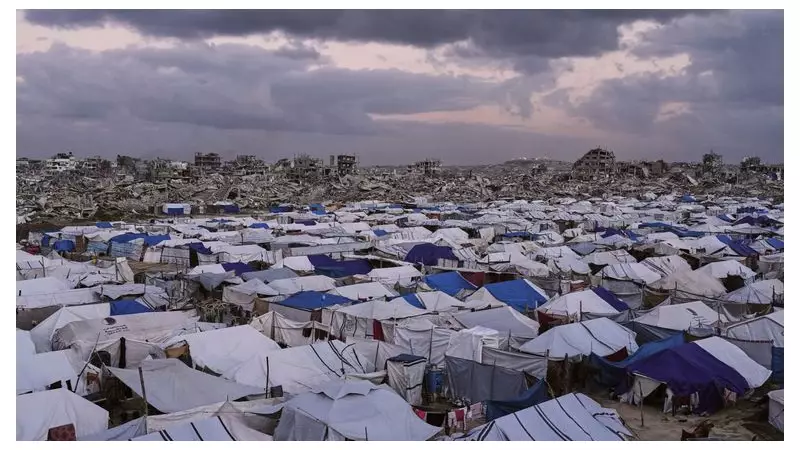
Beyond security, the plan confronts the colossal humanitarian and infrastructural crisis in Gaza. More than two million people currently live in tents or the ruins of buildings, largely without basic sanitation, power, or clean water. A massive reconstruction effort is required to rebuild homes, roads, schools, and hospitals.
It remains unclear whether this rebuilding, overseen by Ali Shaath's administration, can proceed in earnest. A key uncertainty is whether Israel will block construction projects until Hamas disarms. The response of the international community, and specifically President Trump, to such a potential stalemate is unknown—whether he would push for action, tolerate deadlock, or consider further military intervention.
While phase two of the Gaza peace plan has been presented with firm pledges, in reality it functions more as a blend of aspirations, ambitions, and opening negotiating positions. The process ahead will be complicated, protracted and unpredictable. What it will not be is easy.