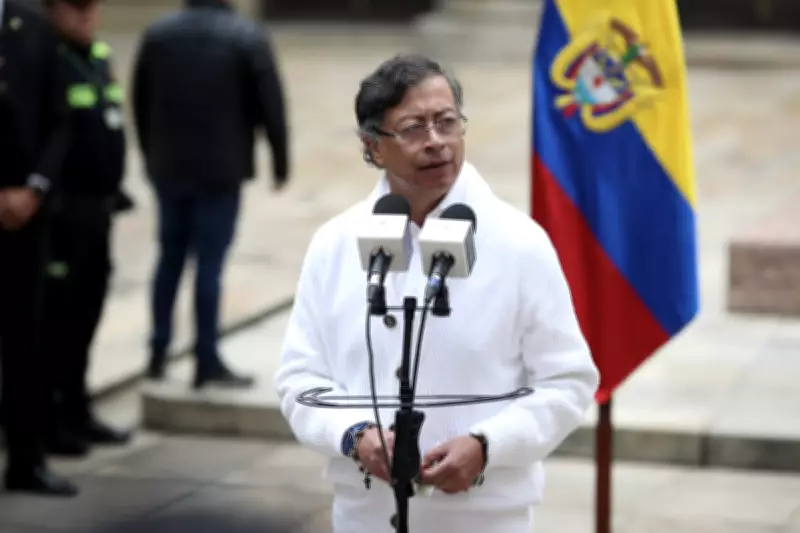
In a shocking development that has sent shockwaves across the continent, the Colombian President's recent state visit to Ecuador took a grim turn with the discovery of multiple mass graves containing dozens of bodies. This incident, which unfolded during what was intended to be a routine diplomatic engagement, has escalated into a full-blown regional crisis, raising urgent questions about security, human rights, and cross-border cooperation in South America.
Unearthing a Humanitarian Catastrophe
The discovery occurred as part of a joint security operation between Colombian and Ecuadorian authorities, initiated during the President's visit to address ongoing bilateral issues. Preliminary reports indicate that the graves, located in a remote area near the Ecuador-Colombia border, hold the remains of at least 50 individuals, with forensic teams working around the clock to identify the victims and determine the causes of death. The scale of the find has overwhelmed local resources, prompting calls for international assistance from organizations such as the United Nations and the Red Cross.
Diplomatic Fallout and Regional Tensions
This gruesome discovery has immediately strained diplomatic relations between Colombia and Ecuador, two nations with a history of complex ties. The Colombian President has publicly demanded a thorough investigation, emphasizing the need for transparency and accountability, while Ecuadorian officials have pledged cooperation but face mounting pressure over security lapses. The incident has also drawn attention from neighboring countries, with leaders in Peru, Brazil, and Venezuela expressing concern and offering support, highlighting the broader implications for regional stability in South America.
Implications for Cross-Border Security
The mass graves are believed to be linked to illicit activities, possibly involving drug trafficking, organized crime, or paramilitary groups operating in the border region. This revelation underscores the persistent challenges of cross-border security in South America, where porous frontiers often facilitate criminal enterprises. Experts warn that without enhanced coordination and intelligence-sharing between nations, such tragedies may recur, jeopardizing not only bilateral relations but also the safety and well-being of local communities.
As investigations proceed, the focus has shifted to humanitarian efforts, with families of missing persons anxiously awaiting news. The Colombian President's visit, initially aimed at fostering cooperation, has now become a pivotal moment in South American diplomacy, forcing a reckoning with the dark undercurrents of violence and corruption that plague the region. The coming weeks will be critical in determining how Colombia, Ecuador, and their allies respond to this crisis, with potential long-term effects on policy, security frameworks, and international partnerships.