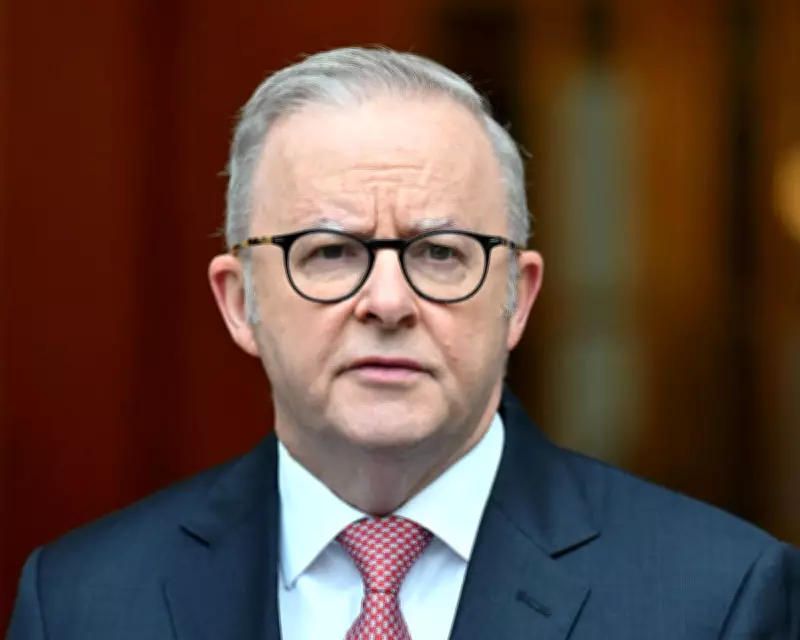
Albanese Breaks Protocol to Send Message to Trump Administration
In a significant departure from his typically reserved approach, Australian Prime Minister Anthony Albanese has broken his usual silence regarding former US President Donald Trump, delivering a public message directly to the Oval Office. This unprecedented move comes as the strategic alliance between Australia and the United States faces severe strain amid the ongoing US-Israeli military conflict in Iran.
Economic Fallout Hits Australian Households and Businesses
Three weeks into what analysts describe as a "war of choice" in Iran, the Albanese government is rapidly revising budget forecasts and warning of substantial economic pain extending through 2029. Treasury modeling indicates that a prolonged conflict could deliver a 0.6% hit to Australia's GDP by 2027, translating to approximately $16.5 billion in economic losses.
Inflation could surge as high as 5% this year, while Treasurer Jim Chalmers has extended the timeline for reviving sluggish productivity from two to five years. The economic pressure is already manifesting through growing fuel shortages that threaten to disrupt agricultural and transport sectors, with the competition watchdog investigating over 500 reports of potential price-gouging since hostilities began.
Trump's Alliance Disregard Reaches Critical Point
The relationship deterioration became unmistakably clear when Trump publicly criticized NATO members, Japan, South Korea, and Australia for refusing to deploy naval vessels to unblock the strategic Strait of Hormuz. In a social media post, the former president declared: "We no longer 'need' or desire, the NATO Countries' assistance – WE NEVER DID! Likewise, Japan, Australia, or South Korea."
Coalition frontbencher Andrew Hastie characterized Trump's comments as "petulant" digs from a leader under immense pressure, telling ABC radio: "I just don't think that's how you treat allies. I think it's a reflection on his character more than us."
Albanese's Calculated Diplomatic Intervention
Breaking with his customary reticence, Prime Minister Albanese used a radio interview to urge both the United States and Israel to conclude hostilities, arguing that the original justifications for military action—including degrading Tehran's nuclear program and curbing missile capabilities—had already been achieved.
"It was a moment of candour," observed political analysts, noting that Albanese demonstrated understanding of Trump's psychological need to perceive himself as a winner. The prime minister suggested that domestic American opposition to the war, combined with international criticism, would be weighing heavily on the former president's ego.
Strategic Risks Extend Beyond Economics
The economic consequences represent only part of the danger for Australia. This week, an Iranian projectile struck near Australia's headquarters at the Al Minhad airbase in the United Arab Emirates, damaging accommodation facilities and medical infrastructure. Any Australian defence personnel becoming directly involved in combat operations would create significant political challenges for a government that initially endorsed Trump and Israeli Prime Minister Benjamin Netanyahu's bombing campaign.
Despite growing discomfort among some Labor MPs about Australia's alignment with Trump's foreign policy, internal criticism remains muted. Meanwhile, outgoing defence chief Greg Moriarty faces a challenging transition as Australia's new ambassador to Washington, replacing Kevin Rudd effective April 1.
Long-Term Implications for Australian Politics
The cheerful atmosphere at Thursday night's farewell dinner for Moriarty in Canberra—where public service chiefs gathered despite lightning and heavy rain—contrasted sharply with the difficult diplomatic landscape awaiting Australia's new envoy. How effectively the Albanese government manages this increasingly unreliable friendship could substantially reshape domestic Australian politics in coming years.
As fuel shortages prompt service station closures in major cities and the government injects approximately 520 million litres of extra petrol and diesel into the system, the economic and diplomatic fallout from the Iran conflict continues to escalate. With Trump facing challenging midterm congressional elections in November and control of both House and Senate potentially in play, the geopolitical stakes have never been higher for Australian foreign policy.