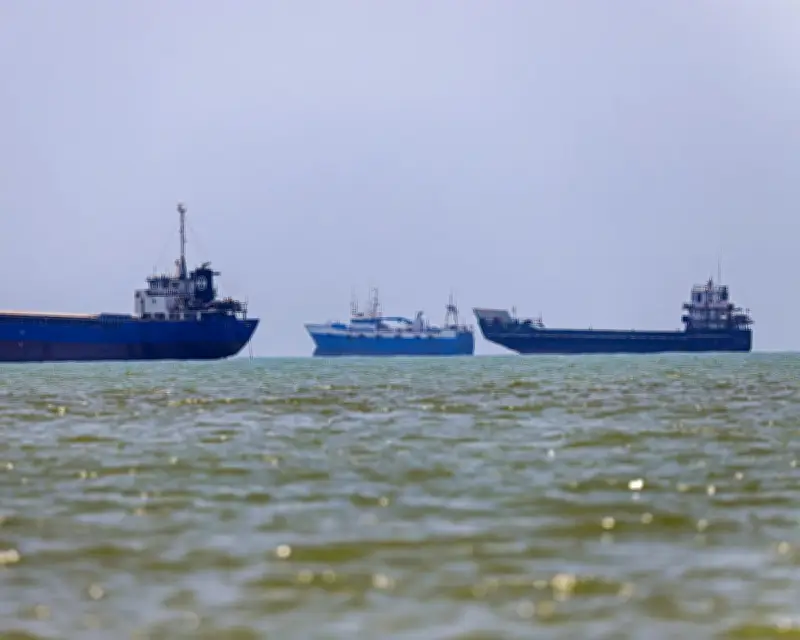
The United States and Iran each asserted Monday they controlled the Strait of Hormuz after a weekend of attacks across the wider Middle East, further threatening any diplomacy to end the war. The attacks were sparked by Iran striking a container ship in the strait off the coast of Oman.
US military strikes and claims
The US military's Centcom described its forces as hitting dozens of sites in strikes Monday, including air defense systems, radar sites, missile and drone equipment, and small boats. "The Strait of Hormuz is a vital maritime corridor for global trade," Central Command said. "Iran does not control it." The US military early Sunday said it hit some 140 targets, including missile and drone launch sites, ammunition dumps, communication equipment, and other sites — a far heavier set of attacks than in two previous rounds of strikes in the last week.
"We bombed the hell out of them last night," U.S. President Donald Trump told NBC's "Meet the Press."
Iran's retaliation and demands
Iran retaliated by attacking nations in the region hosting US military forces, while insisting it alone must control the strait and potentially charge vessels for traveling through it. Iranian attacks on Sunday stretched to Bahrain, Kuwait, Qatar, Jordan, and even Oman — whose territorial waters with Iran make up the strait. Oman, which long has been an interlocutor between Tehran and the West, summoned an Iranian diplomat to criticize the attack.
"The era of one-sided deals is OVER," Mohammad Bagher Qalibaf, the speaker of Iran's parliament and a main negotiator, wrote. "We told you: keep your word or pay the price. Reality is knocking."
Diplomatic efforts and risks
Iran and the US are nearly at the midway point of the 60-day period of an interim deal that was supposed to set up talks for a permanent end to the war. Instead, it has devolved into a series of attacks over the strait and its future. President Donald Trump suggested last week that the interim deal in the war was "over." But mediators, including Pakistan, Qatar, and Egypt, have continued efforts to reach a final agreement to end the war.
"A return to full-scale hostilities would have catastrophic consequences," United Nations Secretary-General António Guterres said in a statement.