Trump's Decades-Long Obsession with Iranian Oil Exposed
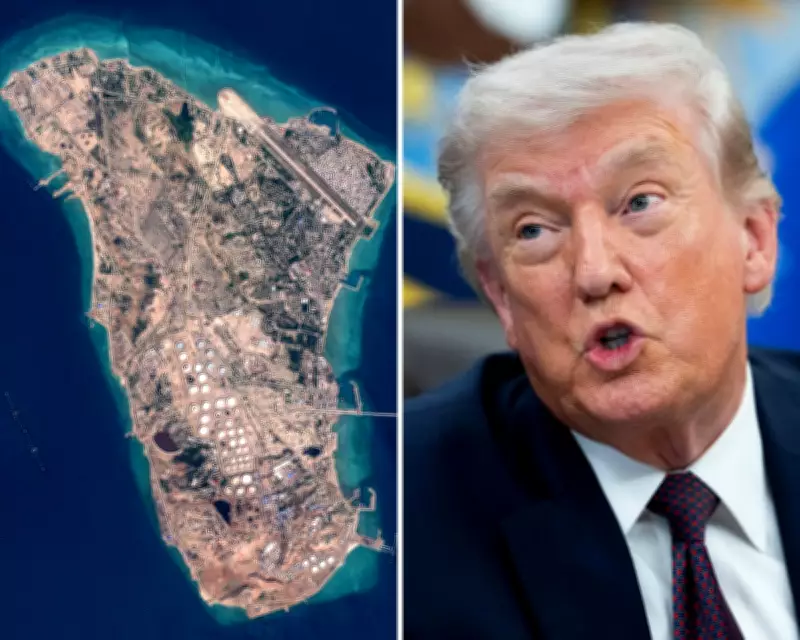
Donald Trump's recent statements about wanting to "take the oil in Iran" by seizing control of the strategic Kharg Island export hub represent more than just campaign rhetoric. According to experts, they reveal a deeply ingrained belief in "fossil-fuel imperialism" that the former president has maintained for over three decades.
'Might-Makes-Right' Logic and International Law Violations
"Trump truly believes that the US is entitled to whatever resource it so desires," said Patrick Bigger, co-director of the Transition Security Project, a research initiative focused on climate and geopolitical concerns of militarization. "It's a real 'might-makes-right' logic that is both abhorrent and spectacularly miscalculated."
Energy lawyer Amir Handjani, a resident fellow at the Quincy Institute for Responsible Statecraft, emphasized the legal implications: "There is no legal framework for going to war to take the natural resources of sovereign countries. There is no rubric under international law and under the rules of war that allow for that."
A Pattern of Resource Ambition Across Multiple Countries
Trump's interest in seizing Iranian oil infrastructure dates back to at least 1988, when he told the Guardian's Polly Toynbee during a UK visit to promote his book The Art of the Deal that if he ever became president, he would be "harsh on Iran" and would "go in and take" Kharg Island.
This pattern extends beyond Iran. During his first presidential campaign, Trump repeatedly suggested the Bush administration should have seized Iraq's oil to "reimburse" itself for war costs. Upon entering the White House, he laid out similar approaches for Syria's oil resources, suggesting Exxon Mobil could lead takeover efforts. Late last year, as he intensified his campaign against Venezuelan president Nicolás Maduro, he suggested oil seized from the country could be treated as a US asset.
The Strategic Challenge of Kharg Island
Kharg Island represents a particularly challenging target - this five-mile strip handles approximately 90% of Iran's oil exports. Actually taking over the island or launching a full-scale attack would present significant military obstacles, particularly since Iranian missiles have rendered US bases in the region inoperable.
"Marines would probably have to parachute into the region to enter, and upon doing so would be in the line of heavy fire," explained Handjani. "And because the move would also invite massive retaliation from Iran, it could easily destabilize the global economy."
Global Economic Consequences and Fossil Fuel Profits
The potential consequences of such action could be catastrophic for global markets. Handjani warned that in a scenario where Iran retaliated against Arab countries' oil facilities in response to a Kharg Island seizure, oil prices could "easily go to $200 or $300 a barrel" as huge volumes of global oil and gas are taken offline for years.
Meanwhile, the current conflict has already created windfall profits for fossil fuel companies, many of which furnished Trump with record campaign donations. "The longer that oil prices stay elevated, the more the oil majors stand to benefit," said Bigger. "And we're already seeing that [the war] is being used as justification to open up more US drilling."
Environmental Implications and 'Saying the Quiet Part Out Loud'
This expanded extraction threatens to lock the world into using more planet-warming fuel, making the transition away from oil and gas increasingly difficult. According to Bigger, Trump appears to have "no real concern with the future" when it comes to environmental consequences.
Instead, Trump's statements underscore what experts describe as "fossil-fuel imperialism." While the US has long been accused of projecting military force to secure strategically useful resources, Trump is now "saying the quiet part out loud," according to Bigger.
"He believes fossil fuels are a linchpin of his domestic industrial strategy, and that whoever controls the oil controls the world," Bigger concluded. "And he believes in using extremely hostile tools to blow up the international order to get what he wants."
The escalating conflict has already killed thousands while creating the largest-ever disruption to global energy supplies. As Trump prepares to provide an update on the Iran war, experts warn that his decades-long ambition to seize foreign oil resources represents not just a violation of international law, but a fundamental threat to global economic stability and environmental progress.