Trump's NATO Withdrawal Threat Creates Unprecedented Alliance Crisis
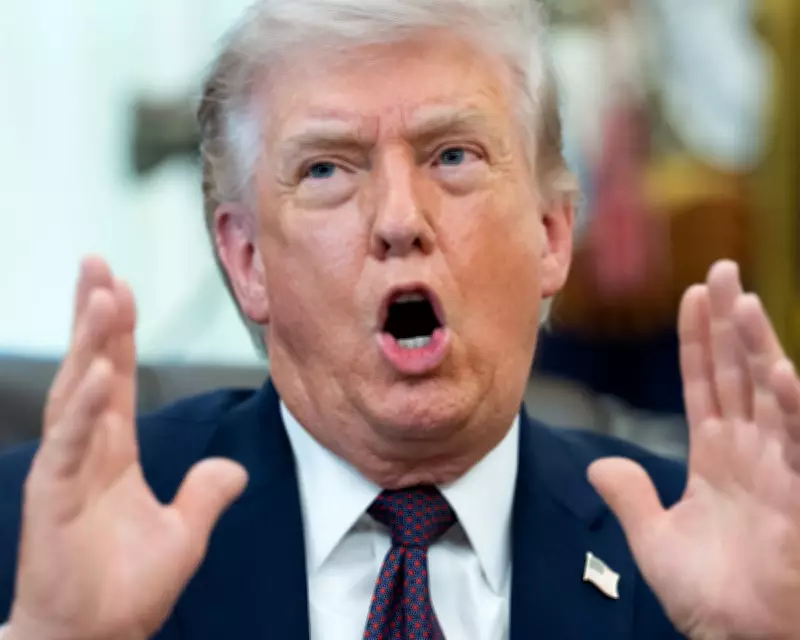
President Donald Trump has declared he is "absolutely" considering withdrawing the United States from the North Atlantic Treaty Organization, marking his most determined threat yet against the military alliance. The president's escalated rhetoric comes directly after NATO allies refused to participate in the month-long US-Israeli assault on Iran, which began on February 28th without prior consultation with alliance members.
"Beyond Reconsideration": Trump's Determined Stance
In interviews with both Reuters and The Telegraph, Trump emphasized that his position on NATO withdrawal was "beyond reconsideration" and insisted he had never been "swayed by NATO." The president signaled he would express his "disgust" for the alliance during a scheduled national address. This represents a significant escalation from Trump's longstanding vocal skepticism about NATO's benefits to the United States.
Ivo Daalder, the US permanent representative to NATO from 2009 to 2013, described the situation as "by far the worst crisis NATO has ever confronted." Daalder explained in an online commentary that military alliances fundamentally depend on trust—the confidence that members will defend each other when attacked. "It's hard to see how any European country will now be able and willing to trust the United States to come to its defence," he wrote.
Iran War Context and European Resistance
The current crisis stems from Trump's decision to launch military action against Iran in partnership with Israeli Prime Minister Benjamin Netanyahu, without consulting NATO allies. Notably, Trump did not invoke Article 5 of the NATO treaty, which triggers collective defense when a member is attacked in Europe or North America—no such attack had occurred.
More than a month into the conflict, Tehran's response—closing the economically vital Strait of Hormuz—has caused oil prices to surge and created worldwide shortages of fertilizer and other essential goods, threatening global recession. Trump has alternated between claiming a negotiated end is imminent and threatening a ground assault while demanding allies help reopen the strait.
European allies have uniformly resisted participation, with some declaring the US-Israeli attack illegal and several withholding overflight rights and base access. Trump has responded by denouncing European capitals as "cowards," particularly targeting the United Kingdom with remarks about its naval capabilities.
Constitutional and Political Hurdles to Withdrawal
While withdrawing from the 1949 Washington Treaty that established NATO would be politically and constitutionally difficult, experts warn the damage to alliance trust may already be irreparable. The 2024 National Defense Authorization Act prohibits a US president from unilaterally withdrawing from NATO without two-thirds Senate approval or an act of Congress—a provision co-sponsored by Secretary of State Marco Rubio, who previously supported the alliance as a senator.
Democratic Senator Mark Warner emphasized congressional resistance, stating: "Congress will not sit by while this president tries to unravel an alliance that has kept Americans safe for decades. Our commitment to NATO is ironclad." Any formal withdrawal attempt would likely trigger a constitutional crisis reaching the Supreme Court, though the court historically sides with the executive on foreign policy matters.
European Responses and Alliance Future
UK Prime Minister Keir Starmer has dismissed Trump's criticism as "noise," maintaining that "NATO is the single most effective military alliance the world has ever seen" while reiterating that the Iran conflict "is not our war." In response to previous Trump criticism, European allies have increased defense spending and attempted to maintain US support for Ukraine against Russia.
NATO Secretary General Mark Rutte has adopted a conciliatory approach, even expressing support for the Iran war despite opposition from nearly all other alliance members—a strategy Daalder criticized as counterproductive to maintaining unity.
Experts warn that even if Trump doesn't formally withdraw, he can undermine NATO through legal means: withdrawing troops, removing US personnel from NATO command structures, and failing to respond to attacks on allies. Ruth Deyermond of King's College London's War Studies Department noted that the crisis won't simply end with Trump's presidency, stating: "The failure to understand the importance of the alliance for US security isn't unique to the Trump administration."
Deyermond concluded that Europeans and Canada must develop a new security framework, describing the task as "frightening, difficult, and expensive, but that doesn't make it less necessary or urgent." Meanwhile, Starmer signaled plans to strengthen UK-EU economic and security ties, calling for "a partnership for the dangerous world that we must navigate together."