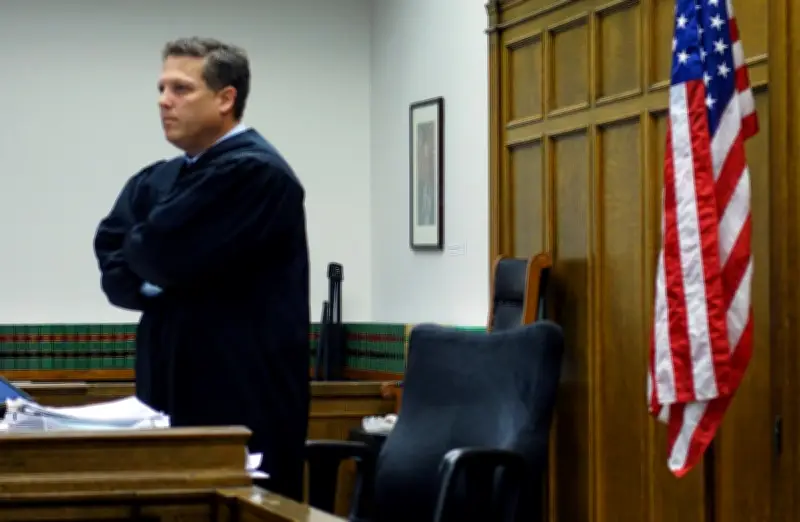
Donald Trump fired the new top federal prosecutor in Seattle on Wednesday less than an hour after the attorney was unanimously appointed by federal judges in the district, highlighting tensions between the courts and the president over the powerful positions.
Rogoff's Brief Tenure
Roger Rogoff, a former judge and veteran state and federal prosecutor, was sworn in as US attorney before 8am at the US courthouse in downtown Seattle. In a phone interview, he said he then went to the US attorney's office and asked to meet with Charles Neil Floyd, whose 120-day interim term in the position ended in February. As he waited in a lobby, Rogoff said he received an email from the Trump administration informing him he had been removed from the position. He is consulting with other lawyers about suing over his firing.
Legal and Political Context
Presidents normally appoint US attorneys, the top federal prosecutors in each judicial district. The positions require Senate confirmation, except in temporary appointments. When temporary appointments expire before a nominee is confirmed, the judges in a judicial district can name a US attorney. But under Trump, the justice department has sought to leave unconfirmed prosecutors in their positions indefinitely, often through novel personnel maneuvers.
“District court judges can appoint a temporary US attorney, and [the president] can fire them,” the acting US attorney general, Todd Blanche, said in a social media post on Wednesday. He added that the judges who appointed Rogoff “abandoned the time-honored process of consultation with the administration so that the selected US attorney is qualified to serve in the administration.”
Trump named Floyd, who previously served as an immigration judge, interim US attorney last October but never forwarded his nomination to the Senate. When Floyd's time as interim US attorney expired, Trump simply shifted his title, a tactic the administration has also tried in other federal judicial districts: he named him first assistant US attorney, while the top post was left empty. In May, a US appeals court panel expressed skepticism that the maneuver was legal. The federal judges in the city decided to take applications for the position, and they appointed a bipartisan panel to review the applications.
Court Appointment and Reactions
On Wednesday morning the court – comprising 17 active and senior judges appointed by five presidents – issued its unanimous order naming Rogoff the US attorney for western Washington. Patty Murray, a US senator from Washington who had opposed Floyd for the US attorney job, blasted Rogoff's quick firing. “Throughout his career, he has demonstrated an outstanding commitment to public service, and he was appointed legally by the federal judges in the western district of Washington,” the senator said in a written statement. “This administration doesn't want to deal with advice and consent – they just want to install cronies to carry out a corrupt political agenda.”
Pattern of Firings
In December, Alina Habba resigned as the top federal prosecutor for New Jersey after an appeals court said she had been serving in the post unlawfully. Lindsey Halligan, who pursued indictments against a pair of Trump's adversaries, left her position as an acting US attorney in Virginia after a judge concluded her appointment was unlawful and that indictments she brought against the New York attorney general, Letitia James, and the former FBI director James Comey must be dismissed. The judges there named James Hundley, who had handled criminal and civil cases for more than 30 years, as US attorney, but the Trump administration fired him. It also fired a court-appointed US attorney in northern New York.
Rogoff's Perspective
Rogoff, who spent 20 years as a state prosecutor and six as a federal prosecutor before becoming a state judge, said he knew the administration might fire him immediately. But he said he had no qualms about the potential conflict he was walking into. Being US attorney is “the best job there is” for a prosecutor, he said. “I'm really proud of my career,” Rogoff said. “The fact that the judges of this district – most of whom I've spent my career appearing in front of, or trying cases against, or working with – believed that I was the right person to do this work is just really humbling and amazing.”