Trump's NATO Withdrawal Threat: Analyzing the Potential Geopolitical Earthquake
Donald Trump's escalating rhetoric about withdrawing the United States from the North Atlantic Treaty Organization (NATO) represents what could become the most significant shift in western security architecture since the alliance's founding in 1949. The former president's recent statements indicate he is seriously considering this unprecedented move, which would fundamentally alter global power dynamics and potentially embolden adversaries like Russia.
The Historical Foundation of NATO
Established in the aftermath of World War II with twelve founding members including the United States, Britain, France, Canada, and Denmark, NATO has expanded to include thirty-two nations. The alliance was created as a bulwark against Soviet communism expansion while recognizing that the absence of collective security had failed to deter Nazi Germany's territorial ambitions in the 1930s. Article 5 of the NATO charter enshrines the principle of collective defense, defining an attack on one member as an attack on all.
Trump's Mounting Criticism and Rationale
Trump's immediate frustration stems from NATO's refusal to support the United States in its conflict with Iran, though nothing in the alliance's charter obligates members to participate in offensive actions not preceded by an attack on a member state. Beyond this specific grievance, Trump has consistently criticized NATO members for what he perceives as inadequate defense spending, famously calling the alliance "obsolete" in 2017 and accusing European countries of "ripping off" the United States.
More recently, Trump has escalated his rhetoric, referring to NATO as "a paper tiger" and suggesting withdrawal is "beyond reconsideration." He has threatened to tell Russia to do "whatever the hell they want" to European countries that fail to meet his defense spending demands, creating significant alarm among alliance members.
NATO's Strategic Importance and Current Relevance
Contrary to Trump's characterization, NATO has demonstrated significant strategic value in recent conflicts. The alliance's support for Ukraine through military assistance from both American and European members has played a crucial role in bogging down Russia's invasion, now entering its fifth year. This support effectively deters Russia from attacking actual NATO members like Poland, Lithuania, Latvia, and Estonia.
Historically, NATO took military action in 1999 to prevent ethnic cleansing in Kosovo, demonstrating its willingness to intervene in humanitarian crises. Russian President Vladimir Putin has openly expressed his desire to break up NATO or decouple it from the United States, recognizing that a weakened alliance would leave eastern European neighbors vulnerable to future aggression.
The United States' Critical Role in NATO
The American contribution to NATO extends far beyond financial support. The United States provides:
- A nuclear umbrella with an arsenal vastly larger than those of Britain and France combined
- Numerous military bases and installations throughout Europe, particularly concentrated in Germany
- Key strategic assets like Incirlik airbase in Turkey
- The backbone of the alliance's command structure and intelligence capabilities
Legal and Practical Hurdles to Withdrawal
Legislation passed in 2024 presents significant obstacles to a unilateral presidential withdrawal from NATO, requiring either a two-thirds Senate majority or an act of Congress. However, Trump has demonstrated willingness to circumvent existing legislation, as evidenced by his decision to attack Iran without seeking congressional approval as mandated by the 1973 War Powers Act.
Former Obama administration ambassador to NATO Ivo Daalder has outlined potential scenarios where Trump could effectively neuter American participation without formal withdrawal, including withdrawing all US troops from Europe and removing American officers from the command structure while technically remaining within Article 5 obligations.
European Response and Adaptation
European leaders have responded to Trump's pressure with both accommodation and increased defense commitments. In June 2024, NATO members agreed to raise their defense spending target to 5% of GDP by 2025, a significant increase from the previous 2% target that many countries struggled to meet a decade earlier.
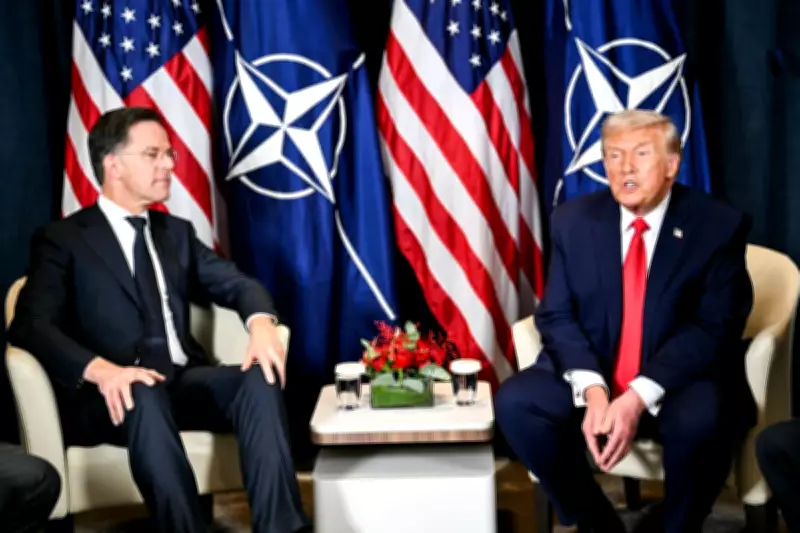
NATO Secretary General Mark Rutte, a former Dutch prime minister, has employed extraordinary diplomatic measures to maintain relations with Trump, even earning the nickname "Trump whisperer" for his efforts to flatter the former president and voice support for American actions that other NATO members oppose.
The Broader Geopolitical Implications
A potential American withdrawal from NATO would represent more than just a policy shift—it would signal the unraveling of the western security framework that has maintained relative stability in Europe for seventy-five years. Such a move would create power vacuums that adversaries like Russia and China would likely seek to fill, potentially leading to renewed territorial conflicts and arms races.
The psychological impact on alliance members cannot be overstated, as countries that have relied on American security guarantees for generations would need to rapidly develop independent defense capabilities or seek alternative security arrangements.
As Trump continues to position himself for a potential return to the presidency, his stance on NATO remains one of the most consequential foreign policy questions facing the international community, with implications that could reshape global power dynamics for decades to come.