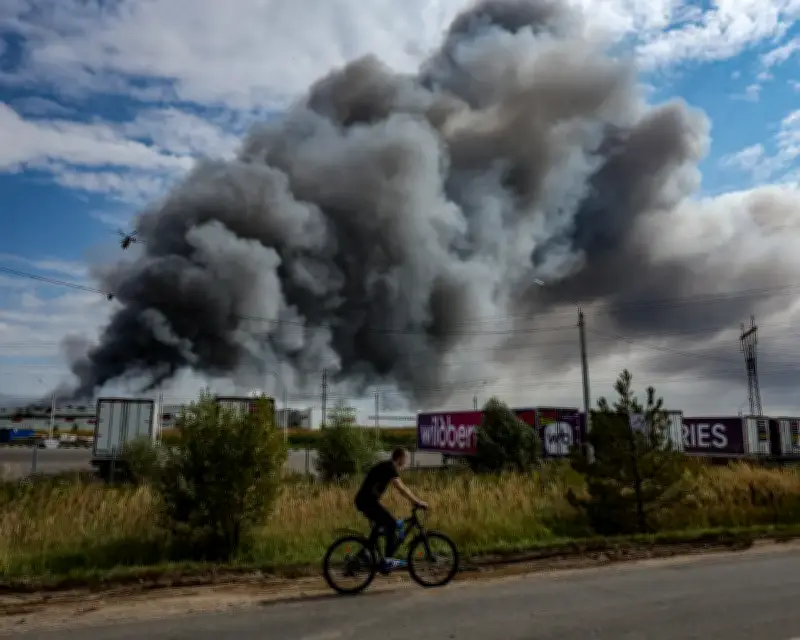
Russia has issued a stark warning to the United Kingdom, threatening "consequences" for what it claims is British support for Ukrainian drone strikes against Russian targets. The statement, delivered by the Russian Foreign Ministry on August 18, 2026, marks a significant escalation in rhetoric between the two nations amid the ongoing conflict in Ukraine.
Allegations of British Involvement
The Russian Foreign Ministry, in a statement reported by The Guardian, accused the UK of directly aiding Ukraine in conducting drone attacks on Russian territory. The ministry claimed that British intelligence and military advisors have been providing real-time targeting data and operational support, enabling Ukrainian forces to strike deep inside Russia.
"We have irrefutable evidence that British specialists are directly involved in planning and executing drone strikes against civilian infrastructure in Russia," the statement read. "Such actions will not go unanswered. The UK must understand that it will face consequences for its hostile and provocative policies."
UK Response and Denial
The UK government has categorically denied these allegations, dismissing them as "baseless propaganda" designed to deflect attention from Russia's own military failures. A spokesperson for the Foreign, Commonwealth and Development Office said: "The UK is fully committed to supporting Ukraine's right to self-defence, but we do not provide any weapons or intelligence that would enable strikes on Russian soil. These claims are entirely false."
The denial comes amid heightened tensions, with the UK having recently pledged an additional £3 billion in military aid to Ukraine, including advanced drone technology. However, British officials have consistently maintained that such equipment is for defensive purposes only and that the UK does not encourage or facilitate attacks on Russian territory.
Impact on Diplomatic Relations
Diplomatic analysts suggest that the Russian threat could lead to a further cooling of relations between Moscow and London, which have already been strained since the 2018 Salisbury poisoning and the full-scale invasion of Ukraine in 2022. The warning may also signal a shift in Russia's approach, potentially targeting British diplomatic missions or imposing sanctions on UK-based companies.
According to Dr. Elena Petrova, a Russia expert at the Royal United Services Institute, "This is a deliberate attempt to intimidate the UK and its allies. Russia is trying to create a deterrent effect, warning other NATO members that they too could face similar consequences if they continue to support Ukraine."
The situation remains fluid, with no immediate indication of concrete actions from Moscow. However, the threat has already prompted the UK to review its embassy security in Russia and consider contingency plans for potential retaliation.
Broader Implications for the Conflict
The escalation comes as Ukraine has stepped up its drone campaign against Russian oil refineries and military installations, citing the need to disrupt Russia's war machine. These strikes have reportedly caused significant economic damage, with estimates suggesting a reduction in Russian oil refining capacity by up to 15% since the start of 2026.
Ukraine has not commented on the Russian allegations, but President Zelensky has previously stated that Ukraine will continue to use all available means to defend its sovereignty, including strikes on military targets inside Russia. The Russian warning to the UK, therefore, may be seen as an attempt to deter Western involvement in these operations, which have become a key component of Ukraine's strategy.
As the war enters its fifth year, the threat of direct confrontation between Russia and NATO members remains a central concern for international security. The UK's response to Russia's warning will be closely watched, as will any retaliatory measures that Moscow may take.