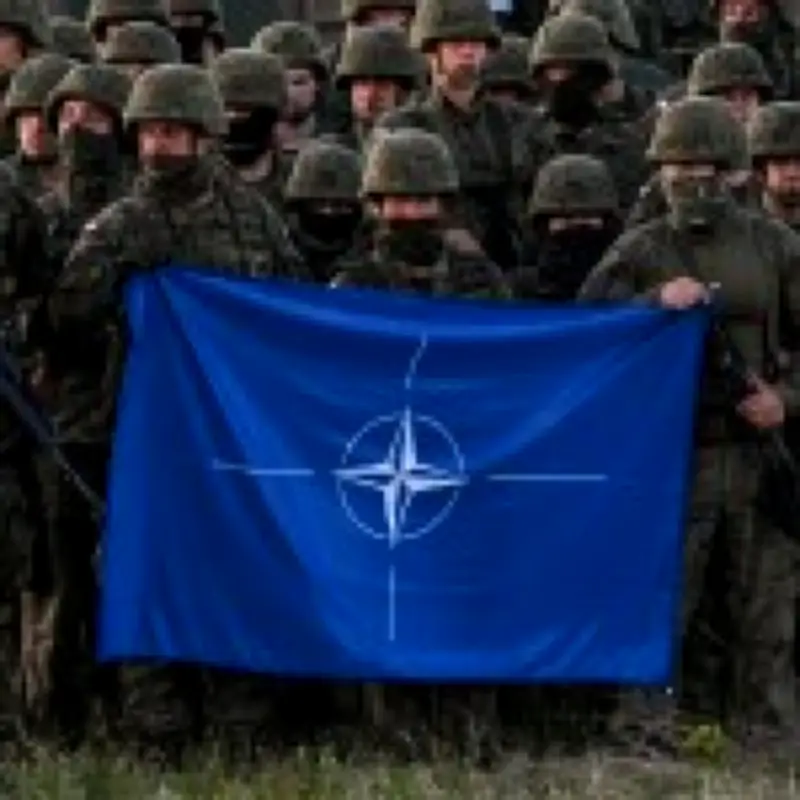
US intelligence reports have raised fresh concerns that Russia could orchestrate a provocation against a NATO member state as early as this autumn, according to the Wall Street Journal. The warning comes as Vladimir Putin seeks a symbolic victory amid stalled military progress in Ukraine.
Intelligence assessment and rationale
Officials initially believed an attack was unlikely because Russia's military focus is tied up in the war in Ukraine. However, new assessments suggest Putin is dissatisfied with the war's trajectory and may pursue a limited escalation to demonstrate strength. The Baltic region and Poland are identified as the most probable targets, given their proximity to Russian borders and strategic significance.
Lithuania's defence minister echoed these concerns, stating: 'The Kremlin, Putin, needs a new escalation, some kind of new victory, and in this case the Baltic region and Poland are the closest targets.' This sentiment aligns with recent incidents that have heightened tensions along NATO's eastern flank.
Recent incidents near NATO territory
Just days ago, a drone packed with explosives was discovered near a Ukrainian cargo plane in Germany, shutting down a runway at the airport. The incident underscores the potential for unconventional attacks that could escalate quickly. In late July, a Russian cruise missile left a crater 33 feet wide in NATO territory when it landed in Poland. Polish authorities found the landing site near the south-east village of Tarnawa-Kolonia, along with scattered debris, after reports of an explosion. Fighter jets were scrambled in response, but Poland's Prime Minister Donald Tusk said there was no immediate danger as the missile fell in an uninhabited area.
These events follow a late 2025 report from German Intelligence, which warned of a potential 'test attack' against NATO by Russian forces. The German Federal Intelligence Service cited Russia's preparation for a 'large-scale war' against NATO as tensions with the West reach a boiling point. The assessment suggests Moscow is willing to probe NATO's defenses to gauge response times and resolve.
Military and strategic implications
A retired British Army general, General Sir Richard Shirreff, has warned that the UK might have less than two years to prepare for a war with Russia. He described a scenario where Russian tanks 'roll across the border into Estonia and Latvia,' approaching the Estonian capital of Tallinn within four hours. The British-led Enhanced Forward Battle Group in Estonia would put up brief resistance but suffer heavy losses before being overwhelmed and forced to withdraw, according to his analysis.
Shirreff further suggested that Russia could fire missiles at RAF bases in England and other targets in Western European countries. In response, NATO forces would launch retaliatory strikes on Russian energy and military infrastructure while sending reinforcements to the Baltic states. Such a conflict would have far-reaching consequences for European security and global stability.
Broader context and expert concerns
The intelligence warnings come amid escalating rhetoric and military posturing from Moscow. Russia's war in Ukraine has not gone as planned, with significant losses and resistance from Ukrainian forces. A minor victory against NATO could serve to bolster domestic support and project strength internationally, even if it risks a wider conflict.
Experts note that any provocation would likely be designed to stay below the threshold of a full-scale war, testing NATO's unity and response mechanisms. The alliance has repeatedly affirmed its commitment to collective defense, but the speed and nature of a potential attack remain uncertain. Western officials are urging vigilance and preparedness, with some calling for increased military readiness in the Baltic region.
As the autumn months approach, the international community watches closely for any signs of Russian aggression. The situation remains fluid, with intelligence assessments evolving as new information emerges. For now, the focus is on deterrence and ensuring that any potential provocation is met with a unified and resolute response from NATO.