Navalny's Poisoning: Was Frog Toxin a Message from Russia?
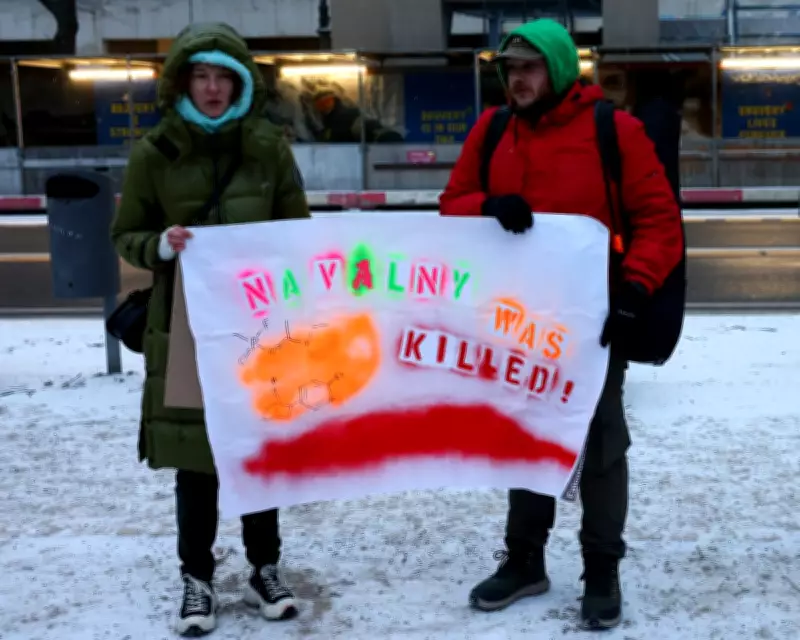
Supporters of Alexei Navalny gathered outside the Russian embassy in Berlin after revelations emerged that the Russian opposition leader was killed using epibatidine, a potent toxin derived from poison dart frogs native to South America. The UK government has explicitly stated that only the Russian state possessed the means, motive, and opportunity to deploy this lethal substance against Navalny during his imprisonment in a Siberian penal colony.
The Lethal Mechanism of Epibatidine
Epibatidine is an extraordinarily powerful painkiller, estimated to be hundreds of times more potent than morphine. Alastair Hay, emeritus professor of environmental toxicology at the University of Leeds, explains that the toxin causes muscle paralysis, particularly affecting the chest wall. "Your chest wall doesn't expand and contract, so essentially you can't breathe and you're suffocated," Hay stated. Compounding the danger, there is no known antidote for this poison, making it particularly deadly.
While epibatidine might appear exotic and obscure, it has been extensively studied for potential medical applications. Researchers worldwide, including in Russia, have investigated its analgesic properties for treating lung conditions such as pulmonary fibrosis and sarcoidosis. However, its extreme toxicity has prevented therapeutic use. "Because its structure is known, it can be synthesized in the lab," Hay noted. "It's a more complicated chemical structure, but competent chemists are not going to have a problem making it." Indeed, epibatidine and its analogues are available online for research purposes.
Russia's History of Poisonings
Russia has a well-documented history of using poisons against perceived threats. In 2006, former KGB agent Alexander Litvinenko died after ingesting radioactive polonium-210 in his green tea. In 2018, former Russian agent Sergei Skripal and his daughter Yulia survived poisoning by the nerve agent novichok, though the substance later killed Dawn Sturgess. Russia is known to operate a poison factory in Moscow and employs highly skilled chemists capable of producing such toxins.
Foreign Secretary Yvette Cooper has suggested that the use of epibatidine in Navalny's killing was deliberately symbolic. "Russia saw Navalny as a threat. By using this form of poison the Russian state demonstrated the despicable tools it has at its disposal and the overwhelming fear it has of political opposition," she asserted.
Expert Perspectives on Signaling
Some experts question whether the poison was intended as a clear message. Dr. Brett Edwards, an expert in biological and chemical weapons at the University of Bath, points out that if avoiding detection were the primary goal, many other poisons or methods could have been used. "[Navalny] was in a high-security prison. So, first of all, nothing gets in there unless they wanted [it] to get in there, particularly for a political prisoner, for obvious reasons," he said. "If they wanted to do it quietly, they wouldn't have used a toxin."
Dr. Luca Trenta, associate professor of international relations at Swansea University, contrasts this case with previous Russian poisonings. "It was not like with the Skripals or with Litvinenko in which it was clearly impossible to hide," he observed. "This one, if it had not been for a fairly long effort at getting some samples and some testing out, it might not have been discovered." Trenta suggests Russia might have been testing epibatidine's effectiveness or showcasing its capabilities if the toxin was discovered.
Hay emphasizes the difficulty of detecting epibatidine due to its potency, which requires only minute quantities to be lethal. The identification of the toxin was possible only through state-of-the-art instruments and samples smuggled out of Russia by Navalny's widow, Yulia Navalnaya.
The Broader Implications
Edwards notes that while the use of epibatidine raises questions about Russia's other capabilities, the fundamental reality remains unchanged. "It's intriguing, but in essence, it's just murder. It's just standard political murder. They've always done it. They'll keep doing it," he concluded. Trenta adds that if there is a signal, it demonstrates Russia's ability to produce such weapons and its disregard for international norms and law.
The case of Navalny's poisoning with an exotic frog toxin continues to provoke analysis and debate among experts, highlighting the complex interplay of science, politics, and statecraft in modern geopolitical conflicts.