
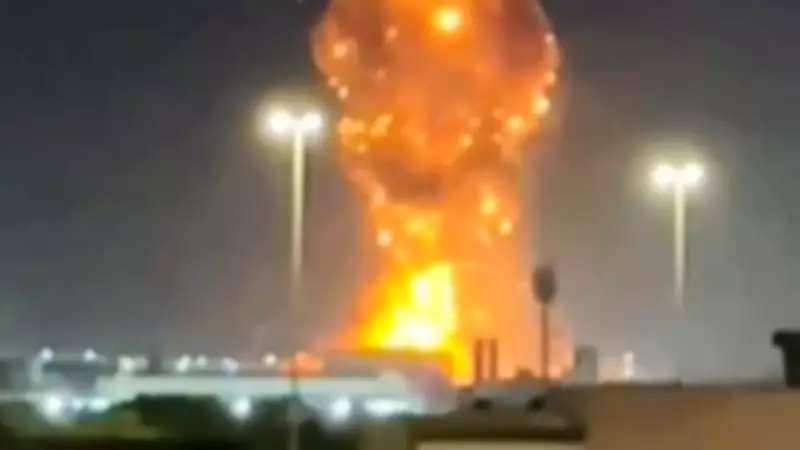
Iran's Missile Barrage on Gulf Energy Targets Sparks Fears of Global Economic Collapse
In a dramatic escalation of hostilities, Iran has launched precision missile strikes on critical energy infrastructure across the Persian Gulf region, targeting facilities in Saudi Arabia, Qatar, Kuwait, and Israel within a single day and night. This aggressive move comes as former U.S. President Donald Trump is reportedly weighing the deployment of American troops to secure the vital Strait of Hormuz, a key global oil chokepoint. Iranian officials have explicitly stated to Sky News that the world cannot expect restraint from a nation under military aggression, signaling a potential shift towards prolonged conflict.
Catastrophic Damage and Soaring Energy Prices
The financial toll of these attacks is staggering. A targeted strike on Qatar's Ras Laffan gas plant, involving just a handful of missiles, inflicted an estimated $26 billion in damages and is projected to take years to fully repair. This assault has severely disrupted the global supply of liquefied natural gas, leading to an immediate 30% surge in gas prices for European consumers. Analysts and economists are issuing dire warnings, suggesting that if these energy-focused attacks persist for weeks, the repercussions could be catastrophic for the worldwide economy.
Oil, gas, helium, plastics, and fertilizer prices have already skyrocketed, but experts caution that this may only be the beginning. The doomsday scenario unfolding in the Gulf threatens to inflict widespread economic pain globally, as the region's energy exports are crucial to industrial and consumer markets.
Diplomatic Standoff and Military Escalation
In an exclusive interview with Sky News, Esmail Baghaei, a senior Iranian diplomat, defended the attacks as a necessary response to aggression. He emphasized that Iran, facing what he described as unprecedented acts of terrorism and targeting of its leaders, cannot be expected to show restraint. This stance follows Israeli airstrikes on Iran's South Pars gasfield, which prompted Tehran's swift retaliation.
The situation has drawn international concern, with Donald Trump issuing urgent warnings to both Israel and Iran to avoid further attacks on energy facilities. However, reports indicate that Trump is also seriously considering military intervention to secure the Strait of Hormuz, a move that could extend the conflict for months and heighten risks to global energy security.
Global Implications and Economic Vulnerability
If Iran maintains the potency of its missile arsenal, the Gulf's precious energy installations remain vulnerable, posing a continuous threat to the global economy. The analogy of a shootout in a crystal warehouse underscores the fragility of the situation. With each escalation, the potential for a prolonged war increases, threatening to destabilize markets and trigger a worldwide economic meltdown.
The last 24 hours of missile dueling have made one point abundantly clear: a sustained conflict in the Persian Gulf could do calamitous damage, and all nations may soon feel the economic pain if diplomacy fails to prevail.




