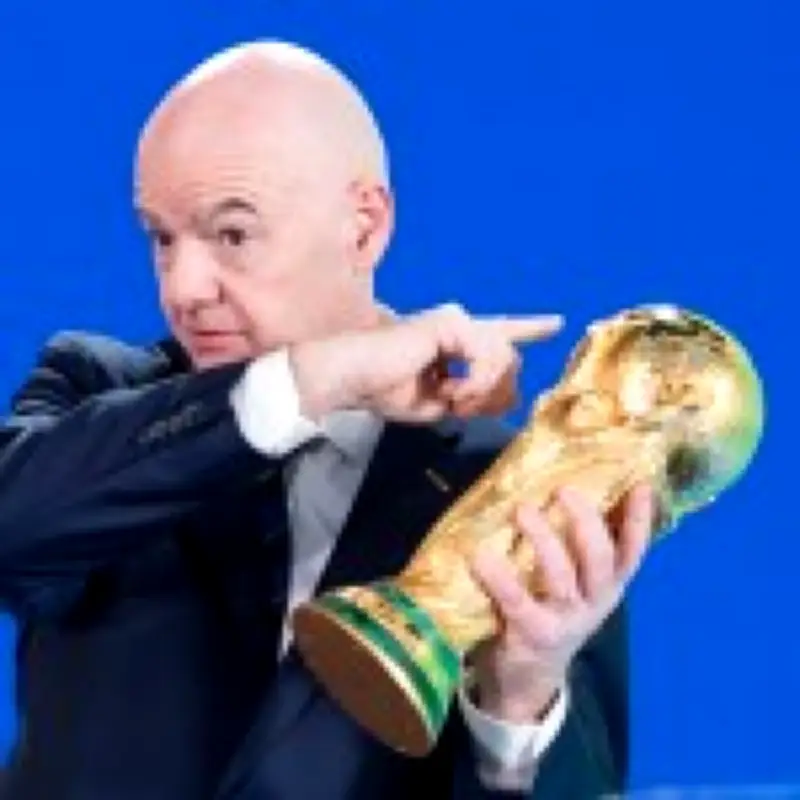
FIFA president Gianni Infantino has announced the abandonment of the proposal to sell a stake in the World Cup to private investors, a plan that had sparked intense opposition from European and other football confederations. The decision, revealed in a statement on August 1, 2026, comes after an emergency meeting this week where UEFA threatened a boycott of the tournament, accusing FIFA of selling the sport's 'soul'.
Plan details and backlash
The proposal aimed to create a new company, FIFA Forward Enterprise (FFE), to oversee commercial operations for future World Cup and Club World Cup tournaments. FIFA sought to raise $4.2 billion (£3.1 million) through private investment, with investors holding a minority stake but expecting significant influence over decisions, potentially leading to an expanded World Cup or more frequent tournaments.
The backlash was swift. UEFA, CONCACAF, and the Asian Football Confederation (AFC) collectively represent 143 of FIFA's 211 member associations, making it impossible to secure the required majority vote. CONCACAF rejected the proposal during a meeting this week, and the AFC issued a statement expressing solidarity with UEFA and CONCACAF.
Infantino's statement
In his statement, Infantino said: 'Having listened carefully to all the views, it has become clear that the project has created divisions of a nature that, regardless of the level of support, are no longer in the interest of the objective set out in the first place. Our purpose has always been – and will always be – to unite and improve. As a result, this proposal will not proceed.'
He added: 'Moving forward, my intent is to bring all interested parties back together in the coming days and weeks in the spirit of shared interest in our game, and with the objective to continue growing football everywhere, particularly in those countries that mostly need our support.'
Opposition and resignation
The plan had already faced criticism from within FIFA's ranks. On Friday, FIFA accused the media of 'disrupting' the consultation process and insisted that 'nobody is selling football'. However, the opposition was too strong to overcome.
Carlos Cordeiro, one of Infantino's senior advisors, resigned in protest over the plan. In a statement, Cordeiro said: 'Let me be clear: I had no involvement in this proposal, and I oppose it unequivocally. It is a bad deal for FIFA's Member Associations, a bad deal for football, and a bad deal for the long-term future of the game.' He added: 'Football has been central to my life, and after more than 35 years in banking, I understand both the value of this asset and the consequences of giving part of it away. That is why this proposal should be rejected.'
Financial incentives and implications
Infantino had offered each of FIFA's 211 member associations up to $40 million (£29.6 million) if they agreed to the proposal by September 19. This incentive was seen as an attempt to secure the necessary votes, but it failed to assuage concerns about the long-term impact on the sport.
The scrapping of the plan is a significant victory for those who argued that private investment could compromise the integrity of the World Cup. The decision also highlights the growing influence of confederations like UEFA in shaping FIFA's policies.
As FIFA moves forward, Infantino has pledged to bring all interested parties together to discuss the future of the game, with a focus on growing football globally, particularly in developing nations. The outcome of these discussions will be closely watched by the football community.