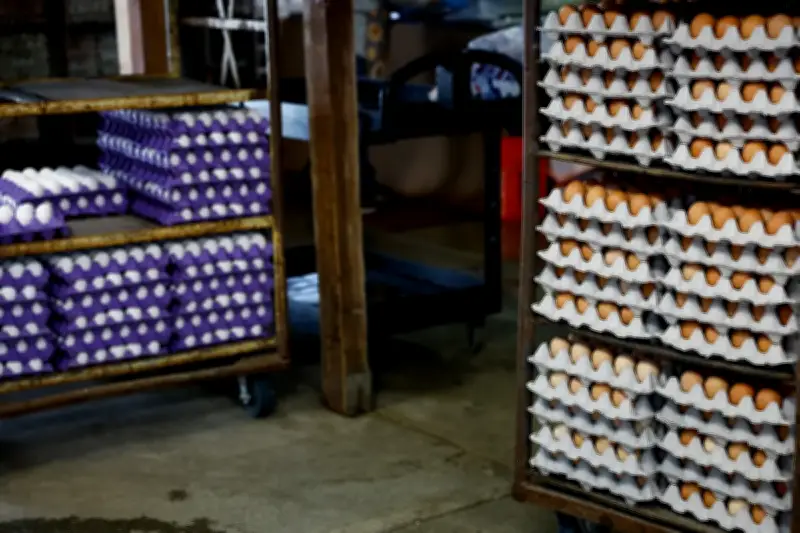
The US Food and Drug Administration (FDA) has elevated a recall of nearly 1.6 million dozen eggs to its highest-risk warning, as a salmonella outbreak linked to the eggs has sickened at least 98 people across 17 states, with 26 hospitalizations reported.
The recall, issued by Midwest Poultry Services, was reclassified as Class I on 12 August. The FDA defines a Class I recall as “a situation in which there is a reasonable probability that the use of or exposure to a violative product will cause serious adverse health consequences or death.” The affected eggs—white and brown cage-free varieties—were produced in Texas and shipped to retail outlets across the US south and south-west, including Arkansas, Louisiana, Mississippi, New Mexico, and Oklahoma.
Outbreak details and timeline
As of 24 July, the Centers for Disease Control and Prevention (CDC) and FDA had identified 98 illnesses linked to the recalled eggs, with 26 hospitalizations. No deaths have been reported. Illnesses occurred between 21 November 2025 and 30 June 2026, according to federal health officials.
Midwest Poultry Services discovered the contamination through “proactive environmental monitoring practices and root cause analysis,” as stated in an FDA recall report. The company halted distribution of fresh eggs from its Texas farms as of 22 July. However, the recalled eggs remain a concern because their best-by and sell-by dates extend through 17 August.
Retail distribution and consumer guidance
The eggs were available at Kroger stores in Texas and Louisiana, and Brookshire Grocery locations in Texas, Oklahoma, Arkansas, Louisiana, New Mexico, and Mississippi, as well as “other smaller retail outlets,” according to the initial recall alert. The specific egg products covered by the recall are listed in the FDA enforcement report.
Midwest Poultry Services has advised consumers not to eat the recalled eggs and to return them to the place of purchase for a refund. The reclassification to Class I underscores the potential for serious health consequences, though no fatalities have been linked to the outbreak.
Broader food safety context
The recall reclassification comes as the US confronts multiple foodborne illness outbreaks. The country is experiencing one of the largest recorded foodborne illness outbreaks in its history, with confirmed cases of cyclosporiasis linked to lettuce surpassing 13,000. Another salmonella outbreak involving jalapeños has prompted a recall of Taylor Farms products sold in 26 states.
On Monday, the FDA announced changes to rules governing how food manufacturers notify the agency about ingredients brought to market. While the change closes a regulatory loophole, it falls short of the administration’s promises to dramatically overhaul food regulations. The egg recall serves as a reminder of the ongoing risks in the food supply chain, with federal agencies continuing to monitor and respond to outbreaks.