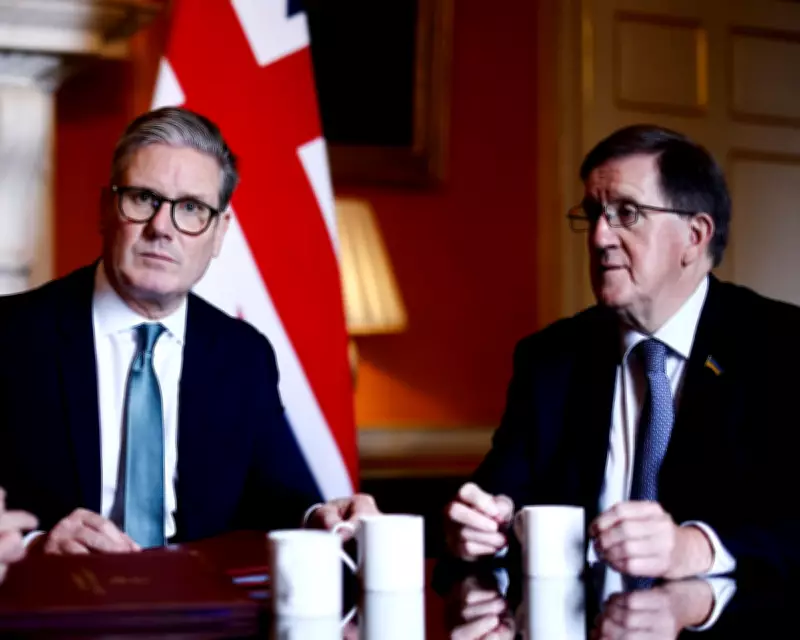
Former NATO Leader Delivers Scathing Critique of Starmer's Defence Approach
George Robertson, the former NATO secretary general who led the alliance from 1999 to 2003 and currently serves in the House of Lords, has launched a blistering attack on Prime Minister Keir Starmer's defence policy. In a meeting captured in July 2024, Robertson confronted Starmer with dire warnings about the United Kingdom's military preparedness.
'Corrosive Complacency' Endangers National Security
Robertson, who authored the government's strategic defence review, accuses the Starmer administration of demonstrating "corrosive complacency towards defence" that has placed the UK in genuine peril. The former defence secretary believes Starmer is "not willing to make the necessary investment" to address critical military shortcomings.
In a scheduled lecture in Salisbury, Robertson will emphasize that the recent Iran conflict "has to be a rude wake-up call" for British leadership. He plans to highlight the country's inability to deploy more than a single Royal Navy warship, HMS Dragon, to the Mediterranean during the first two weeks of the Iran war as evidence of systemic underpreparedness.
Military Experts Echo Grave Concerns
General Richard Barrons, who co-authored the defence review with Robertson, has reinforced these alarming assessments. "It is a mark of how serious it is that someone who has been a Labour party activist for more than 60 years and was a NATO secretary general has now had to say it in these terms today," Barrons told BBC Radio 4's Today programme.
Barrons expressed particular dismay about recent comments from US Defence Secretary Pete Hegseth mocking the Royal Navy. "I hung my head in sorrow, but I couldn't argue with him because although the Royal Navy and the Royal Air Force and the army are, in their bones, outstanding institutions, they are simply too small and too undernourished to deal with the world that we now live in," Barrons admitted.
Funding Crisis and Treasury 'Vandalism'
Robertson's criticism extends beyond political leadership to what he describes as "vandalism" by "non-military experts in the Treasury." He argues that "we cannot defend Britain with an ever-expanding welfare budget" and believes spending cuts in other government departments may be necessary to bolster defence funding.
The government's proposed 10-year defence investment plan, originally due by autumn of last year, has been repeatedly postponed amid warnings of a staggering £28 billion funding gap over the next four years. Barrons starkly framed the choice facing the prime minister: "They either find some more money to implement a new de minimis review at the speed we agreed last year, or he is going to announce £28bn worth of cuts. And how would that fit with the world that we find ourselves in today?"
Systemic Shortages Across Military Capabilities
In his forthcoming speech, Robertson will warn that the UK faces not just equipment shortages but "crises in logistics, engineering, cyber, ammunition, training and medical resources." He plans to criticize Chancellor Rachel Reeves for dedicating "a mere 40 words on defence in over an hour" during her budget speech last year, and none at all in last month's spring statement.
"There is a corrosive complacency today in Britain's political leadership," Robertson will assert. "Lip service is paid to the risks, the threats, the bright red signals of danger – but even a promised national conversation about defence can't be started."
Government Response and Ongoing Challenges
A government spokesperson defended the administration's approach, stating: "We are delivering on the strategic defence review to meet the threats we face. It is backed by the largest sustained increase in defence spending since the cold war, with a total of over £270bn being invested across this parliament."
Defence Minister Luke Pollard acknowledged in February that creating the investment plan represents "a bigger task than many people outside defence realise." He explained it would require "fundamentally changing the shape of our armed forces" while simultaneously replenishing military stockpiles depleted by support for Ukraine.
The Ministry of Defence, Treasury, and Downing Street have yet to reach agreement on how to proceed with the defence investment plan, according to sources familiar with the negotiations. Meanwhile, Defence Secretary John Healey recently exposed covert Russian submarine operations targeting critical undersea infrastructure around UK waters, highlighting the immediate threats facing the nation.