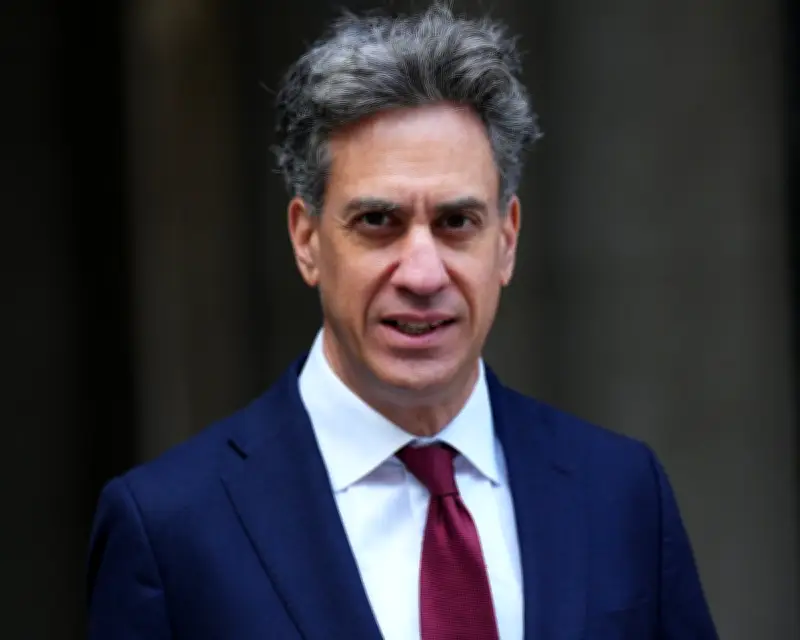
Ed Miliband, the energy secretary credited with turbocharging the UK's clean energy transition, has been appointed foreign secretary in a cabinet reshuffle, leaving behind a legacy of rapid decarbonisation and record investment. According to Ed Matthew, UK director at the E3G climate thinktank, 'Miliband has been the most successful minister under the Starmer administration. Perhaps that is why they have attacked him so viciously.'
Record of achievement in energy
Within 72 hours of taking office in July 2024, Miliband lifted the ban on onshore windfarms and began consenting offshore wind and solar farms while reforming the grid connection queue. Auctions for low-carbon generation secured enough capacity to supply about 23 million homes. The warm homes plan, which includes insulation, heat pumps and clean energy, is expected to lift about 1 million families out of fuel poverty. A new nuclear programme for small modular reactors is also underway.
Last month, the government announced that the private sector had committed approximately £100 billion to the UK's clean technology sector. Alongside that, there is a plan to support 400,000 people into low-carbon jobs, more than double the number employed in the declining North Sea basin.
Relentless attacks from opponents
Rightwing media publications have frequently labelled Miliband a 'net-zero zealot' with a 'messianic' devotion to climate action. The fossil fuel industry, along with the Conservatives, Reform UK, and sections of the Labour party, lobbied for new drilling projects such as Jackdaw and Rosebank. Miliband previously described Rosebank as 'climate vandalism.'
Craig Bennett, chief executive of the Wildlife Trusts, said: 'At a time when lots of people want to say “a plague on all your houses” about politicians, Miliband stands out as a rare example of someone who’s actually made a difference.'
Economic impact and energy prices
Businesses, led by the CBI, noted that the UK's high energy prices—about 45% above the G7 median—were damaging growth. However, the CBI made clear that net zero is not the culprit. Miliband's reforms have added about £150 off bills for the average household, while about 6 million families on low incomes will gain about £150 more through the warm homes discount.
The problem is that fossil fuel prices have risen even faster due to the Ukraine invasion and the Iran war, sending gas and oil prices soaring. Additionally, the rules governing the UK's privatised power market mean that electricity prices are set by gas-fired power stations, which can be highly profitable for them but disastrous for consumers.
International recognition
Teresa Ribera, a vice-president of the European Commission responsible for green transition, praised Miliband: 'He is, by some distance, one of the most skilful and respected negotiators I have ever worked with, and one of the most honest and principled politicians I know. He commands respect in international institutions and among the world’s most influential governments.'
Mohamed Adow, director of the Power Shift Africa thinktank, said: 'On the international stage, Miliband is seen as someone who understands that ambitious climate action and economic renewal can go hand in hand.'
Challenges ahead
Miliband's move to the Foreign Office prevents him from following through on domestic energy reforms. It remains to be seen whether his replacement, Miatta Fahnbulleh, will continue with the same enthusiasm. However, his international allies are cheered; the fight to limit the climate crisis is global, and with the US departure from the field, uncertainty in Europe, and China and India's flirtations with Russia, a leadership vacuum exists.