Defense and Oil Industries Reap Windfalls as US Gas Prices Climb During Iran Conflict
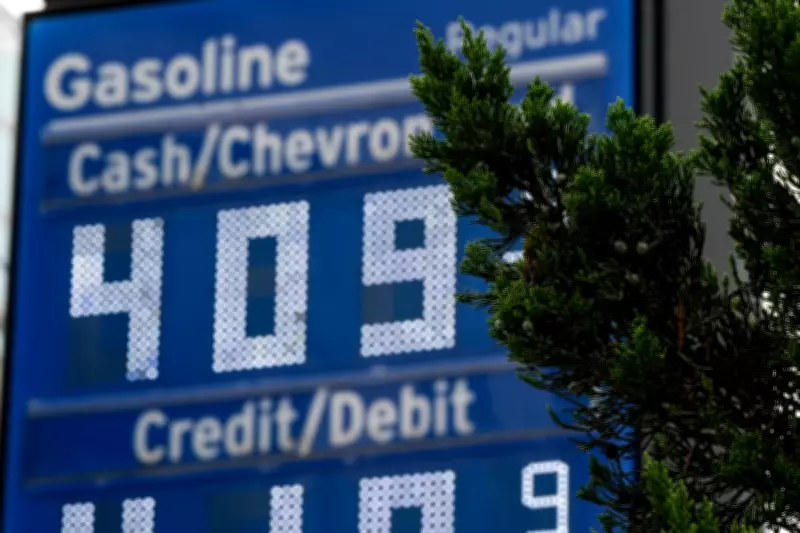
In Atlanta, gas prices at a Chevron station on 3 April 2026 reflect a broader national trend, with costs soaring past $4 a gallon for the first time since 2022. This surge comes as the US-Israel war with Iran enters its fifth week, creating economic ripples that benefit defense contractors and oil companies while Americans grapple with inflation.
Corporate Gains Amid Consumer Struggles
As the White House faces criticism over potential gas price hikes, former President Donald Trump took to Truth Social to reassure the public, noting the US's position as the world's largest oil producer. However, the reality is that defense and oil sectors are capitalizing on the conflict. The US Department of Defense recently announced Boeing's involvement with Lockheed Martin to triple missile seeker production, boosting aerospace stocks. Lockheed Martin's share price has jumped 25% since the start of the year.
Simultaneously, American-produced oil has nearly doubled in value, from $65 to over $110 a barrel, due to Iran's blockade of the Strait of Hormuz and attacks on Middle Eastern energy infrastructure. This price spike has propelled gas prices upward, mirroring trends seen in 2022 after Russia's invasion of Ukraine.
Oil Companies Experience Significant Profit Surges
The increase in oil prices has proven lucrative for American oil firms. Share prices for ExxonMobil, Shell, and Chevron have all risen by over 20% this year, even as the broader stock market dips. According to Rystad Energy, US oil producers could see an additional $63 billion in profit with oil above $100 a barrel. Leo Mariani, a senior research analyst at Roth Capital Partners, described this as a windfall for energy companies, with March prices exceeding expectations.
In 2022, oil and gas companies globally made $916 billion in profit, with American firms accounting for $281 billion during the price surge. Chevron, for instance, announced a $75 billion stock buyback program after its shares soared over 50% that year. Economists Gregor Semieniuk and Isabella Weber found that 50% of these profits went to the top 1% of Americans, with minimal trickle-down to the bottom 50%.
Current Conflict Presents Greater Supply Disruptions
Unlike the 2022 scenario, where Russian oil was reshuffled, the Iran conflict has physically removed oil from the market due to damaged infrastructure. Clay Seagle, a senior fellow at the Center for Strategic and International Studies, notes this is a more severe supply event. While prolonged high prices might reduce consumer demand, as seen in the 1970s, oil companies currently benefit more from price hikes than production losses.
The disruption extends beyond oil, affecting diesel prices, which have jumped 40%, and impacting industries like airlines and fertilizer production. Stock prices for United and American Airlines have dropped over 15% this year, highlighting broader economic strain.
Potential for Higher Profits and Long-Term Impacts
Economists warn that profits from the current oil price shocks could surpass 2022 levels if the conflict persists. Semieniuk predicts that prolonged disruptions will lead to even greater corporate gains. As Middle Eastern oil production remains uncertain, the financial divide between corporations and everyday Americans continues to widen, underscoring the complex dynamics of war and economics.