
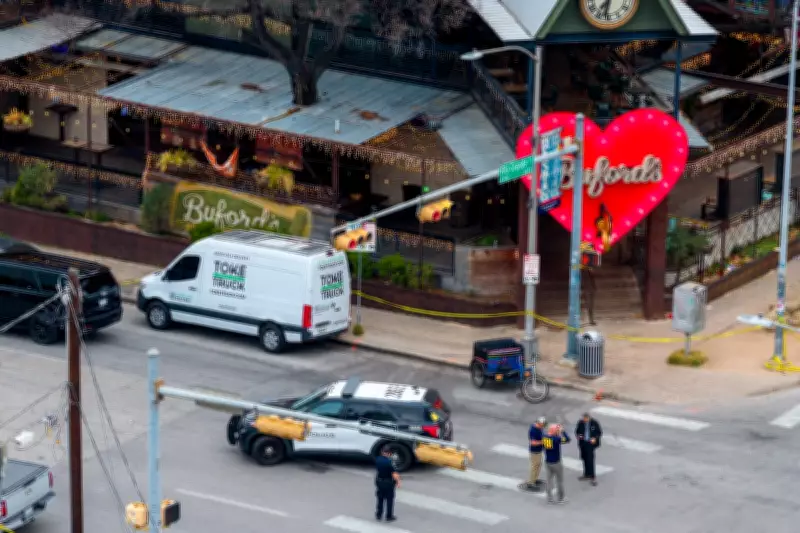
FBI and Local Authorities Probe Austin Bar Shooting as Potential Terrorist Act
Law enforcement officials in Texas are intensively investigating a weekend mass shooting at a popular Austin bar as a potential act of terrorism, with the suspect wearing clothing displaying pro-Iranian sentiment. The incident occurred just hours after the United States launched airstrikes on Iran under former President Donald Trump's direction, raising fears of further retaliatory attacks across the nation.
Deadly Incident at Downtown Austin Bar
Early on Sunday, March 1, 2026, police shot and killed Ndiaga Diagne, a 53-year-old Senegalese national and naturalized U.S. citizen, after he reportedly opened fire at Buford's bar in downtown Austin. The establishment is particularly popular with university students and was crowded at the time of the attack. The shooting resulted in two civilian fatalities and left fourteen others wounded, some with serious injuries that required immediate medical attention.
FBI special agent Alex Doran from the San Antonio field office addressed the media during a press conference, stating that investigators discovered indicators on the subject and in his vehicle suggesting a potential nexus to terrorism. However, Doran emphasized that it remains too early to make a definitive determination about the exact nature of the attack and the suspect's complete motivations.
Suspect's Background and Potential Links
According to law enforcement sources, Diagne wore a hoodie bearing the phrase "Property of Allah" during the attack, with a T-shirt underneath featuring an Iranian flag design. The Site Intelligence Group reported that Diagne had expressed pro-Iranian regime sentiment and hatred for Israeli and American leadership in Facebook posts dating back to 2017. These posts included a photograph of the suspect holding what appears to be an assault rifle, adding to concerns about his ideological leanings.
Despite these troubling indicators, detectives from the Austin Police Department, working alongside the FBI's Joint Terrorism Task Force (JTTF), have indicated that Diagne likely operated as a lone actor without direct connections to organized terrorist groups. The investigation continues to examine his digital footprint, personal history, and any potential international influences that might have motivated the violent assault.
Heightened Security Measures Nationwide
The escalating conflict in the Middle East has prompted federal authorities and multiple major U.S. cities to implement enhanced security protocols. FBI Director Kash Patel announced on social media that counterterrorism and intelligence teams have been placed on high alert, with JTTFs across the country working around the clock to address and disrupt any potential threats to homeland security.
The Pentagon's Northern Command issued an advisory urging military bases to remain vigilant against possible attacks targeting U.S. facilities and personnel. Naval Base Coronado in San Diego, comprising nine separate sea and air divisions, has already increased base security measures, resulting in noticeable delays at entrance gates as personnel conduct thorough screenings.
Major Cities Respond to Elevated Threat Level
In New York City, police officials released a statement confirming they are closely monitoring events in Iran and the Middle East while coordinating with federal and international partners. As a precautionary measure, the NYPD has enhanced patrols at sensitive locations throughout the city, including diplomatic missions, cultural institutions, religious sites, and other relevant areas of potential vulnerability.
Los Angeles Mayor Karen Bass addressed the situation, acknowledging that many residents in the city's large Iranian community are deeply concerned about the military actions. While no credible threats have been identified in Los Angeles at this time, the Los Angeles Police Department has stepped up patrols near places of worship, community spaces, and other strategic locations throughout the metropolitan area.
Historical Context and Previous Warnings
This incident follows a pattern of heightened domestic security concerns during periods of international conflict. In June of the previous year, the Homeland Security Department's National Terrorism Advisory System issued a bulletin warning of a heightened threat environment in the United States following U.S. airstrikes on Iran's nuclear facilities. The advisory specifically noted that such conflicts could motivate violent extremists and hate crime perpetrators to attack targets perceived as Jewish, pro-Israel, or linked to the U.S. government or military.
Texas Governor Greg Abbott responded to the Austin shooting with a strong statement, initiating efforts to safeguard communities across the state. These measures include increased patrols at energy facilities, ports, and the border with Mexico. Governor Abbott issued a clear warning to anyone considering using the current Middle East conflict to threaten Texans or critical infrastructure, promising that Texas would respond with decisive and overwhelming force to defend the state and its residents.




