Experts Challenge AI Attribution in Iran School Bombing, Emphasize Human Accountability
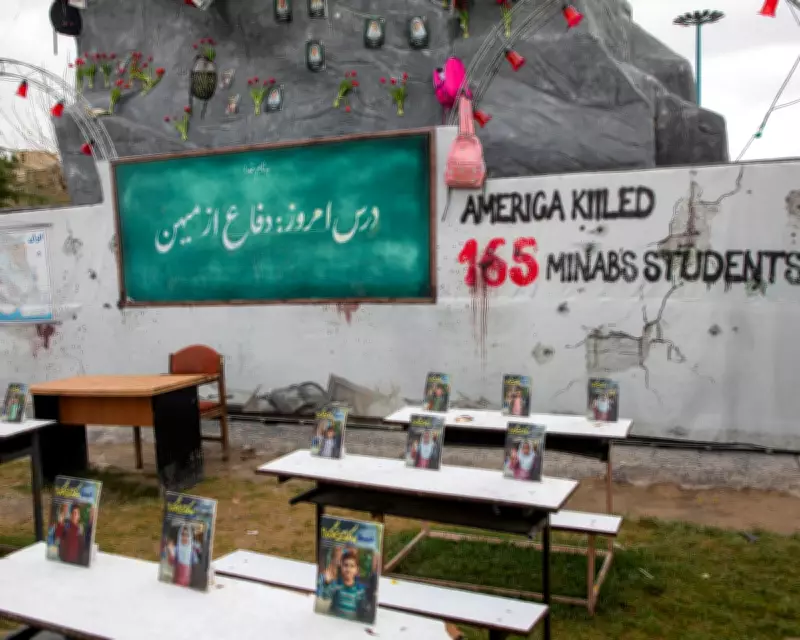
In the aftermath of the tragic Shajareh Tayyebeh primary school bombing in Tehran, a memorial stands as a somber reminder of the human cost of conflict. While some reports have pointed to artificial intelligence as a factor in the incident, experts are now raising critical concerns about this narrative, arguing it dangerously shifts blame away from human decision-makers.
The Language of Displacement: From Euphemism to Automation
Anthony Lawton, writing from Market Harborough, Leicestershire, contends that the deeper issue isn't technological but linguistic. "To say there was an 'AI error' quietly removes the human subject from the sentence," he observes. This follows a historical pattern where civilian casualties have been described with terms like "dehoused" or "collateral damage," but now responsibility is being displaced entirely from people to systems.
Lawton emphasizes that moral accountability fundamentally depends on clarity about who acts. "However complex the chain of analysis and command, it remains human beings who design, authorize and execute these decisions," he writes. "To obscure that fact is not a technical error but a civic one."
Anthropomorphic Language and Moral Agency
Dr. Felicity Mellor, Director of the Science Communication Unit at Imperial College London, echoes these concerns while addressing broader AI discourse. She points to alarming language in media reports describing AI agents that "connived," "conned," "admitted" and "confessed," or that "lie" and "cheat."
"The term widely used to describe AI rule-breaking – scheming – is similarly anthropomorphic," Dr. Mellor notes. "Such language ascribes moral agency to large language models and in so doing obscures where responsibility actually lies."
She offers a powerful analogy: "Imagine a company had released high-speed vehicles onto the roads before fitting them with effective brakes. We would not say the vehicles 'connived' to kill other road users; we would say the humans behind the company had behaved with the utmost recklessness."
The Consequences of Misplaced Responsibility
Both experts warn that this linguistic shift has serious practical implications. Lawton argues that "AI may accelerate warfare, but it is also accelerating a subtler shift: from euphemism to automation as alibi." He stresses that "if public language cannot name human responsibility, public scrutiny cannot hold it to account."
Dr. Mellor extends this warning to the broader technology landscape: "If out-of-control AI does ever cause harm, we will have no hope of holding the technology companies (and the governments that promote them) to account unless we properly attribute moral agency when we speak about their products."
A Call for Clarity in Complex Systems
The consensus emerging from these analyses is clear: while AI systems may be involved in modern warfare and technology, ultimate responsibility must remain with the humans who design, deploy and oversee these systems. The memorial in Tehran serves as a poignant reminder that behind every technological system are human decisions with human consequences.
As warfare and technology grow increasingly complex, these experts argue that maintaining linguistic precision about responsibility isn't merely academic – it's essential for accountability, ethics and ultimately, for preventing future tragedies.