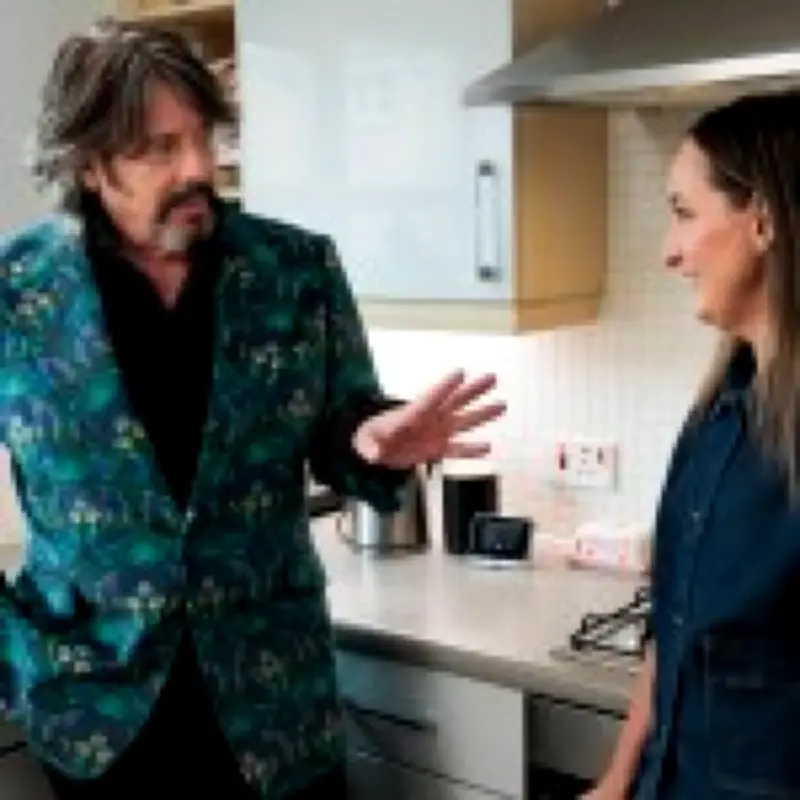
Three-quarters of UK homeowners have considered reimagining their property to maximise space, according to new research from Smart Energy GB. This trend, dubbed 'space-stretching', sees families adapting their existing homes rather than moving, often to accommodate multiple generations under one roof.
Laurence Llewelyn-Bowen's Multigenerational Setup
TV interior designer Laurence Llewelyn-Bowen, 61, has split his own house into three separate living spaces to house multiple generations of his family. He believes this arrangement is far from unconventional, noting that it mirrors how most families lived before the 20th century.
'People often see it as an unconventional approach, but it's actually how most families functioned before the 20th century,' he says. 'I'm inspired to see so many people re-discovering this way of living.'

Llewelyn-Bowen has installed a smart meter in his home to help family members from grandparents to grandkids monitor their energy use. He explains that living with multiple generations impacts more than just space—it changes energy consumption patterns.
'What becomes clear very quickly is that having multiple generations under one roof affects more than just space, it changes how you use energy too,' he says. 'I've found that a smart meter is a brilliant way to see how those patterns shift, helping everyone make small, mindful changes that bring greater peace of mind.'
Why Brits Are Choosing to Stay Put
The rise of space-stretching is largely driven by the escalating costs of moving, with 48 per cent of homeowners citing this as the primary reason for renovating over relocating. Popular projects include creating multi-purpose guest rooms and offices (35 per cent), converting lofts into additional living spaces (21 per cent), and adapting garages into workspaces (17 per cent).
Smart meters are playing a key role in these transformed homes. These devices automatically send readings to energy suppliers, ensuring accurate bills and eliminating manual readings. They come with an in-home display showing real-time energy use and costs, enabling households to control their spending and access flexible tariffs that reward off-peak usage.
From Garage to Bakery: A Case Study
Charlie Shires, 32, from Harrogate, transformed her garage into a bakery for her cake business, HG1 Bakes, after it outgrew her semi-detached home. The space now houses multiple ovens and freezers, significantly increasing energy demands.
Charlie relies on her smart meter display to track consumption in near-real time. 'The smart meter helps keep us in control of what we're using,' she says. 'I think it's super important to be able to see how much your energy is going up and decide if you want to do anything to reduce it.'
Keeping Family Close in Wrexham
Dawn and Mick McHugh, 58 and 59, of Wrexham, converted their downstairs living area into a bedroom and wet room for Dawn's elderly mother, who lives with them permanently. Their eldest son lives just two minutes away, making staying in their home a priority.
The change has increased their energy bills significantly. 'Having more people in the house is the major impact on our energy use,' Dawn explains. 'And obviously elderly people need more heating and twice as many showers. So, when you think about it logically, bills were bound to go up.'
Using their smart meter display, the couple now identifies effective energy-saving methods. They coordinate cooking to use the oven once for multiple meals and have installed radiator thermostats to lower temperatures in unused rooms. 'If we're cooking, we try to think, 'Right, Mum's having a fish pie; we'll have something that goes in the oven.' So we're only putting the oven on once,' Dawn says.
The research, conducted by OnePoll for Smart Energy GB across 2,000 UK homeowners from May 13-19, 2026, underscores a growing national trend towards adaptive home improvements. As energy costs remain a concern, space-stretchers are finding that smart technology offers practical solutions to manage both space and bills.