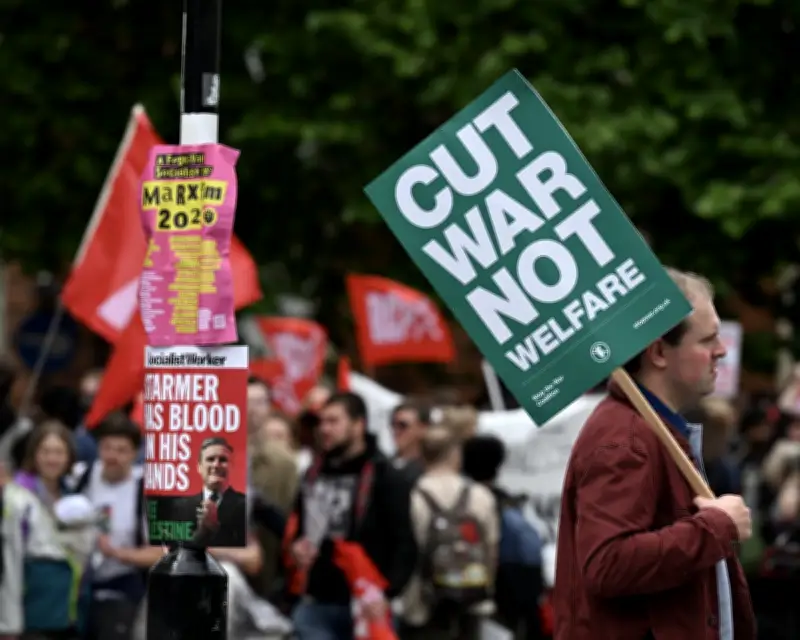
A recent survey revealing that 47% of Labour party members believe the government spends too much on social security has drawn a sharp rebuke from Labour peer Ruth Lister. In a letter to the Guardian, Lister argues that such views are based on a false narrative of "out of control" spending, when in fact non-pensioner social security has remained at about 5% of GDP for the past decade.
Stable Spending, Misguided Perceptions
Lister emphasizes that social security was one of the main casualties of austerity, leaving benefits too low to cover basic needs, which has led to increased reliance on food banks. She suggests that if members had been presented with evidence from academics, thinktanks, and charities showing that improving social security is the most effective way to tackle child poverty, they might have been more supportive.
The peer also points to the Institute for Government's recommendation that social security should be viewed as preventive spending, reducing demand on acute services. She trusts that "senior strategists in Downing Street" who received the survey findings will not draw the wrong conclusions.

Call for Evidence-Based Policy
Lister's letter comes amid ongoing debates within the Labour party about welfare and spending priorities. The survey, conducted by YouGov, suggests a more hawkish stance among members than previously assumed. However, Lister argues that such views are not grounded in the actual fiscal reality.
According to the Office for National Statistics, spending on benefits for working-age people has remained stable as a share of GDP over the past decade, despite political rhetoric suggesting otherwise. This stability, Lister contends, should inform policy discussions.
Impact on Poverty and Public Services
The letter highlights the human cost of underfunded social security, with food bank usage reaching record levels. Charities like the Trussell Trust have reported a surge in demand, linking it to inadequate benefit levels. Lister argues that investing in social security would not only reduce child poverty but also alleviate pressure on the NHS and other public services.
She concludes by urging party leaders to consider the evidence before making policy decisions, warning that cutting social security further would be counterproductive.