
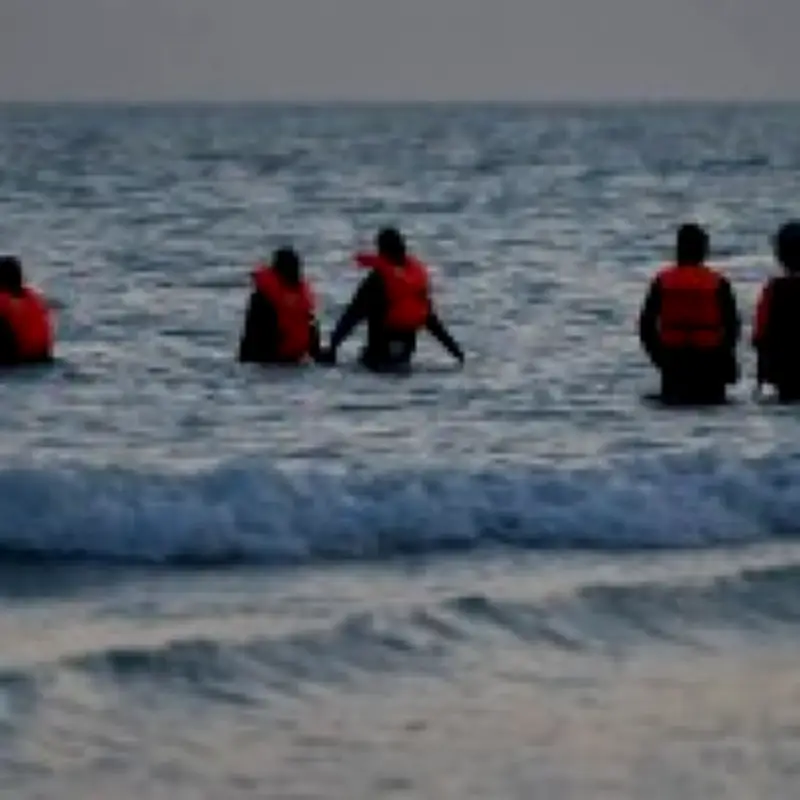
Almost 160 people were rescued from a 'mega-dinghy' in the English Channel after its engine caught fire, France's maritime prefecture of the Channel and North Sea confirmed. The boat, which had departed for the UK on Monday, attempted the crossing overnight before its 'integrity deteriorated very rapidly' when the fire broke out this morning. A fleet of ships was deployed to rescue those on board, saving 157 people by the time the operation concluded. No injuries or fatalities have been reported.
Rescue operation details
According to the prefecture's statement, five people had been rescued from the dinghy and taken to the quay in the French town of Boulogne last night. The statement added: 'Determined to reach the United Kingdom, the migrants making the crossing in precarious boats refused assistance offered by French resources and only accepted it in situations of extreme urgency. Given the structural fragility of the systematically overcrowded boats, the decision was made not to force the migrants to board state rescue vessels, to avoid endangering their lives in the event of a shipwreck.'
The incident underscores the ongoing risks faced by migrants attempting the dangerous crossing, often in overcrowded and unseaworthy vessels. The 'mega-dinghy' is a term used for larger inflatable boats that can carry dozens of people, which have become more common in recent attempts.
Political context and response
The rescue comes amid heightened political attention on small boat crossings. Shadow home secretary Chris Philp has visited the Channel, while Reform UK announced a plan to deploy Royal Navy vessels to return migrants to France yesterday. These developments follow the crisis in the Spanish territory of Ceuta, which has drawn attention to migration pressures across Europe.
Figures released on Sunday showed that more than 2,000 people had arrived in the UK via small boats since Andy Burnham became Prime Minister. In response, Burnham stated his government would be 'relentless' in reducing the numbers. According to provisional figures, small boat arrivals so far total just over 14,500, a 43% decrease compared to the more than 25,400 who had arrived by this point last year. The Prime Minister commented: 'Progress is being made but we're not complacent.'
Ongoing challenges
The Channel crossing remains a contentious issue, with debates over asylum policies, border security, and humanitarian obligations. The refusal of migrants to accept French assistance highlights the desperation of those seeking to reach the UK, often risking their lives in the process.
Authorities continue to monitor the situation, with rescue operations frequently required as boats encounter mechanical failures or adverse weather conditions. The prefecture's decision to avoid forced rescues reflects a delicate balance between saving lives and respecting migrants' autonomy, though it has sparked debate among policymakers.
As the political discourse evolves, the human toll of these crossings remains a central concern. The successful rescue of 157 individuals today is a testament to the efforts of maritime agencies, but it also serves as a stark reminder of the perils that persist in the Channel.




