
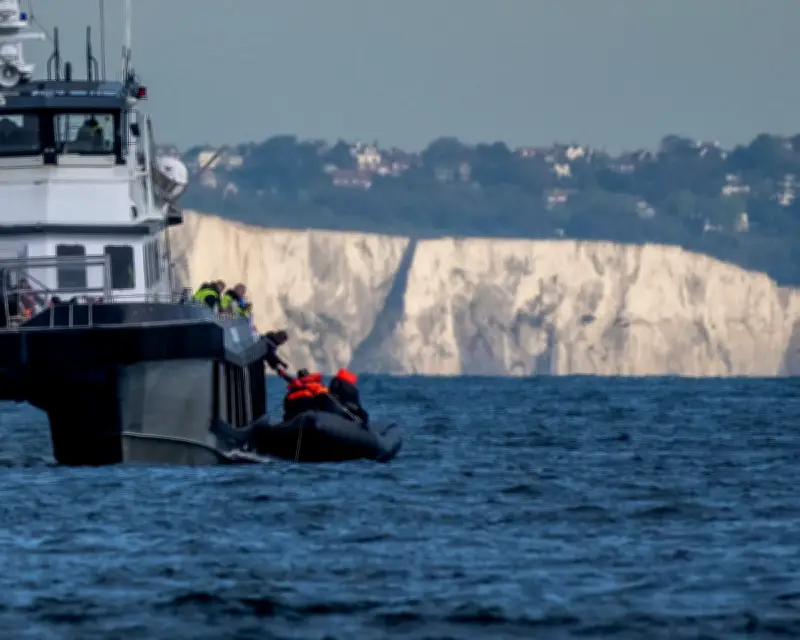
Reform UK leader Nigel Farage has unveiled a controversial plan to deploy the Royal Navy in the English Channel to intercept small boats carrying asylum seekers, a proposal that has sparked intense debate over its feasibility and legality. Dubbed "Operation Fortress," the initiative would represent the "largest military operation in the English Channel since world war two," according to Farage, who spoke to reporters on Monday. The announcement comes amid ongoing scrutiny of Farage's summer, which has been overshadowed by revelations from the Guardian about an undeclared £5m gift and his connections to a convicted fraudster.
What Would Operation Fortress Entail?
Under the plan, the Royal Navy would replace the Border Force's current fleet of five cutters and six patrol ships in the Channel. Navy offshore patrol vessels (OPVs), each nearly 80 metres long, would "close on and shadow" dinghies carrying migrants. Three such OPVs are currently deployed around the UK, though they are scheduled for decommissioning in 2028 and may be sold to Uruguay. One, HMS Tyne, is presently shadowing a Russian frigate in the North Sea alongside a French corvette, illustrating the vessels' existing commitments.
Tom Sharpe, a former navy commander, suggested an alternative could be deploying a frigate, but he cautioned that using a specialist warship for such duties would be "an incredible waste of a military asset." The plan envisages Royal Marines in inflatables approaching packed dinghies to detain occupants, who would then be given food and water before being returned "under escort" to France or Belgium.
Legal and Operational Challenges
International maritime law, specifically article 98 of the UN convention on the law of the sea, obliges ship masters to render assistance to anyone in danger at sea and to proceed "with all possible speed" to those in distress. John Foreman, a former navy captain, highlighted this duty: "Mariners are obliged to rescue people at sea in distress and to not create conditions for putting them in distress." This obligation could complicate the interception process, as migrants may not cooperate, fearing arrest.
Previous attempts to use the navy for such purposes have faced hurdles. In 2022, Boris Johnson's government launched Operation Isotrope, which included tentative plans for "pushbacks" to force boats back to France. These plans were abandoned due to concerns from military figures about practicality, safety, and potential legal action against naval officers.
Farage's Claims and French Response
Farage insists his plan differs from previous pushback strategies. "This is not pushback. We are talking about rescue and return," he told reporters. He expressed confidence that France would accept returned migrants, claiming he had spoken to unnamed French politicians who indicated a "softening of attitude" towards such measures. "Dealing with this problem would be a great, great relief to the people of northern France," Farage added.
However, one French official told the Guardian that the proposals would be "unacceptable," stating that the French government "would clearly not expect a key ally such as the UK to infringe on territory or waters without consent." If France declined to accept returns, Reform's home affairs spokesperson, Zia Yusuf, said marines would return migrants to the French coast regardless, a move that would likely violate French sovereignty and international law.
Expert Concerns and Potential Consequences
Colin Yeo, a leading immigration barrister, called the plan an "illegal act of international aggression," citing article 2(4) of the UN charter, which forbids "the threat or use of force against the territorial integrity or political independence of any state." Peter Walsh, a senior researcher at Oxford University's Migration Observatory, noted that the plan's success hinges on French cooperation. If the UK acted without permission, Walsh warned of "major diplomatic consequences," including France suspending intelligence sharing and beach patrols, or even attempting to repel British ships.
As the debate continues, questions remain over the operational feasibility, legal implications, and diplomatic fallout of Operation Fortress. The proposal underscores the complexities of addressing Channel crossings, which have become a persistent political issue in the UK.




