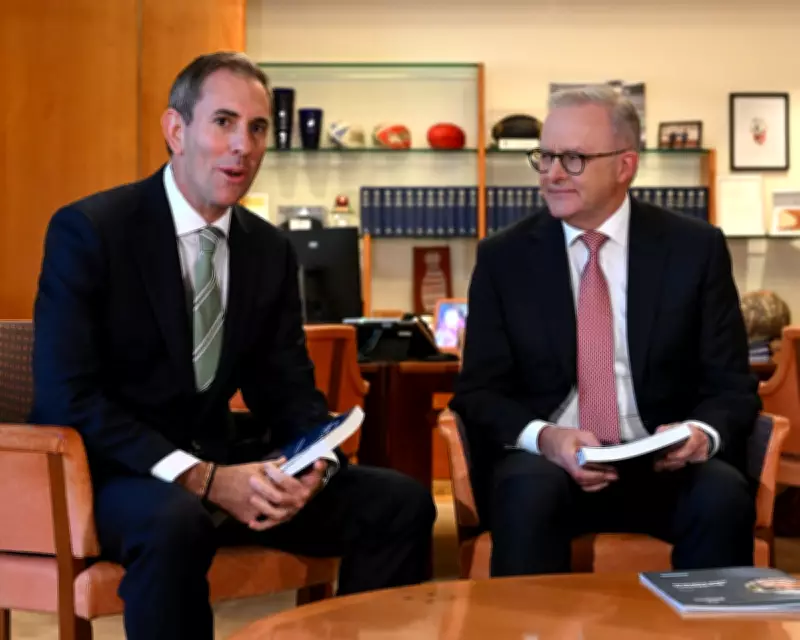
Australia's federal budget for 2026 will reveal a $45bn improvement in the commonwealth's bottom line over the current and next three financial years, as Treasurer Jim Chalmers promises 'spending restraint' amid high and rising inflation.
Key Budget Figures
The improvement in the forecast bottom line comes as Prime Minister Anthony Albanese defends expected reforms to negative gearing and capital gains tax. He casts the budget's focus on intergenerational fairness as a salve against rising populist anti-establishment politics sweeping the Western world.
While the nation's finances are expected to remain in the red, Chalmers flagged a combined $44.9bn in smaller deficits over the four-year forward estimates period, compared to the December update. The budget will show that policy decisions taken since the mid-year economic and fiscal outlook have contributed to the fiscal improvement.

Spending Restraint and Savings
'We've delivered a big improvement in the budget bottom line since we were elected and another improvement since the last update in December,' Chalmers said in a statement. 'What's driving this improvement in the budget are the savings we've found and the spending restraint we've shown.'
The government has already announced that changes to the National Disability Insurance Scheme (NDIS) will save an estimated $37bn over four years. If achieved, it will be one of the largest savings from a single policy decision this century, according to the e61 Institute.
Other pre-announced policy changes include trimming investor tax concessions, winding back health insurance rebates for older Australians, and scaling back the electric car discount. These will bring total savings to 'well over' $50bn, predicted e61 economists Lachlan Vass and Jack Buckley.
Inflation Concerns
After last week's interest rate hike, Reserve Bank Governor Michele Bullock warned that extra government spending risked adding to inflationary pressures. The government claimed real growth in total government payments will average 1.5% in the eight years to 2029-30, though this includes the huge drop-off in spending after the pandemic. Real payments growth will average an estimated 5% in this and the last financial year, according to the mid-year budget update.
Budget Focus Areas
Albanese said Tuesday would feature 'a very wide-ranging budget' focusing on housing, productivity, and fuel security. In the wake of One Nation's historic victory at the Farrer byelection, the prime minister said 'we see what happens when people don't think they have a shot at a fair go'.
Amid accusations of breaking a promise not to touch tax rules for landlords, Albanese said 'the dream of home ownership is disappearing for a generation of Australians, and we can't afford to just sit back and watch that happen'.
Political Reactions
Shadow Treasurer Tim Wilson accused the government of 'a series of broken promises', after Albanese had flatly ruled out making changes to negative gearing during the 2025 election campaign. Wilson said he feared young people looking to enter the housing market today would be deprived of opportunities for wealth creation enjoyed by older generations, who received generous tax breaks on property investments.
'The Australian people have woken up to the new taxes on the self-starters of this nation,' Wilson told a press conference. 'The reality is that this is exactly the opposite of what the treasurer has been saying. He's been going out and saying this is going to be a budget for young Australians. Now he's locking in the benefits for one generation and harming young Australians.'