
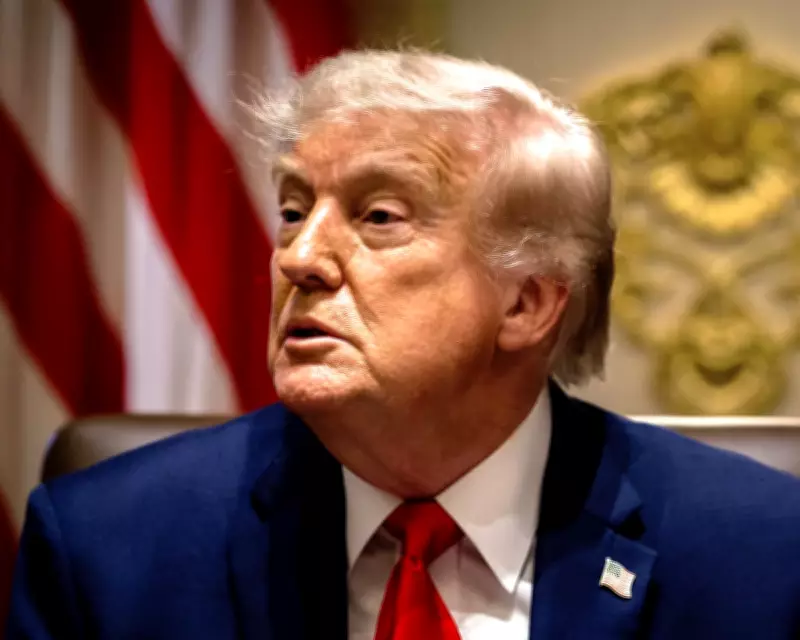
US President Donald Trump has claimed that he could approve an Iran peace deal on Friday that includes significant concessions from Tehran, such as opening the Strait of Hormuz and dismantling its nuclear program. However, top Iranian officials have signaled that no final agreement has been reached, highlighting a stark contrast between the two sides' accounts.
Trump emerged from the White House Situation Room after spending more than two hours with senior aides but did not immediately announce a decision. According to The New York Times, citing a senior administration official, Trump had not yet made a final decision on the deal.
In a post on his Truth Social platform, Trump outlined the terms of the purported deal, stating that Iran "must agree that they will never have a Nuclear Weapon or Bomb," open the Strait of Hormuz for all traffic without tolls, eliminate mines in the waterway, and allow the US to unearth and destroy highly enriched uranium from a secure nuclear site in Iran. He also said the deal would preclude the transfer of frozen assets to Iran. Trump added that he would lift the US naval blockade against Iran, though it was unclear if that would be contingent on the agreement being confirmed.
Iranian officials reacted defiantly to Trump's announcement. The semi-official Tasnim news agency reported that no final understanding had been reached, calling Trump's post "in line with his usual pattern of making unilateral and egotistical statements." Foreign Ministry Spokesperson Esmaeil Baqaei told state media that "exchanges of messages are continuing, but no final agreement has been reached yet."
Iran's Foreign Minister, Abbas Araghchi, indicated that discussions with Oman focused on the future administration of the Strait of Hormuz in line with sovereign responsibilities and international law, suggesting Iran is unlikely to open the waterway under the same system as before the war.
A White House official told AFP on condition of anonymity that the Situation Room meeting lasted approximately two hours and that President Trump will only make a deal that satisfies his red lines, emphasizing that "Iran can never possess a nuclear weapon."
Meanwhile, a meeting between US Secretary of State Marco Rubio and Pakistan's Foreign Minister Ishaq Dar ended without public comment on the negotiations, in which Pakistan is a key mediator. Tasnim reported that there had been no discussion about the nuclear issue and that Trump's claims of lifting the US blockade should be met with "scepticism." Iran's Fars news agency described Trump's post as a "mixture of truth and lies," stating that the deal did not include provisions for opening the Strait of Hormuz without fees or destroying Iran's nuclear material.
On Friday, Iran's top negotiator, Mohammad-Bagher Ghalibaf, wrote that Iran has "no trust in guarantees or words – only actions are the measure." He also sent a defiant message that Iran is ready for another round of fighting if talks to extend the ceasefire and end the war fail. "We seize concessions not through dialogue, but with missiles; in negotiations, we merely make them understand," he wrote. "The winner of any agreement is the one who is better prepared for war from the day after."
US Vice President JD Vance hinted on Thursday night that an agreement was close, but Trump reportedly needs more time to decide whether to back a negotiated agreement that would defer many difficult issues, including the fate of Iran's remaining nuclear stockpile, to subsequent negotiations. Senior Iranian officials reiterated that there is no plan to allow the export of its uranium, but observers suggest that does not rule out downblended uranium further from weapons grade.
Trump may also need time to persuade a reluctant Israeli Prime Minister Benjamin Netanyahu to accept a ceasefire in Lebanon as part of the agreement. Netanyahu has been stepping up attacks on Hezbollah positions throughout Lebanon, including in Beirut. He did not immediately comment on the Iran deal, stating that Israeli forces have crossed the Litani and are operating in strategic areas.
Baghaei warned that the "silence and indifference of international institutions" will provoke Israel to "further embitterment," describing the US as "an accomplice and partner in all of Israel's crimes" in Lebanon, the Palestinian territories, and the entire region.
Ebrahim Rezaei, spokesperson for the Iranian parliament's national security and foreign policy commission, suggested Iran is in no mood to back down on its plans to change the management of the Strait of Hormuz. He claimed Iran's management of the waterway has been recognized worldwide, questioning why Iran should commit to not building a nuclear weapon, stating, "This matter is none of America's business."
Ebrahim Azizi, chair of the parliament's national security and foreign policy commission, denied reports about the possible transfer of Iran's enriched uranium stockpiles to a third country, saying the Islamic Republic has no intention of handing over these materials. However, Iranian President Mahmoud Pezeshkian adopted a more conciliatory tone, thanking Pakistani mediators for their effectiveness toward reaching an agreement during a phone call with Pakistani Prime Minister Shahbaz Sharif.




