
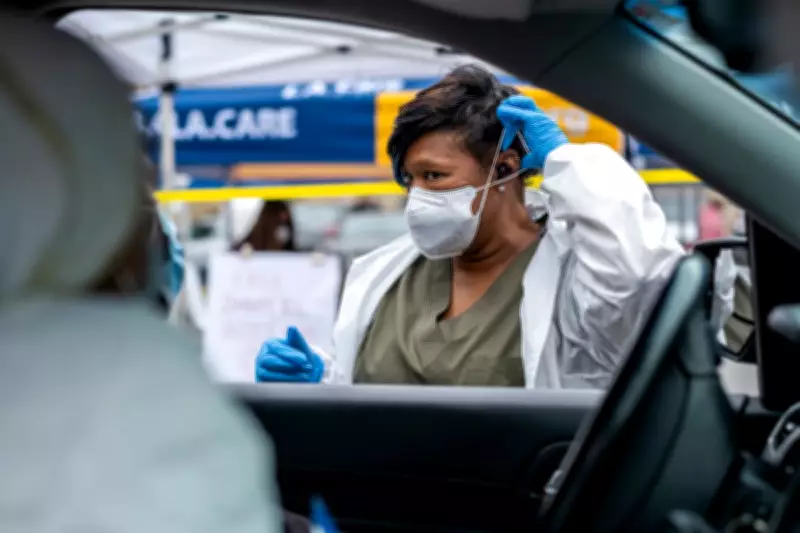
Experts are sounding the alarm that the United States is not adequately prepared for the next pandemic, citing reduced funding, rampant misinformation, and a loss of public trust in the wake of Covid-19. The recent hantavirus outbreak, though unlikely to trigger a global crisis, has highlighted critical weaknesses in the nation's public health infrastructure, including testing capacity, outbreak prevention expertise, and the ability to combat false narratives.
Stephanie Psaki, former White House global health security coordinator, emphasized that even if the current outbreak is contained, it should not breed complacency. “We’re not ready for this type of threat,” she said, noting that many key personnel and systems for rapid outbreak response have been dismantled. Scientific models suggest a 50% chance of another pandemic as severe as Covid-19 within the next 25 years, underscoring the urgency.
Misinformation: A Major Obstacle
Misinformation remains one of the greatest challenges. Dr. Anthony Fauci, former chief medical adviser to the president, pointed out that while conspiracy theories have existed for centuries, social media amplifies them dangerously. “We’re just being overwhelmed,” he said, adding that trusted influencers often outrank scientists in swaying public opinion. “You can’t fight misinformation with data; you have to communicate on a level people understand.” Fauci advocated for pre-bunking myths and releasing accurate information swiftly to avoid playing catch-up.
Nina Schwalbe, a senior scholar at Georgetown University, stressed the need for better communication of uncertainty. “We say things too simply, and then people lose their trust,” she said, noting that the public can handle ambiguity.
Advances at Risk
The pandemic spurred remarkable scientific achievements, such as mRNA vaccines, which Fauci described as “one of the best vaccines ever developed.” However, these gains are jeopardized by funding cuts and misinformation. Vaccine development began just six days after the SARS-CoV-2 genome was published, and a 95% effective vaccine was deployed within 11 months—a feat built on years of prior research. Yet, global vaccine distribution efforts faltered due to lack of planning, including basic supplies like syringes. “Tens of millions of doses are meaningless if there’s no way to distribute them,” Fauci said.
The delay in global access caused deep damage to international alliances, according to Psaki. “It’s very difficult to rebuild trust after that kind of betrayal.” While the 2024 mpox response improved, challenges remained in getting vaccines into arms. Rapid testing also lagged; South Korea conducted 20,000 tests daily while the US struggled with faulty tests.
Federal Gaps, State Leadership
Pandemic preparedness is not solely a domestic issue. Fauci stressed the importance of international collaboration, warning that the US appears to be stepping back from global partnerships. Donald Trump’s move to leave the World Health Organization (WHO) has been criticized; Psaki called the WHO “absolutely essential,” noting that the US contribution of $130 million is a fraction of Pentagon spending on luxury items.
In the absence of federal guidance, states are taking the lead by forming health alliances and working directly with WHO. Matthew Kavanaugh, director of the Georgetown global health policy center, said, “The federal government is not going to play the role needed in the next pandemic, so we are watching states step up.”
Hope and Investment
Psaki outlined the basics of outbreak response: stop threats from emerging, identify them quickly, contain them, and keep hospitals from being overwhelmed. Despite political divisions and misinformation, she urged “a little more space for hope and trust,” noting that most families prioritize safety.
Schwalbe, who lost her father to Covid-19 in March 2020, recalled the chaos: no oxygen or palliative care, only refrigerator trucks and wailing sirens. The experience fortified her resolve to strengthen public health. “We can’t just leave public health as the unseen thing that people complain about when it’s not working. We have to invest in it,” she said.




