Virtual Reality Therapy Provides Respite for Gaza's Children
In the heart of Gaza City, amidst displacement camps and the lingering scars of war, a small office space has become a sanctuary for Palestinian children grappling with profound trauma. Here, virtual reality headsets offer a fleeting escape, transporting young minds from the grim reality of rubble and destruction to serene digital landscapes. For a few precious minutes, these children can immerse themselves in worlds filled with trains, toys, animals, and the sea, before stepping back into the harshness of Gaza as it stands today.
A Glimpse into Healing Through Technology
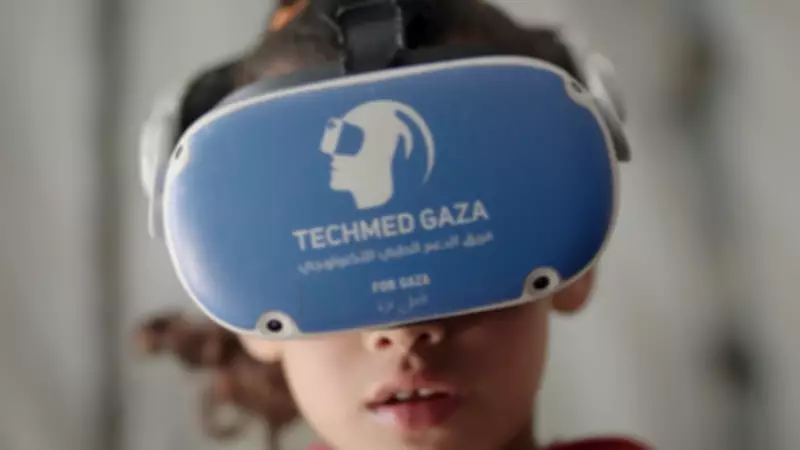
Seven-year-old Razan stands still, wearing a VR headset as a therapist gently prompts her to describe what she sees. She names objects as they appear: a train, toys, animals, the sea. This session, part of a therapeutic intervention, looks like play but serves a deeper purpose. Razan was injured last year while fetching water for her family when a shell landed nearby, sending shrapnel into her leg. A series of surgeries followed, including a failed reconstruction attempt, leaving her leg misshapen and her recovery uncertain.
Doctors in Gaza, where medical facilities have been severely impacted by two years of war, told her family that proper treatment would require leaving the Strip. For Razan, this news felt like a second attack. Her mother, Rana Abu Harbid, recounts how the trauma led Razan to stop eating for days, surviving only on water before collapsing and being hospitalized. Nightmares still haunt her, causing her to wake terrified and shaking, feeling as if the ground is moving.
Brothers Bound by Shared Suffering
In the same office, brothers Ahmad and Amjad, aged 17 and 13, share their experiences with the VR sessions. Ahmad describes how the pressure of war closes in on him, but the headset helps him feel able to breathe again. Amjad says it transports him from a world of war and destruction into one of nature. Their story is one of sudden devastation: an Israeli airstrike hit their home, throwing Ahmad into the air like a piece of paper. Shrapnel struck his face, blinding him in one eye, while Amjad suffered even more severe injuries, initially assumed dead until he moved his hand in the hospital mortuary.
Their mother, Nissma, recalls waking to dust and rubble, finding Ahmad covered in blood and realizing his eye was gone, then searching for Amjad buried under debris. Months later, both boys still carry shrapnel in their bodies, with doctors in Gaza unable to treat some injuries, necessitating travel outside the Strip for surgery—a distant hope for many families amid strict crossing restrictions.
The TechMed Gaza Initiative
The VR sessions are part of a project run by TechMed Gaza, initiated after a child injured in the war exhibited severe psychological symptoms, such as refusing to eat or drink and constant crying. VR was introduced to reduce these symptoms, yielding positive results. Staff member Lama Abu Dalal explains that the project has worked with around 180 cases, using structured sessions that include breathing exercises, walking exercises, and exposure to natural environments within the headset.
Remarkably, Lama notes that some children who could not walk due to fear have taken their first steps while wearing the headset, indicating psychological rather than physical barriers. However, the initiative faces significant limitations: with only a few headsets available and no replacement parts due to closed crossings, fewer children can benefit. When equipment breaks, it cannot be repaired or replaced, hindering the reach of this vital therapy.
A Fragile Backdrop of Ongoing Conflict
All of this unfolds against a backdrop of ongoing instability. Although a ceasefire announced late last year remains officially in place, it is fragile, with strikes continuing and people still being killed. Life in the camps remains precarious, underscoring the urgency of mental health support for Gaza's youngest survivors. As Razan removes her headset, the forest and sea disappear, and the camp outside reappears. For a few minutes, these children are somewhere else, but they inevitably step back into Gaza as it is—a testament to both the power and limitations of virtual reality in healing war wounds.