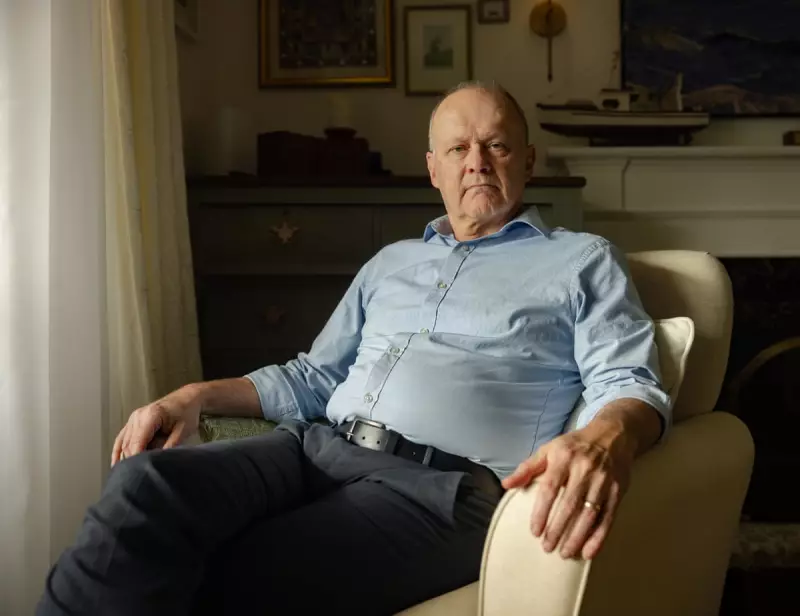
For psychologist Chris Moore, a single catastrophic night in Cambridge during his student years became the defining crucible of his life and career. Fuelled by alcohol and youthful recklessness, he and three friends made a decision that would end one life and irrevocably alter theirs: they took a car and drove drunk, resulting in a collision that killed a cyclist.
A Night That Changed Everything
Moore, now a professor of psychology and neuroscience at Dalhousie University in Nova Scotia, recalls the warm spring evening in Cambridge. After end-of-year exams, a house party was in full swing. Later, the group decided to drive back to town. Moore fell asleep in the front passenger seat and awoke to paramedics pulling him from the wreckage, his forehead lacerated from hitting the windscreen.
It was only the next day, after surgery, that he learned the full horror: they had driven into a group of cyclists, killing one man and injuring others. "I felt this incredible shock, that mass combination of emotions, obviously the horror of what had happened," Moore recounts. "The massive regret of what we’d done." The ensuing emotional storm was a complex roil of fear, regret, and anxiety about what his family would think.
The Healing Power of Forgiveness and a New Understanding of Guilt
Moore's new book, The Power of Guilt, draws on this personal trauma and four decades of research. He argues for a radical reappraisal of guilt, not as a purely negative emotion to be avoided, but as a vital social tool. Guilt, he posits, functions as a drive to repair damaged relationships, both between individuals and within societies.
"I wanted to give guilt a makeover in terms of its reputation," Moore explains. "We often think of guilt as not a nice thing, because it’s painful and ugly, and I wanted to show why it’s actually good for us." He distinguishes healthy guilt from toxic shame. Healthy guilt focuses on the bad act and motivates repair; shame convinces you that you are a bad person, leading to withdrawal.
Crucial to his own healing was the unexpected forgiveness offered to him. While in hospital, members of the Christian Union from the cycling group visited his bedside. "It was incredible for them to be at my bedside and explicitly say: 'We forgive you,'" he says. Later, the family of the deceased man also wrote to his parents offering forgiveness. This, alongside his parents' uncharacteristically gentle and loving response, was transformative.
"I was incredibly lucky," Moore reflects. "If that had not happened, then there’s no question that guilt would have lingered for much longer." This forgiveness allowed him to move forward without the burden of shame. "I didn’t think I was a bad person. I thought I was, at the time, a stupid person," he states.
Guilt in Society: From Parenting to Politics
Moore applies his relationship-first theory of guilt to various modern dilemmas. On parenting, he sees guilt as almost inevitable but not inherently damaging. "You feel guilt as a parent because you want the best for your child," he notes, cautioning against the bombardment of advice that can exacerbate it.
He advocates for a greater role for restorative justice within the criminal justice system, emphasising the repair of relationships harmed by crime. On broader societal issues like historical injustices and reparations, such as the UK's role in slavery, Moore suggests collective guilt has a role. "The question is: did your group have responsibility for it? Did the UK as an entity, as a collective, a nation, have responsibility for it? And if they did, then there is a reasonable debate to have about reparations."
For individuals wrestling with unresolved guilt, especially from long-ago events, Moore suggests self-forgiveness through a perspective shift. "Imagine you were the person you’d harmed... would you forgive that person?" he asks. If you have done all you could to make amends and feel genuine contrition, you may deserve your own forgiveness.
Moore served nearly three months in prison for his role in the accident, but was allowed to return to Cambridge to complete his degree and PhD. The physical scars on his forehead remain a permanent reminder. Yet, his life's work stands as a testament to a hard-won understanding. "A functioning life, and a functioning world, is all about strong relationships," he concludes, "and the point of guilt is to strengthen and manage relationships."
The Power of Guilt: Why We Feel It and Its Surprising Ability to Heal by Chris Moore is published on 8 January by August Books.