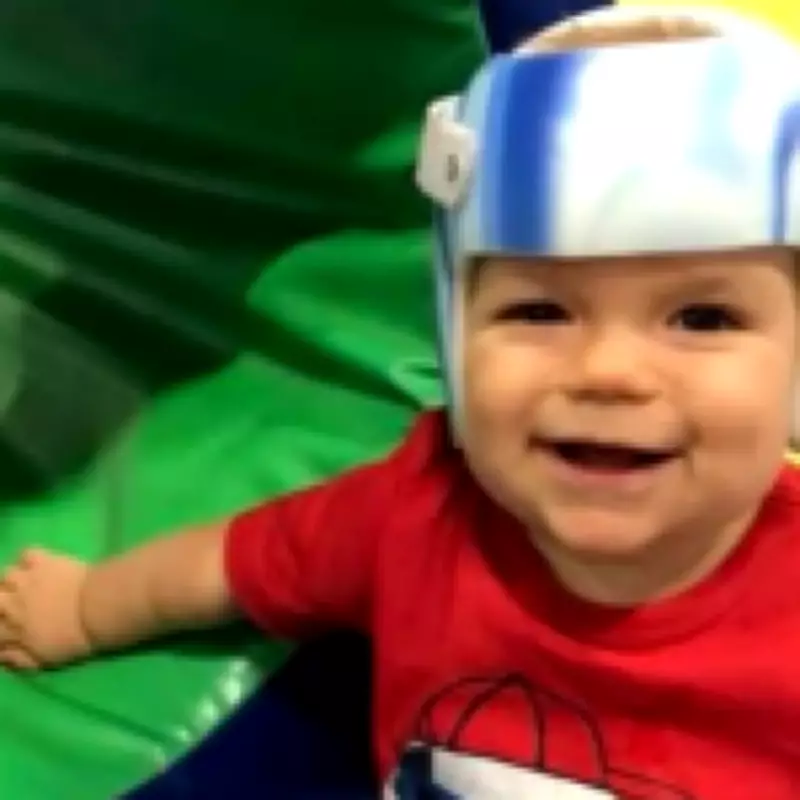
A mother has shared the heartbreaking reality of watching her young son slowly lose his abilities due to a rare condition often called childhood dementia. Georgia Nonas, 29, from the UK, says her four-year-old son Cody, who she describes as a 'loving little boy with the most contagious smile', is fading away every day.
Diagnosis and Early Signs
Cody was diagnosed with Sanfilippo syndrome type A at age three, after showing early symptoms like hearing issues, recurring ear infections, and developmental regression. He had said 'mamma' and 'baba' but then never spoke again. Initially diagnosed with autism at age two, the Sanfilippo diagnosis came a year later. Georgia recalls it as 'the worst day of my life', leaving her numb and in denial.
What Is Sanfilippo Syndrome?
Sanfilippo syndrome, or mucopolysaccharidosis type III, is a rare genetic disorder that affects about 1 in 50,000 to 250,000 people. It causes progressive damage to the brain and spinal cord due to the buildup of waste products. Symptoms often appear between ages 1 and 4 and include coarse facial features, heavy eyebrows, excessive hair growth, sleep disturbances, respiratory issues, and diarrhea. Children typically live only into their late teens.
'Children with Sanfilippo lose every skill they've learned,' Georgia explains. 'Sadly, we are seeing this happen now.' Cody also has epilepsy and requires daily painkillers for muscle and joint pain, as well as sleeping aids.
Daily Struggles and Anticipatory Grief
Georgia, now a full-time carer, describes the emotional toll: 'Anticipatory grief is a big part of being a parent to a child with Sanfilippo – you start grieving your child the day you get that diagnosis. It's a gut punch at random times in the day.' She says daily life is hard for Cody, affecting his sleep, communication, mobility, and eating.
Child Bereavement UK notes that parents facing such news often experience shock, distress, numbness, denial, fear, anger, and confusion. They offer confidential support via helpline at 0800 02 888 40 or email helpline@childbereavementuk.org.
Advocacy and Hope
Georgia has turned to social media to raise awareness, sharing Cody's story to help others recognize the signs. 'Before his diagnosis, we had never heard of it. But when I went looking for a community online, I saw children who looked just like Cody. If someone sees his story and thinks, 'Oh, my child has those features', it can lead to an earlier diagnosis.'
While no treatment is available in the UK, the family is waiting for the US Food and Drug Administration (FDA) to approve a gene therapy that could slow the disease's progression. 'It isn't a cure, but it is a way to slow down the clock,' Georgia says. 'Our biggest wish is to get him to that treatment so we can hold onto the boy he is today for as long as possible.'
Despite the challenges, Georgia cherishes every moment: 'Cody is the light of my life. I want to travel and explore the world with him. We have a trip to Disneyland Paris booked this July. I just want to make as many memories as possible.'