My nine-year-old son, Leo, hates losing. Over the years, there have been tears when he hasn't won at a board game. He has threatened to quit cricket – his favourite sport – because he wasn't the best on the day. And he is not above levelling cheating accusations at a rival team who has won fair and square.
In those moments, I have forced myself to go against the instinct every parent has: to smooth it over, tell him he is a winner anyway, or agree with him, as a way to rescue him from the disappointment. Instead, I have always told him the truth, because it is an important lesson for children to learn. You will not always be the winner. Sometimes you are the loser.
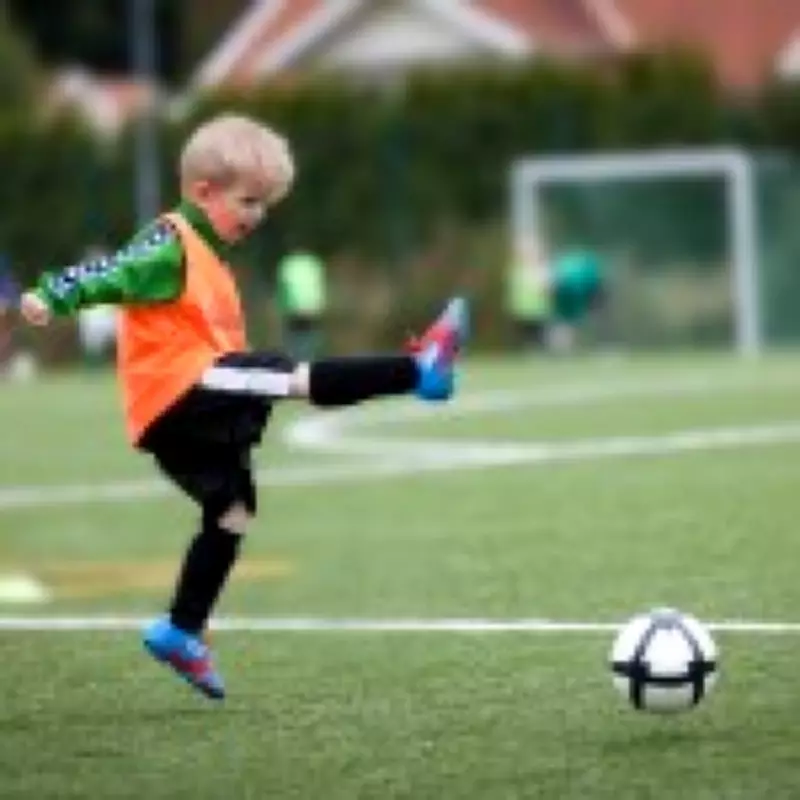
So when I saw commentator Michelle Dewberry's viral comments about not wanting her five-year-old son to get a runner-up sticker at football training, I found myself somewhat reluctantly agreeing with her. Dewberry wrote on X: 'My 5 year old boy does football training. At the end of the session they do a man of the match type thing. My boy is always desperate to win it. He often doesn't.' She went on to say, 'One of the other mums heard me and was aghast at what I said. She told me she is going to get runner-up stickers for all the kids who don't make it. I said no thanks, not for my son,' commenting that, 'Kids need to learn that they can be the best, but they must apply themselves and dust themselves off when it doesn't go their way.'

Dewberry is not wrong. Children do need to learn how to lose. They need to learn that things will not always go their way – to understand that someone else might be faster, stronger, cleverer, or simply better at something than they are. Dewberry is also a GB news presenter and Brexiteer who is in favour of capital punishment, so as you can imagine, she is not the first person I would expect myself to agree with.
I strongly feel that every child should be encouraged to take part in sports and team activities, regardless of ability. They get taught so much more than how to kick a ball or run fast. They teach teamwork, discipline, and resilience. Sometimes there is a player of the match. And the other children need to learn how to support that child, congratulate them and be happy for them. That is all part of being in a team. Not receiving a sticker or runners up prize – I think that takes away from the child who was determined the best.
And five is not too young to start learning that lesson, either. Because if children grow up believing they should always win, or always be rewarded regardless of effort, the real world eventually becomes a very confusing place. You will not always get picked. You will not always succeed. You will not always be exceptional at everything you try. And that is okay. In fact, I would argue it is healthy. Children should learn that effort matters more than ego. That trying your best is something to feel proud of, even if you do not come first. That if your best is not good enough on one occasion, it does not make you a failure as a person. We cannot all be brilliant at everything.
But where I started to part ways with Dewberry was when the conversation drifted away from teaching kids about resilience and coping with disappointment towards something much harsher. Her message became more about mocking sensitivity and dismissing her child's feelings, and she suggested that people sometimes use defeat as an excuse to play the victim. Dewberry topped her post off by stating that the country would be 'in a better place' if more people aligned with her worldview.
It was once she took that turn that I think she crossed a very important line. There is a difference between teaching resilience and demonstrating to your kids a complete lack of empathy – between saying 'You lost, try harder next time' and making kids feel fundamentally rubbish or weak for struggling. Because while children absolutely need boundaries and honesty, they also need compassion.

The healthiest adults are usually not the ones who were taught to suppress every emotion or 'toughen up' at all costs. They are the ones who learned how to process disappointment without feeling ashamed for having emotions in the first place. It is okay to lean into how children feel when they lose. It is okay to say: 'I see you are disappointed,' 'I know that hurts,' and 'I understand that you wanted to win.' That is not creating weakness, and it is certainly not playing the victim. It is teaching emotional security.
Kids need cheering on. They need support. They need to feel valued, whether they came first or last. But they do also need honesty. The important thing about defeat is what comes next. Helping children overcome that disappointment in a healthy way rather than pretending it does not exist or shaming them for feeling it. Because teaching children to value competitiveness over compassion risks creating adults who see kindness as weakness and struggling people as failures. It can damage a child's confidence and self-worth far more than losing a game ever could.
Not everyone wins. Not everyone can win. That is life. Real resilience comes from us raising children who can lose without becoming sore losers. Who can congratulate the winner sincerely. Who can dust themselves off, work harder and try again next time. And most importantly, children who understand that coming second, or even last, does not make them any less valuable.