
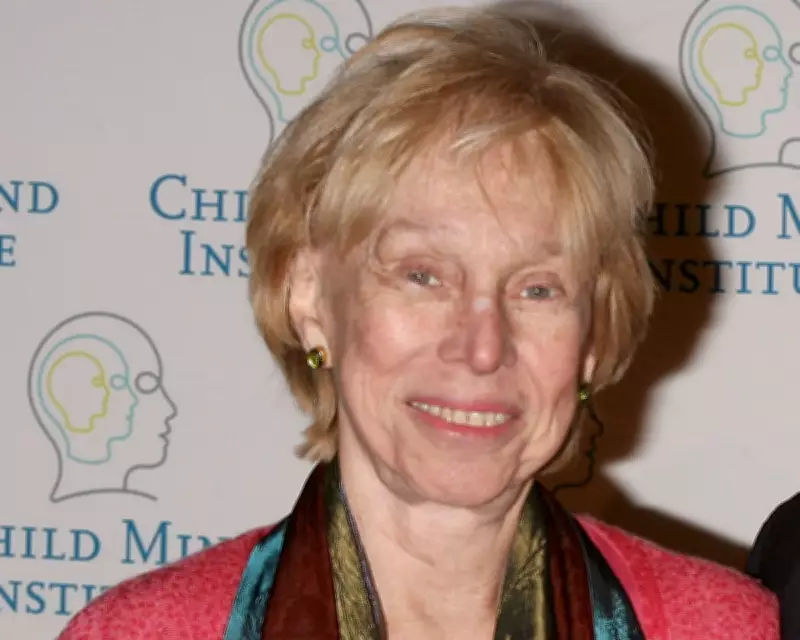
Judith Rapoport: A Trailblazer in Mental Health and OCD Awareness
The child psychiatrist Judith Rapoport, who has died at the age of 92, is widely recognized for bringing obsessive-compulsive disorder (OCD) into the public consciousness. Her influential book, The Boy Who Couldn't Stop Washing, published in 1989 and translated into over 20 languages, was written in an accessible, jargon-free style for a general audience, based on her pioneering research into the condition.
Transforming Perceptions of OCD
Individuals with OCD often describe their lives as dominated by compulsions, such as repeatedly checking light switches, locking doors, or performing rituals before leaving home. Many experience this as a form of torture, with constant hand-washing or other behaviors disrupting daily life. Before Rapoport's work, most sufferers were unaware that others shared similar struggles, leading to shame and secrecy. Her book revealed that OCD has a neurological basis and is far more common than previously thought, affecting up to 2% of the population.
Historically, OCD was often attributed to strict upbringing or parenting practices, but Rapoport demonstrated that it is a neurological disease with familial patterns, treatable with medication. Her 1989 double-blind drug trial using clomipramine, an antidepressant, led to its approval by the US Food and Drug Administration for OCD treatment. This breakthrough provided hope for many, as echoed by Charles Gentz, an OCD patient who said, "I thought I was the only person touching things... the shame was washed away." Gabrielle Shapiro, a professor of clinical psychiatry, noted that Rapoport's work significantly reduced stigma for those affected.
Early Life and Career Journey
Born in New York City in 1933 to Minna Enteen, a schoolteacher, and Lewis Livant, a businessman, Judith attended Walden School in Manhattan before earning a degree in experimental psychology from Swarthmore College. She graduated magna cum laude in 1955 and pursued a medical degree at Harvard Medical School, where she met her husband, Stanley Rapoport. Despite facing resentment as one of only five women in her class, she graduated in 1959 and married two years later.
After brief work at Mount Sinai hospital, she trained in psychiatry at Harvard's Massachusetts Mental Health Center and St Elizabeths hospital in Washington DC. In 1962, she and her husband studied in Sweden at Uppsala University, and she later led research at the Karolinska Institute in Stockholm. Upon returning to the US, she joined the National Institute of Mental Health (NIMH) in 1976, where she conducted her seminal OCD research and was promoted to head of the child psychiatry branch in 1984.
Shifting Paradigms in Psychiatry
Rapoport played a key role in shifting American psychiatry from Freudian models of unconscious conflict to a focus on brain biology and its impact on mental illness. Her work extended beyond OCD to include studies on attention deficit hyperactivity disorder (ADHD) and childhood schizophrenia. In 1978, she published a paper showing that both hyperactive boys and a control group responded similarly to amphetamines, challenging the belief that only hyperactive children were calmed by stimulants. For childhood schizophrenia, she used magnetic resonance imaging to demonstrate its progressive nature, leading to brain matter loss, countering earlier assumptions about upbringing as the cause.
Her research methods, including using her sons in drug trials, drew some criticism, but her contributions were widely celebrated. She appeared on talk shows like Oprah Winfrey and Larry King to promote her work, and by retirement, she had published multiple medical books and over 300 scientific papers. Recognized as a fellow of the US Institute of Medicine and the American Academy of Arts and Sciences, Shapiro described her as "a pioneer, turning child psychiatry into a modern, evidence-based discipline."
Personal Life and Legacy
Outside her career, Rapoport enjoyed music, playing guitar, singing in choirs, theatre, hiking, and gardening. She is survived by her husband, sons, and four grandsons. Her legacy endures through her transformative impact on mental health awareness and treatment, with her work continuing to alleviate pain for countless individuals. As she once said, "If my work alleviated just part of their pain then it was not wasted time."




