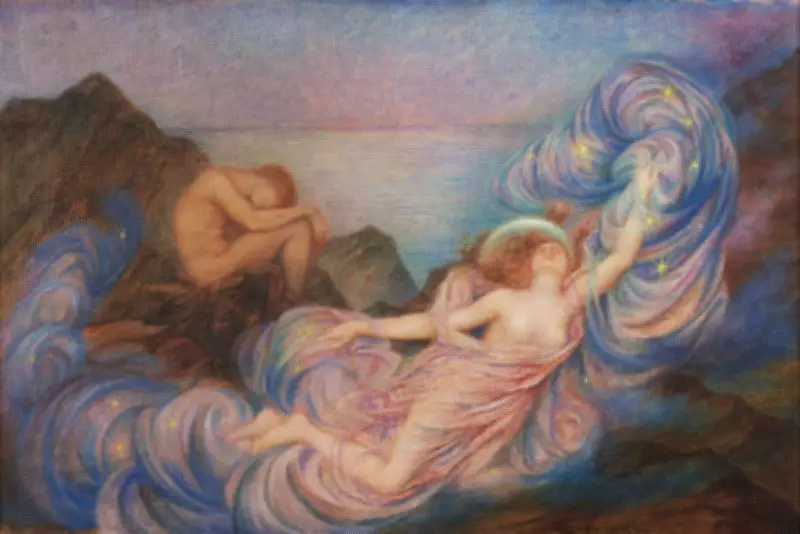
Eleanor Gordon-Smith writes, 'Depression is lying when it tells us that darkness is a guide to depth. Love, joy, relief, reflection, awe at nature, and awareness of contingency can also oxygenate your creative blood.' This insight challenges the common belief that suffering alone fuels artistic truth, offering a hopeful perspective for those navigating recovery.
The Creative Expansion of Depression
Many individuals experience depression as both debilitating and strangely vivid, fostering a creatively expansive state. During such times, immersion in poetry, painting, and literature that echoes inner turmoil can feel honest and alive. Art exploring life's darker edges provides a perspective that seems richer and more truthful than everyday chatter, becoming a comfort and a means of making sense of the world.
Fear of Losing Depth in Recovery
As one steps back into ordinary life after overcoming depression, there is often a worry that the intensity and clarity felt during those dark times will slip away. The wider world may appear preoccupied with consumption, indifferent to injustice, and lacking in empathy. The challenge becomes how to maintain emotional depth and cultural perspective while engaging with daily routines and a more normal affective life.
Debunking Depression's Illusions
Eleanor Gordon-Smith addresses this concern by highlighting depression's trick of presenting darkness as truth. She argues that this is a form of magical thinking, where despair convinces individuals that normal, loving experiences are superficial. In reality, intensity and truth exist outside of suffering just as powerfully as within it.
For example, is Matisse's bright chapel less profound than Rothko's somber works? Is Barber's melancholic Adagio truer than Handel's jubilant Zadok the Priest? The inevitability of suffering is not inherently more profound than the absurd contingency of being alive after billions of years of cosmic history.
Embracing Light and Joy
Depression lies by suggesting that depth only comes from darkness. Instead, love, joy, relief, reflection, awe at nature, and awareness of contingency can oxygenate creative blood. Figures like Luis Barragán in a sunbeam, Zadie Smith on joy, and Annie Dillard on seeing demonstrate that intensity and clarity are found in knowing we are the lucky ones. Meaningful connections, such as a shared glance with someone who understands, can feel just as alive as the depths of despair.
Navigating Post-Depression Creativity
Immersion and reflection do not have to cease just because acute suffering has ended. Returning to a more normal affective life means that the experiences one reflects on intensely will shift from darkness to lighter themes. It can be helpful to name current feelings precisely—whether tired, relieved, curious, or reborn—and bring the same quality of attention to them that depression demanded.
Part of the issue is the misconception that all happiness is the same. In fact, there are numerous forms of non-suffering to be present with, each offering unique depths. By identifying these and applying focused attention, individuals can retain a sense of clarity and expansion.
Finding Meaningful Perspectives
Seeking out creative and intellectual voices that reject consumption and injustice can provide rich truth-telling without the isolation of depression. Unlike despair, these perspectives prove that one is not fundamentally alone. Agency over how to re-enter the world allows for cultivating vividness by asking how to make life personally meaningful, moving beyond depression's one-dimensional view of truth and depth.
In summary, overcoming depression does not mean losing creative depth. By embracing joy, light, and diverse experiences, individuals can find profound truths and maintain the meaningful parts of their journey, fostering a richer and more resilient creative life.