Parents are constantly advised to limit their children's screen time, but when it comes to determining which films or TV shows are best for developing minds, guidance remains largely generic. A slow-paced program like Bluey offers a different viewing experience from a fast-paced action series like PAW Patrol, yet both are considered suitable for young children.
Evolution of Children's Content
This challenge is intensifying as content evolves. Prof Tim Smith, director of University of the Arts London's Nerve Lab, explained: "Today's young viewers increasingly engage with short-form, fast-paced, highly captivating content, often created by splicing and rearranging existing episodes into quickly digestible snippets. This evolution changes how content is produced and distributed, and may affect children's attention, comprehension, and emotional response."
Young children process information differently from adults, yet evidence on how specific features of children's programs influence attention and behavior remains scarce. Alisa Musatova, a research assistant on the Animating Minds project, noted: "Children as young as two spend three to four hours daily on screens. Understanding what is age-appropriate is crucial."

Nerve Lab's Innovative Approach
Animating Minds is one of several research strands at the Nerve Lab, which opened in London this week. The first UK facility of its kind combines wearable brain imaging, motion capture, and AI-powered analytics to study real-time responses to media and art. Other projects include developing tools to help visually impaired people navigate video games and shaping live dance performances.
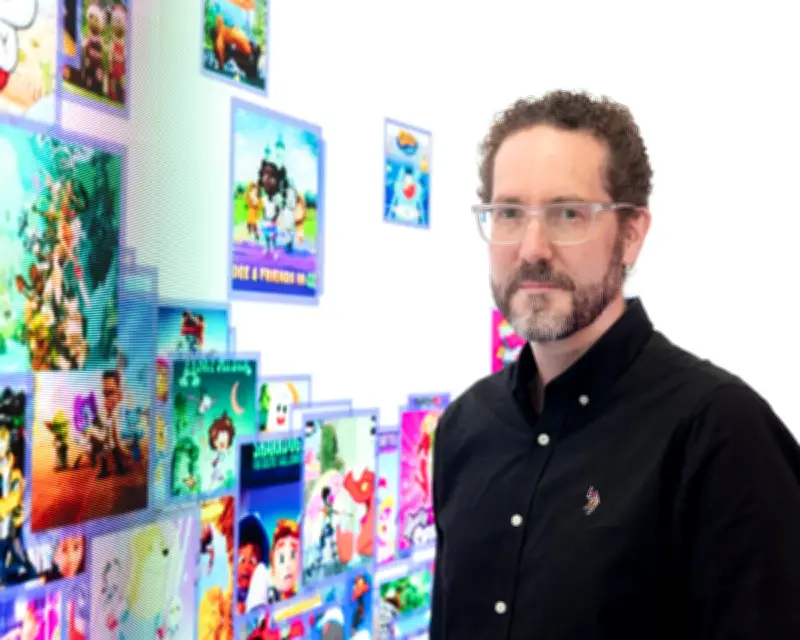
To understand how different content styles affect young viewers, Musatova and colleagues compiled a database of about 1,000 episodes of popular animated TV shows. They use AI to analyze pacing, colorfulness, loudness, shot frequency, and narrative structure, while interviewing animators and producers about creative decisions.
Online Study and Goals
The team is recruiting UK families with children aged three to six for an online study exploring how animated programs influence short-term attention. The ultimate goal is to create computational tools that help animators, commissioners, and regulators understand program effects and develop nuanced classification systems. "Can we build a system to predict how animated content affects young children?" asked Smith.
Prof Heather Kirkorian, a developmental psychologist at the University of Wisconsin-Madison, agreed that more research is needed. "The digital media landscape has changed. While there is speculation about impacts, little precise measurement exists. AI tools could analyze programming at a scale previously impractical."
Polly Conway, senior editor at Common Sense Media, added that quantifying previously difficult features would be valuable. "Just because a program teaches ABCs doesn't mean it's at the correct level for the audience."
Mathstronauts Project
Another Nerve Lab project uses brain imaging and behavioral data to investigate individual differences in children's math comprehension. Dr Rakhi Leela Nair, leading the Mathstronauts project, explained: "Two children may answer the same question incorrectly for different reasons. One may not understand fractions, another may struggle to suppress an intuitive response."
Using functional near-infrared spectroscopy (fNIRS), children wear a cap with sensors that monitor brain activity while playing a math game. The system then adapts the game in real time: impulsive children get tasks encouraging slower thinking, while those lacking understanding receive additional teaching. The system is being tested with seven- and eight-year-olds in a north London primary school.
Prof Roi Cohen Kadosh, a cognitive neuroscientist at the University of Surrey, described the approach as plausible but cautioned: "The important test is whether the system outperforms existing approaches. A teacher may already distinguish between lack of understanding and impulsivity. Technologies like fNIRS should support, not replace, teachers."