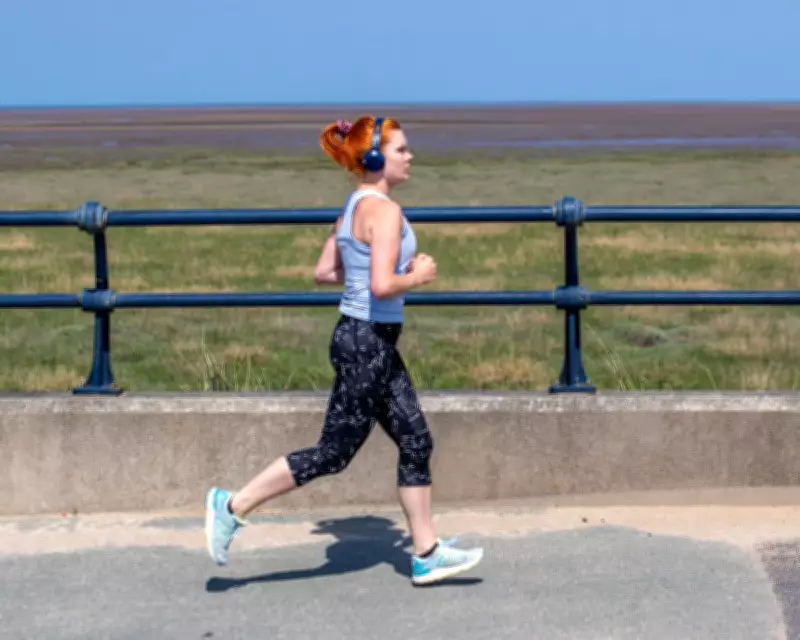
People who are the least fit need to do 30-50 minutes more exercise a week than the fittest to get the same reduction in cardiovascular risk, according to research.
Study Details
Researchers examined data from more than 17,000 British adults taking part in the UK Biobank study. They completed a cycle test to measure their baseline cardiorespiratory fitness (estimated VO2 max) and wore a fitness tracker for a week to record typical exercise levels. The adults, aged 40-69, were tracked for an average of eight years, during which there were more than 1,200 cardiovascular incidents, including heart attack, atrial fibrillation, stroke, and heart failure.
Current Guidelines
The NHS advises adults to do at least 150 minutes of moderate to vigorous physical activity each week, such as brisk walking, cycling, or running. The study, published in the British Journal of Sports Medicine, found that achieving this guideline of two and a half hours of exercise was associated with an 8-9% reduced cardiovascular risk.
“Given that large proportions of the population do not meet even this benchmark, the primary public health message remains straightforward: achieving 150 minutes per week of moderate to vigorous activity delivers meaningful cardiovascular protection regardless of fitness level,” the authors conclude.
Key Findings
The research also calculates that more exercise lowered the risk even further, but those with the lowest fitness needed about 30-50 extra minutes of exercise a week to obtain the same benefits. To achieve a 20% reduced risk, the least fit needed to do 370 minutes of moderate to vigorous physical activity a week, whereas those with the highest fitness levels only needed 340 minutes. To reduce the odds of cardiovascular events by more than 30%, the least fit would need to do more than 10 hours (610 minutes) while the most fit would have to do just over nine hours (560 minutes).
“This finding highlights the steeper challenge faced by deconditioned populations,” the research concludes. “Current moderate-to-vigorous physical activity guidelines provide a universal but modest safety margin, whereas optimal cardiovascular protection may require substantially higher activity volumes.”
“Future guidelines and implementation strategies may need to differentiate between the minimal moderate-to-vigorous physical activity volume required for a basic safety margin and the substantially higher volumes necessary for optimal cardiovascular risk reduction.”
Expert Reactions
The findings appear to challenge previous research, which found that walking only 4,000 steps a day would still reduce older people’s risk of dying early by around a quarter. But experts said recommending more than nine hours a week of exercise was “misguided.”
Aiden Doherty, professor of biomedical informatics at the University of Oxford, said: “We can’t give much weight to the figure of 560-610 minutes of exercise a week. Clearly there will be cardiovascular benefit for people who are able to do more than 1 hour 20 minutes of moderate-to-vigorous intensity physical activity a day but this is not a sensible public health message. The public should continue to aim for at least 150 minutes of moderate to vigorous intensity of physical activity a week; more is better; every move counts.”
Responding to the findings, a Sport England spokesperson said that increasing activity levels was vital for keeping people healthier for longer: “Emerging research like this reinforces the importance of helping more people be active, more often. Sport England’s own research shows activity relieves healthcare issues for both individuals and the NHS, preventing 1.3 million cases of depression, 600,000 of diabetes, and 57,000 of dementia.”