
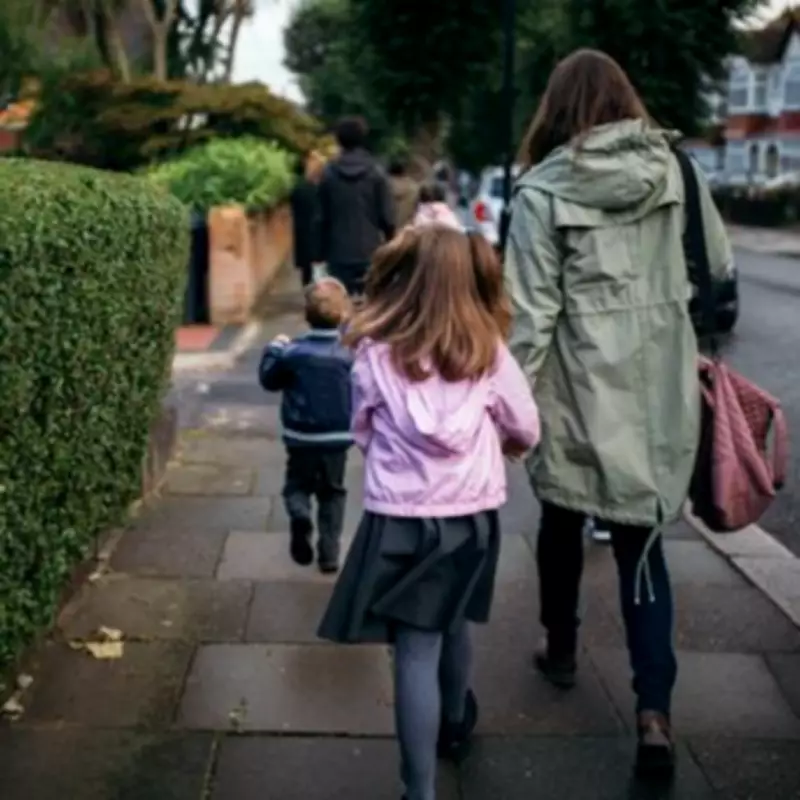
UK Law on Leaving Children Home Alone During Easter Holidays Explained
As the two-week Easter holidays commence for most schoolchildren across the United Kingdom, numerous parents are grappling with the familiar challenge of balancing work commitments with childcare responsibilities. With children growing older, many parents naturally begin to consider when it might be appropriate to allow their youngsters more independence, whether that involves staying home alone or spending time outdoors without direct adult supervision.
What Does UK Legislation Actually Say?
Contrary to common belief, UK law does not specify a precise minimum age at which a child can legally be left without supervision. However, parents could potentially face legal proceedings if leaving a child unsupervised results in that child being placed in danger or suffering harm. The legislation focuses on the concept of neglect and whether a child's welfare is compromised.
Official guidance from child protection organizations emphasizes that decisions should be based primarily on a child's individual maturity level rather than simply their chronological age. The National Society for the Prevention of Cruelty to Children provides specific recommendations that children under the age of 12 are rarely mature enough to be left alone for extended periods, and that those under 16 should not be left without supervision overnight.
NSPCC Guidance and Parental Considerations
Helen Westerman, head of local campaigns at the NSPCC, explained that establishing a single statutory age threshold would be impractical because children develop at different rates. She noted that many parents use school holiday periods to assess whether their children are ready for increased independence.
Ms Westerman also highlighted how term breaks can create additional pressure on families, particularly during a period when the cost of living remains elevated. The NSPCC has handled over 21,000 enquiries concerning unattended children throughout the past four years, with nearly half of these occurring during summer holidays.
Practical Guidance for Parents
Assessing Readiness: Parents should carefully evaluate how their child might cope without supervision and consider how they would respond in emergency situations. Key questions include whether the child can handle risks responsibly and how the child themselves feels about being left alone.
Implementing Safety Measures: Before deciding to leave a child home alone, parents should take practical precautions such as providing spare keys, ensuring access to food and bathroom facilities, and identifying potential hazards in the home environment.
Age-Specific Warnings: The NSPCC emphasizes that babies and very young children must never be left unsupervised, whether asleep or awake. Children under 12 are rarely mature enough to cope with emergencies and should not be left alone for extended periods.
Communication and Preparation: Parents should discuss potential scenarios with their children, establish clear rules and boundaries, and ensure children have vital contact information for trusted adults. When children venture out independently, parents should know their destination, activities, companions, and travel distance.
Building Independence Gradually: Ms Westerman recommends that parents allow children to build independence incrementally, establishing trust through adherence to agreed-upon rules and boundaries. This approach helps both parents and children feel more confident about increasing autonomy.
The Easter holidays present both challenges and opportunities for families navigating the complex question of when children are ready for unsupervised time. By focusing on individual maturity, implementing practical safety measures, and maintaining open communication, parents can make informed decisions that balance their children's growing independence with their ongoing safety and wellbeing.




